







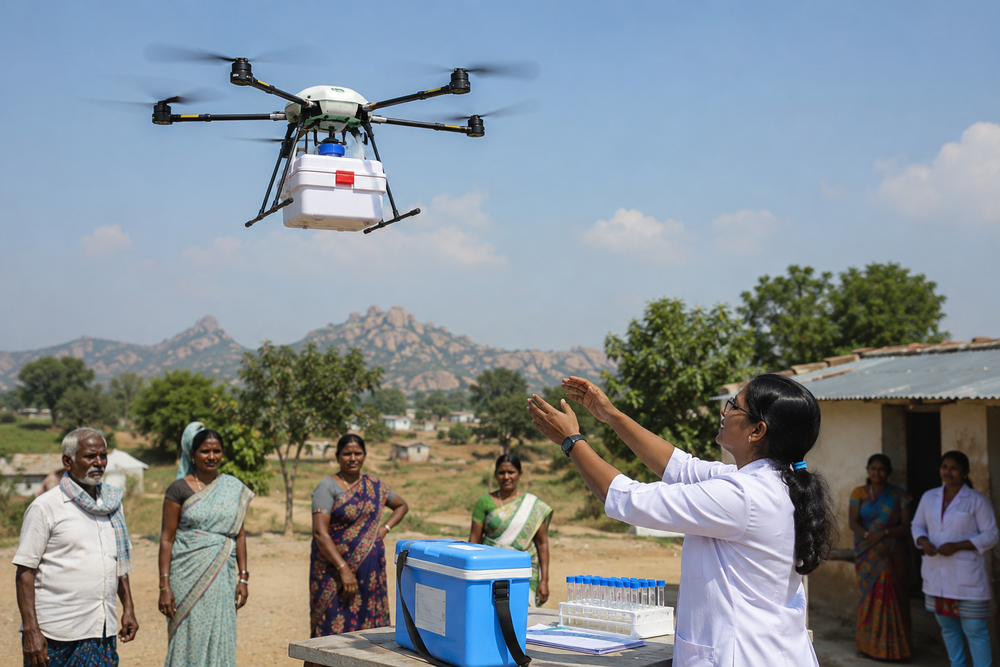
Drone-assisted transport of tuberculosis (TB) sputum samples can significantly reduce diagnostic delays and out-of-pocket expenses for patients living in remote and underserved areas, according to a study conducted by the Indian Council of Medical Research (ICMR).
Conducted under its flagship i-DRONE initiative, the ICMR study was carried out in Telangana’s Yadadri-Bhuvanagiri district in collaboration with AIIMS Bibinagar and the District TB Office under the National TB Elimination Programme (NTEP).
It compared the conventional system, in which patients travelled to TB diagnostic centres, with a drone-enabled model that transported sputum samples collected at nearby Primary Health Centres (PHCs) and sub-centres (SCs) to designated TB diagnostic laboratories.
The study enrolled 840 participants and found that the median turnaround time for TB diagnosis fell from 15 days under the conventional system to five days after the introduction of drone-based sample transport. The reduction in diagnostic delays enabled earlier disease confirmation and faster clinical decision-making.
The study also reported a sharp decline in the financial burden on patients. The mean out-of-pocket expenditure (OOPE) for obtaining a TB diagnosis dropped from around ₹9,451 under the conventional model to approximately ₹91 during the drone-enabled phase. The savings were primarily driven by reduced travel costs, lower wage losses and the availability of sputum collection facilities closer to patients’ homes.
Notably, the median OOPE during the drone-enabled phase was zero, indicating that many participants incurred no travel-related expenses for diagnosis. The intervention was implemented through a hub-and-spoke network linking 11 Primary Health Centres, 60 sub-centres and four TB Units, enabling patients to submit samples at health facilities closer to their villages instead of travelling long distances.
Commenting on the findings, Dr Rajiv Bahl, Secretary, Department of Health Research and Director General, ICMR, said, “Affordable and timely access to diagnosis remains central to India’s TB elimination efforts. This study demonstrates how technology can help bridge geographical barriers and reduce the burden on patients, particularly those living in remote areas. The evidence generated through the i-DRONE initiative will help inform future public health innovations while complementing existing healthcare delivery systems.”
Healthcare workers involved in the study reported that drone-enabled sample transport reduced delays, improved operational efficiency and gained community acceptance after an initial familiarisation period. The researchers, however, identified operational challenges such as adverse weather, payload limitations and the need for continued training, highlighting the importance of careful planning for wider implementation.
The researchers noted that the findings are based on programme implementation in a single district and provide valuable operational evidence on the role of drone-enabled logistics in strengthening healthcare delivery in geographically challenging areas. They added that further implementation across diverse settings would help generate additional evidence to support policy decisions.
The study adds to the growing body of evidence under the ICMR’s i-DRONE initiative, which is exploring the safe and effective use of drones for transporting vaccines, medicines, blood products, diagnostic specimens and tissues to improve healthcare access in difficult terrains across the country.


