







India is steadily transforming its talent ecosystem through a comprehensive life-cycle approach that integrates education, skilling, employment and entrepreneurship, with the objective of creating a future-ready workforce capable of driving economic growth and global competitiveness. According to the government, policy reforms and flagship programmes are embedding vocational education into school curricula, expanding opportunities for continuous upskilling and promoting lifelong learning to meet the demands of a rapidly changing labour market.
The government has positioned skill development as a central pillar of its vision for Viksit Bharat 2047, recognising that a skilled, productive and innovative workforce is essential for sustaining economic growth, enhancing competitiveness and ensuring inclusive development. The strategy spans every stage of life, from introducing vocational education in schools to supporting workforce reskilling, apprenticeships, entrepreneurship, women-centric initiatives and lifelong learning.
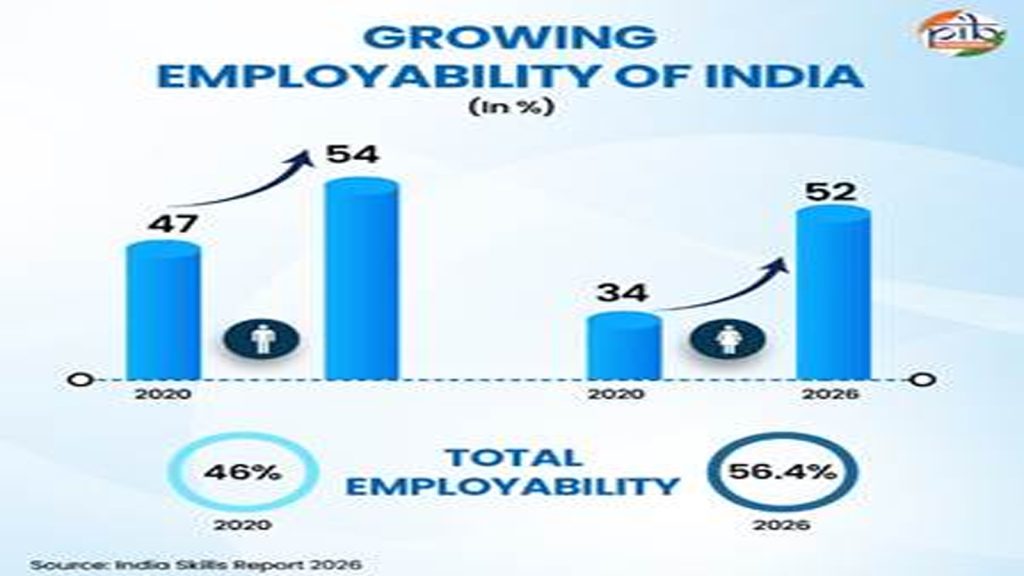
Rapid advances in automation, artificial intelligence, digitalisation, climate action and demographic shifts have significantly reshaped labour markets worldwide, making continuous skill development increasingly important. The government noted that India’s improving employability reflects the impact of its targeted interventions. The India Skills Report 2026 shows employability rising from 46 per cent in 2020 to 56.4 per cent in 2026, accompanied by strong hiring sentiment that signals growing demand for future-ready talent.
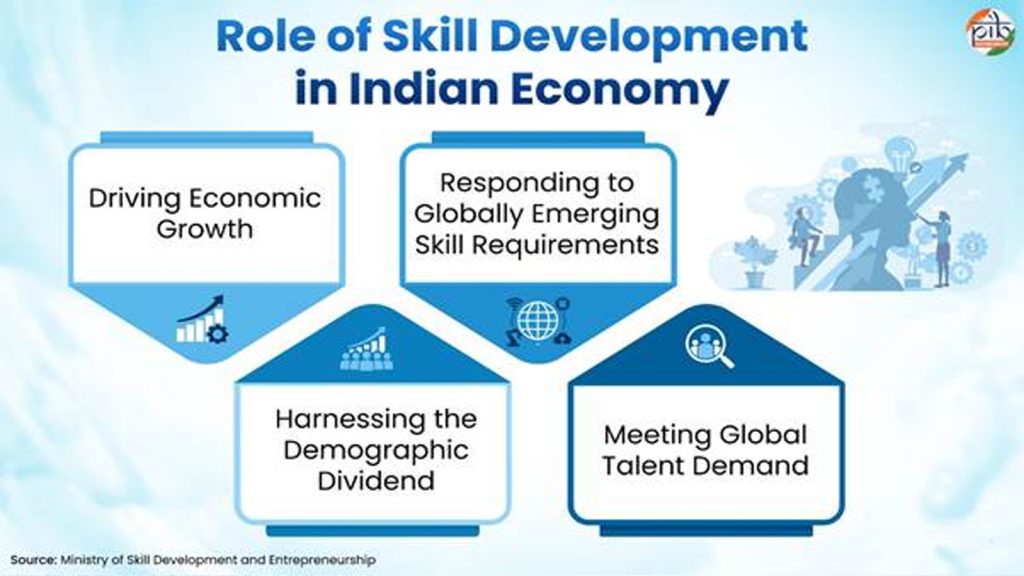
The government believes skill development not only enhances employability and productivity but also contributes to poverty reduction, enterprise creation and sustainable economic growth. India has also strengthened its preparedness for emerging technologies, with the International Monetary Fund’s AI Preparedness Index awarding the country a score of 49.3, higher than the average for emerging and developing economies. Coupled with India’s demographic advantage, where over 54 per cent of the population is below 25 years of age and more than 62 per cent falls within the working-age group, focused skilling is seen as essential for harnessing this opportunity. The government also noted that India is expected to generate a surplus of 45 million skilled professionals by 2030 at a time when global labour shortages are projected to reach 85 million, creating significant opportunities for the country to meet international workforce demand.
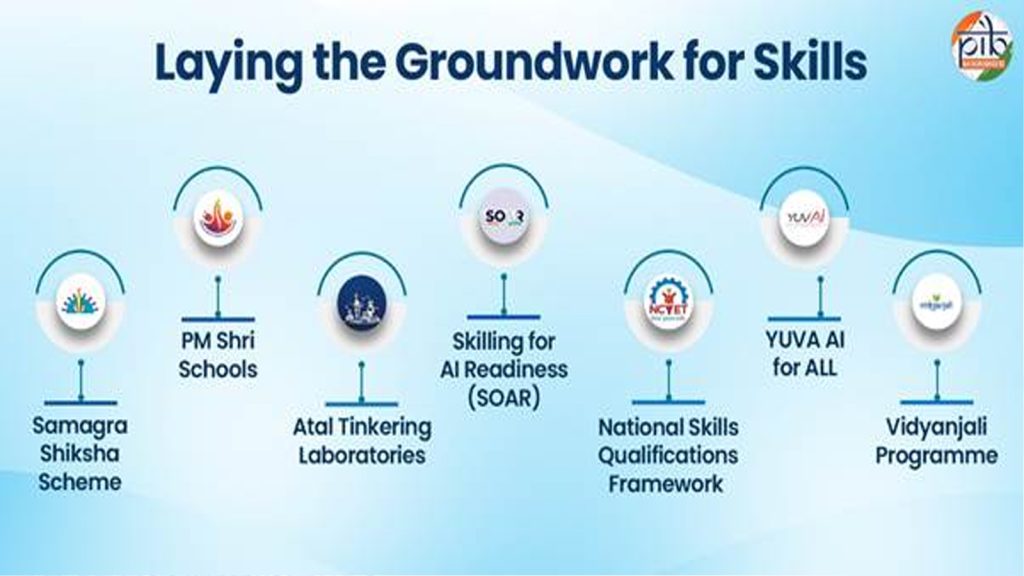
Recognising that lifelong employability begins with early exposure to vocational education, the government has expanded several initiatives in schools. Under the Samagra Shiksha Scheme, 138 job roles have been approved and skill education has been introduced in 25,140 schools, covering more than 35.5 lakh students. The Hub and Spoke Model has been adopted to maximise existing infrastructure, while the Ministry of Skill Development and Entrepreneurship has established 1,200 vocational skill laboratories across Jawahar Navodaya Vidyalayas and Eklavya Model Residential Schools.
The PM SHRI Schools initiative, launched in 2022 to implement the National Education Policy 2020, has expanded rapidly, with 13,092 schools developed across 776 districts by June 2026. At the same time, the Atal Innovation Mission has established more than 10,000 Atal Tinkering Laboratories in 722 districts, engaging over 1.1 crore students in innovation-driven learning.
Artificial intelligence has emerged as a major focus area within the government’s skilling framework. Through the Skilling for AI Readiness (SOAR) programme, developed in partnership with Microsoft, HCL Technologies and NASSCOM, more than 2.30 lakh students had enrolled in AI courses by February 2026. Complementing these efforts, the YUVA AI for ALL initiative under the IndiaAI Mission, launched in November 2025, has registered over 85.27 lakh enrolments as of July 2026 through its free self-paced AI certification programme available on FutureSkills Prime and iGOT Karmayogi.
The National Skills Qualification Framework continues to provide the foundation for integrating academic education, vocational training and skill development through a common competency-based framework that supports lifelong learning and career mobility.
Community participation has also become an important component of school education through the Vidyanjali Programme, which connects schools with volunteers from diverse professional backgrounds. By June 2026, over 8.44 lakh schools had joined the initiative, supported by more than 5.62 lakh volunteers and 2,705 CSR organisations and NGOs, benefiting over 2.04 crore students.
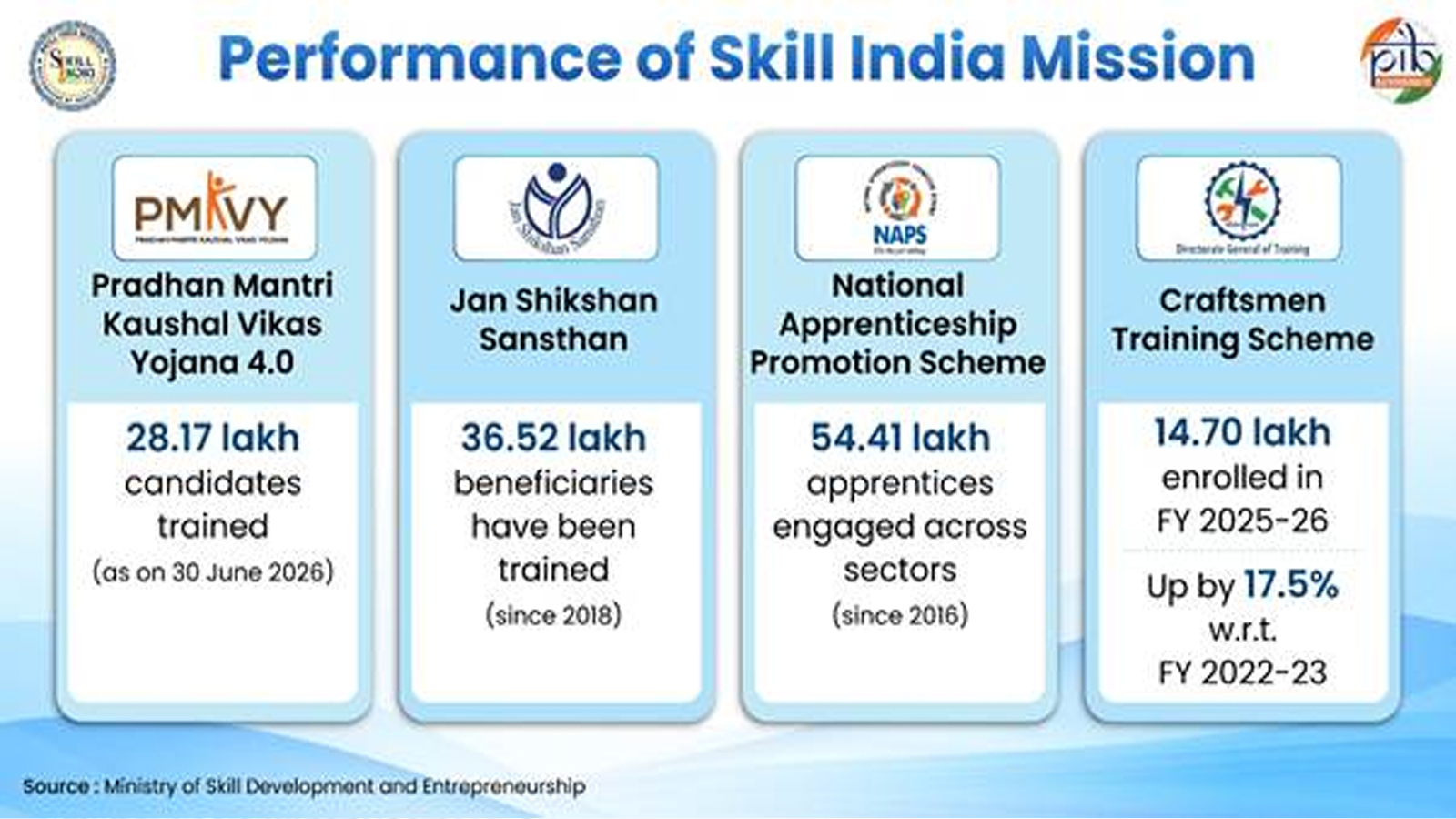
Beyond school education, the Skill India Mission remains the government’s flagship programme for workforce skilling, upskilling and reskilling. Under Pradhan Mantri Kaushal Vikas Yojana (PMKVY) 4.0, more than 28.17 lakh candidates had been trained across 36 sectors in 36 States and 738 districts by June 2026. The scheme has introduced 68 customised courses and 189 future-skill job roles while expanding implementation through more than 16,900 institutions, including over 6,800 Skill Hubs.
The Jan Shikshan Sansthan programme has trained over 36.52 lakh beneficiaries since 2018 through community-based, non-formal skill training, with women accounting for more than 82 per cent of beneficiaries and tribal communities also receiving significant support. Since December 2024, products created under the programme have also been marketed through the UdyamKart portal to improve market access for artisans and micro-entrepreneurs.
The National Apprenticeship Promotion Scheme continues to strengthen industry-led training through the “Earn While You Learn” model. More than 54.41 lakh apprentices have been engaged across sectors since 2016, with over 12.35 lakh apprentices participating during the 2025-26 financial year. The government has also disbursed more than ₹562 crore through Direct Benefit Transfer towards apprenticeship support.
Industrial Training Institutes have also expanded significantly under the Craftsmen Training Scheme, with training now offered in 169 courses through 13,888 ITIs. Student enrolment has increased from 12.51 lakh in 2022-23 to 14.70 lakh in 2025-26, reflecting growing interest in vocational education.
To modernise vocational training infrastructure, the government launched the Pradhan Mantri Skilling and Employability Transformation through Upgraded ITIs (PM-SETU) programme in 2025. The initiative aims to upgrade 1,000 government ITIs, establish five National Centres of Excellence for Skilling and train 20 lakh youth over five years. Andhra Pradesh has become the first state to operationalise PM-SETU through the Visakhapatnam ITI Cluster, while Strategic Investment Plans worth ₹1,237.58 crore have already been approved for clusters in Odisha, Gujarat and Telangana.
Advanced technology training is also receiving greater emphasis under the IndiaAI Mission’s FutureSkills Pillar, which supports AI education from undergraduate to doctoral levels while establishing 570 AI and Data Labs in Tier-II and Tier-III cities. Complementing this effort, FutureSkills Prime, jointly developed by NASSCOM and the Ministry of Electronics and Information Technology, now offers more than 2,800 courses to over 33 lakh registered learners, with women accounting for 41 per cent of users.
Employment-linked skilling has been further strengthened through the Pradhan Mantri Viksit Bharat Rozgar Yojana, launched in 2025. The scheme provides financial incentives for first-time employees registered with EPFO as well as incentives for employers hiring additional workers. By June 2026, it had supported the creation of 15 lakh employment opportunities with incentive disbursements worth ₹2,400 crore.
Entrepreneurship development has become another major component of the government’s skilling agenda. The PM Vishwakarma scheme continues to support traditional artisans through skill upgradation, toolkit incentives, credit support and market linkages. By June 2026, more than 24.50 lakh applicants had completed basic training, loans worth ₹5,165.84 crore had been sanctioned and over ₹35 crore in digital incentives had been disbursed.
Registered users on the Startup India platform also have access to free online courses covering entrepreneurship, finance, management, security and programming, while entrepreneurship development programmes implemented by the National Institute for Entrepreneurship and Small Business Development and the Indian Institute of Entrepreneurship continue to provide mentorship, incubation and business support. The Ministry of MSME’s Entrepreneurship Skill Development Programmes similarly focus on promoting self-employment among women, Scheduled Castes, Scheduled Tribes, persons with disabilities, ex-servicemen and economically weaker sections.
Women’s participation in emerging technologies has also become a priority. The AI Careers for Women initiative, launched in 2025, has already reached more than 10,000 students through 25 AI Centres of Excellence. The Swavalambini Women Entrepreneurship Programme, implemented in partnership with NITI Aayog’s Women Entrepreneurship Platform, is fostering entrepreneurial skills across multiple states through awareness and development programmes. Another initiative, NAVYA, launched in June 2025, aims to train adolescent girls aged 16 to 18 years in aspirational districts through vocational training in emerging sectors such as artificial intelligence, cybersecurity, digital marketing and green jobs.
The Union Budget 2026-27 has further expanded the skilling agenda by proposing initiatives including the Khelo India Mission, a pilot programme to train 10,000 tourist guides, three new All India Institutes of Ayurveda, a National Institute of Design in eastern India, AVGC Content Creator Labs in schools and colleges, training for 1.5 lakh multi-skilled caregivers and the development of five university townships integrating higher education, research and skilling.
According to the government, the combined impact of these initiatives is creating an inclusive, industry-responsive and future-oriented talent ecosystem. By aligning education, vocational training, entrepreneurship and emerging technologies with evolving industry requirements, India aims to harness its demographic dividend, strengthen global competitiveness and build a workforce capable of supporting sustained economic growth and the vision of Viksit Bharat 2047.


