







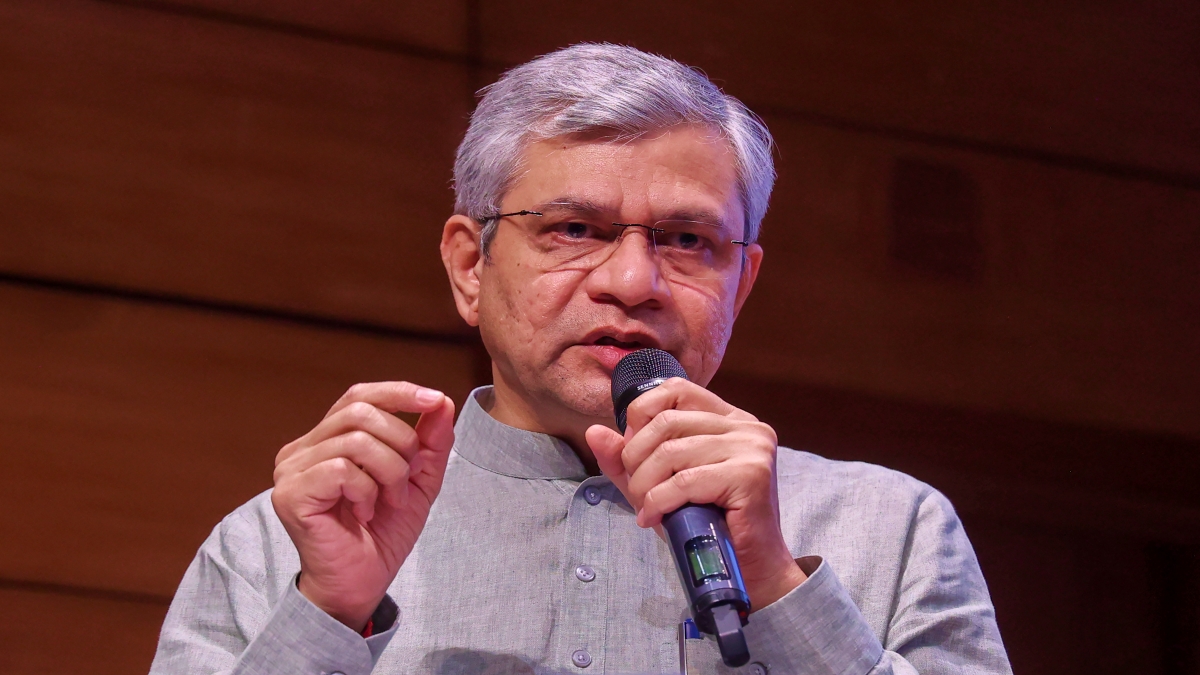
The Centre has disabled public access to 50 OTT platforms over the past two years for hosting obscene content in violation of the Information Technology (IT) Act and other laws, the government informed Parliament on Wednesday, while outlining measures to tackle digital addiction and strengthen online safety for children.
In a written reply to the Lok Sabha, Union Electronics and Information Technology Minister Ashwini Vaishnaw said the government’s policies are aimed at ensuring an “open, safe, trusted and accountable” internet, particularly for children.
Vaishnaw said the blocked platforms were found to be in violation of Sections 67 and 67A of the IT Act, Section 294 of the Bharatiya Nyaya Sanhita (BNS), and Section 4 of the Indecent Representation of Women (Prohibition) Act, 1986.
The minister said the Information Technology Act, 2000, and the Information Technology (Intermediary Guidelines and Digital Media Ethics Code) Rules, 2021, require intermediaries to exercise due diligence and prevent users from sharing content that is unlawful or harmful to children.
He added that recent amendments to the IT Rules mandate social media platforms and other intermediaries to remove unlawful content within three hours of receiving an order from a competent court or a reasoned direction from the appropriate government or its authorised agency.
On children’s online privacy, Vaishnaw said the Digital Personal Data Protection Act, 2023, requires parental consent before processing children’s personal data and prohibits tracking, behavioural monitoring and targeted advertising directed at minors.
He also referred to the Promotion and Regulation of Online Gaming Act, 2025, saying it seeks to address digital addiction and financial harm associated with online gaming.
Citing the Economic Survey 2025-26, the minister said digital addiction has emerged as a serious public health challenge, particularly among those aged 15-29, with consequences ranging from anxiety and depression to sleep disorders, cyberbullying and financial losses linked to compulsive gaming, social media use and online gambling.
The government is also running cyber awareness initiatives under the Information Security Education and Awareness (ISEA) project. According to the minister, 6,650 awareness workshops have been conducted across the country, reaching more than 11.37 lakh participants, including students, teachers, law enforcement personnel, government officials and the general public.
He said CERT-In regularly issues advisories, awareness material and online safety guidance, while the Ministry of Education, CBSE and NCERT have introduced measures such as the PRAGYATA Guidelines on Digital Education, cyber-security training for teachers, Cyber Clubs in schools and cyber safety modules in the school curriculum.


