







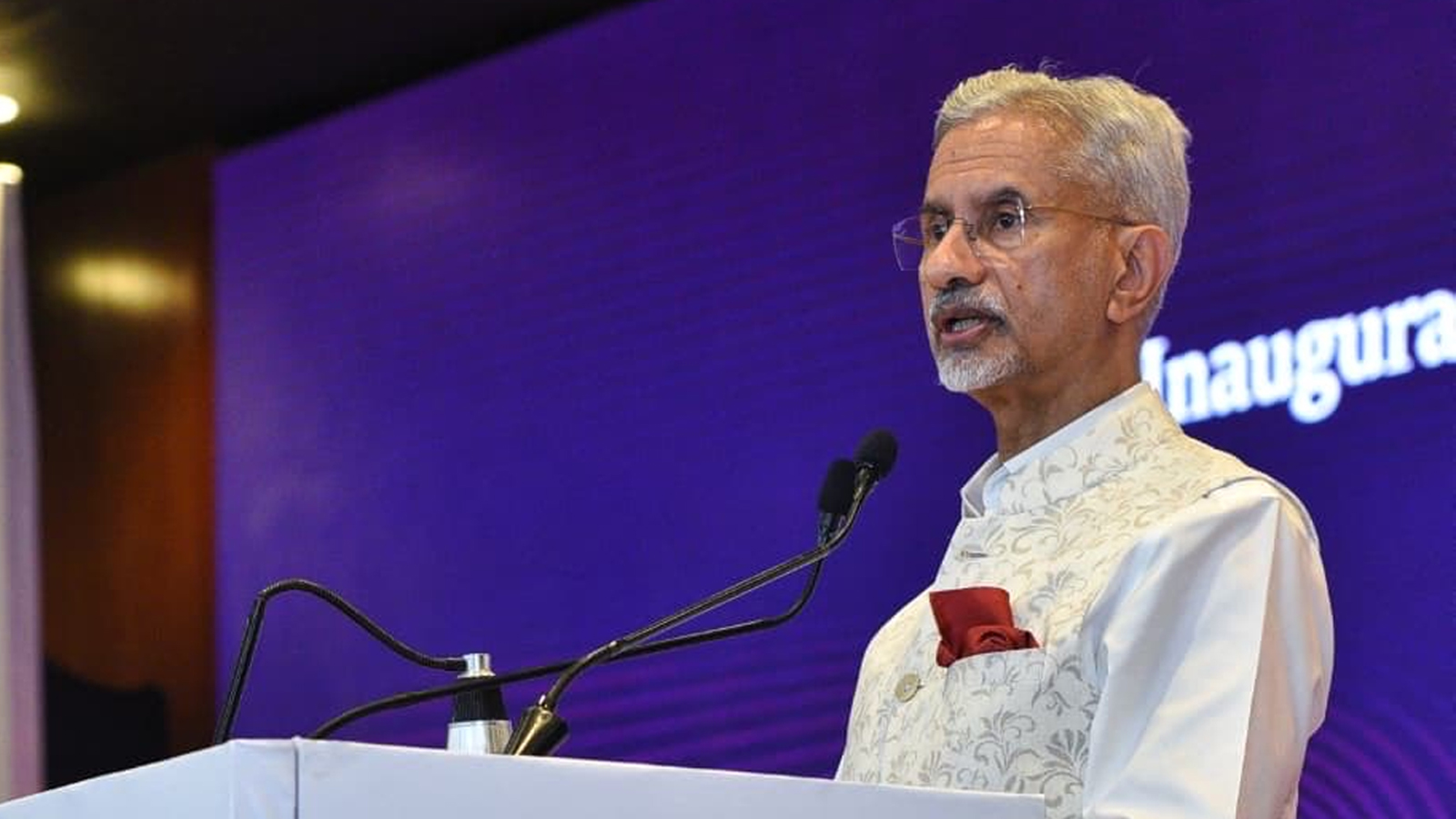
External Affairs Minister S. Jaishankar on Tuesday said India has signed 28 Migration and Mobility Partnership Agreements (MMPAs) or equivalent arrangements with 26 countries, underscoring the country’s growing emphasis on creating safe, legal and mutually beneficial global mobility pathways.
Addressing the Human Resource Mobility Forum in New Delhi, Jaishankar said the movement of skilled human resources has become one of the most important drivers of economic growth amid rapid demographic changes, technological disruption and evolving labour market requirements.
“The world is undergoing a profound transformation. Demographic patterns are changing sharply across continents, while artificial intelligence, automation, digitalisation and the green transition are redefining the skills required for tomorrow’s economy. At the same time, traditional sectors such as healthcare, manufacturing, construction and agriculture continue to require skilled manpower,” he said.
The External Affairs Minister noted that discussions on economic development have traditionally centred around trade, investment and capital flows, but human resources have now emerged as a critical pillar of national competitiveness.
“Countries increasingly recognise that access to skilled and adaptable talent is essential for sustaining growth, fostering innovation and maintaining productivity. In fact, it is equally important for maintaining their quality of life,” he said.
Jaishankar emphasised that human resource mobility extends far beyond the movement of people across borders.
He added, “It is about connecting aspirations with opportunities, linking talent with demand and creating pathways through which individuals contribute to both economic growth and social well-being.”
The EAM said India’s vision for mobility is not confined to facilitating overseas employment but is rooted in strengthening international cooperation.
“We view mobility as a very important pillar of international cooperation. These partnerships are based on mutual benefit, shared responsibility and long-term sustainability. When managed effectively, they create value for source countries, destination countries, employers, workers and communities alike,” he said.
Highlighting India’s expanding international engagement in this domain, EAM Jaishankar said the country has signed 28 Migration and Mobility Partnership Agreements or equivalent arrangements with 26 countries, while negotiations with several more nations are currently underway.
He stressed that expanding legal migration channels must be accompanied by stronger efforts to combat illegal migration, exploitative recruitment practices, fraudulent intermediaries and human trafficking.
“These challenges compromise the credibility of legal mobility ecosystems and place vulnerable individuals at risk,” he said.
The minister highlighted technology’s growing role in migration governance, describing the upgraded eMigrate Version 2 platform as a major step towards creating a safer and more transparent migration ecosystem.
“India’s commitment to safe and legal mobility is reflected in the eMigrate platform. Since its inception, more than 50 lakh emigration clearances have been issued. This digital ecosystem has become a global example of leveraging technology to protect migrant workers while facilitating mobility,” he said.
Looking ahead, Jaishankar said advances in artificial intelligence, automation and the green economy would significantly reshape global labour markets.
While many traditional occupations would evolve, he said entirely new categories of employment would emerge, requiring continuous skill development and workforce adaptation.
“The green economy will create demand for new skills and capabilities. At the same time, traditional sectors will continue to require manpower. Healthcare and caregiving services will become especially important with ageing populations. The silver economy is becoming as important as the technology economy,” the EAM said.
Calling for closer collaboration among governments, industry, educational institutions and international organisations, Jaishankar said future workforce planning must become more proactive.
“We must develop mechanisms that anticipate future workforce requirements. We must strengthen systems that support continuous learning and skill adaptation. We must also facilitate greater recognition of qualifications and competencies across jurisdictions. Above all, we must ensure that workers are prepared not only for today’s opportunities but also for the demands of tomorrow,” he said.
The External Affairs Minister reiterated that the welfare and protection of Indian citizens abroad remain central to India’s migration governance framework.
He said initiatives such as the Indian Community Welfare Fund (ICWF), responsive consular services, the MADAD portal and the eMigrate platform have strengthened grievance redressal and ensured timely assistance to Indians overseas.
Describing the Human Resource Mobility Forum as an important platform for policy dialogue, Jaishankar said the challenges and opportunities associated with global mobility transcend national boundaries and require coordinated international action.
He noted that the forum would hold focused discussions with five partner countries to explore ways of strengthening the implementation of existing mobility agreements and maximising their mutual benefits.
Reaffirming India’s commitment to global cooperation, Jaishankar said trusted mobility pathways have the potential to drive inclusive development and deepen international partnerships.
“We believe that trusted mobility pathways can contribute to stronger economies, more resilient societies and deeper international cooperation. Mobility, when guided by fairness and responsibility, can serve as a powerful force for inclusive growth and human progress,” he said.
Expressing confidence in the outcomes of the forum, Jaishankar said its deliberations would generate valuable policy insights, strengthen partnerships and contribute meaningfully to shaping the future of global talent mobility.


