







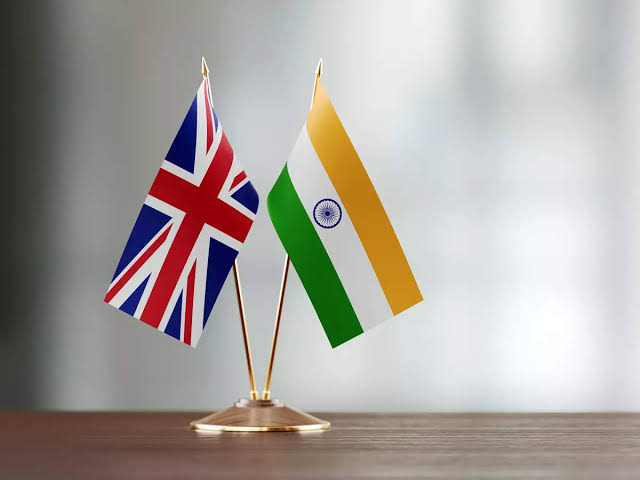
The India-United Kingdom Comprehensive Economic and Trade Agreement (CETA) and the Agreement on Social Security, also known as the Double Contribution Convention (DCC), came into force on Wednesday, giving Indian exporters preferential access to the UK market and marking a major milestone in bilateral economic ties.
To mark the launch, more than 50 export consignments worth over USD 140 million were flagged off from over 20 ports, airports, Inland Container Depots (ICDs), Special Economic Zones (SEZs) and manufacturing facilities across the country under the preferential tariff regime.
The consignments, comprising products such as electronics, pharmaceuticals, gems and jewellery, departed from key trade hubs including Mundra, Nhava Sheva, Chennai, Mumbai (Sahar), Kolkata and Hyderabad.
A formal inauguration ceremony was held at Vanijya Bhawan in New Delhi in the presence of British High Commissioner to India Lindy Cameron, Commerce Secretary Rajesh Agrawal, Director General of Foreign Trade Santosh Kumar Sarangi, representatives of Export Promotion Councils, industry bodies and exporters.
In a post on X, Union Commerce and Industry Minister Piyush Goyal described the implementation of CETA and the Social Security Agreement as “a defining milestone” in India-UK relations.
He said the agreement, concluded under the leadership of Prime Minister Narendra Modi, provides zero-duty market access for nearly 99 per cent of India’s exports, covering almost the entire trade value between the two countries.
Goyal said the pact would create new opportunities for sectors such as textiles, leather, gems and jewellery, engineering goods, marine products, chemicals and processed foods while benefiting MSMEs, farmers and manufacturers. He added that the agreement would also boost India’s IT, professional, financial, education and business services sectors while expanding mobility for Indian professionals.
Highlighting the significance of the Double Contribution Convention, the minister said Indian professionals on temporary assignments in the UK would be exempt from paying double social security contributions for up to five years, improving the global competitiveness of India’s workforce.
Commerce Secretary Highlights Long-Term Gains
Addressing the gathering, Commerce Secretary Rajesh Agrawal termed the agreement one of the most significant achievements of the Department of Commerce, saying it reflected the vision of Prime Minister Narendra Modi to strengthen India-UK economic ties.
He noted that negotiations involved more than 800 technical sessions across 14 formal rounds before the agreement was finalised.
Agrawal said the pact goes beyond India’s previous free trade agreements in terms of both scope and depth, offering substantial gains in trade in goods and services.
With services contributing more than half of India’s GDP and over 70 per cent of the UK’s GDP, he said the agreement would provide predictability and greater market access, giving a strong push to bilateral services trade.
He said the real success of the agreement would be measured by its ability to create jobs, livelihoods and economic opportunities. The Department of Commerce, he added, would work with Export Promotion Councils and industry clusters to maximise utilisation of the agreement.
The Commerce Secretary also said the decision to operationalise CETA on July 15, 2026, was taken by the leaders of both countries during their meeting on the sidelines of the G7 Summit in France a month earlier. He said all notifications, customs preparations and Rules of Origin mechanisms had been completed to enable seamless implementation from the first day.
UK Calls Pact a Historic Milestone
British High Commissioner Lindy Cameron described the agreement as a “historic milestone” in the UK-India partnership.
She said India was the UK’s 11th-largest trading partner in 2025, with annual bilateral trade nearing £48 billion, while investments between the two countries supported more than 700,000 jobs.
According to Cameron, the agreement is expected to increase bilateral trade by more than £25 billion annually over the long term while contributing nearly £5 billion each year to the GDP of both countries.
She said Indian exporters would enjoy duty-free access on around 99 per cent of tariff lines, while UK businesses would receive tariff reductions or eliminations on 90 per cent of tariff lines, covering 92 per cent of current UK exports to India.
Beyond merchandise trade, she said the agreement strengthens cooperation in customs, digital trade, financial services, telecommunications, intellectual property, professional services and regulatory transparency.
Digital Certificates of Origin Issued
The first Certificates of Origin under the India-UK CETA were issued through the eCoO 2.0 platform on a self-certification basis.
The government said the digital certification system would reduce compliance requirements and transaction costs, particularly benefiting MSMEs.
Industry associations and Export Promotion Councils welcomed the implementation of the agreement, saying duty-free access, simplified certification procedures and business-friendly Rules of Origin would significantly improve the competitiveness of Indian products in the UK market.
They also said the agreement would support labour-intensive sectors, create opportunities for women entrepreneurs, MSMEs, youth and students, and contribute to the government’s vision of Viksit Bharat.
Separately, the Maharashtra government organised a ceremonial launch of the agreement in Mumbai in the presence of Chief Minister Devendra Fadnavis. The event featured a symbolic exchange of export cargo between Maharashtra and the UK’s Deputy High Commissioner, marking the beginning of preferential trade under the India-UK CETA.


