







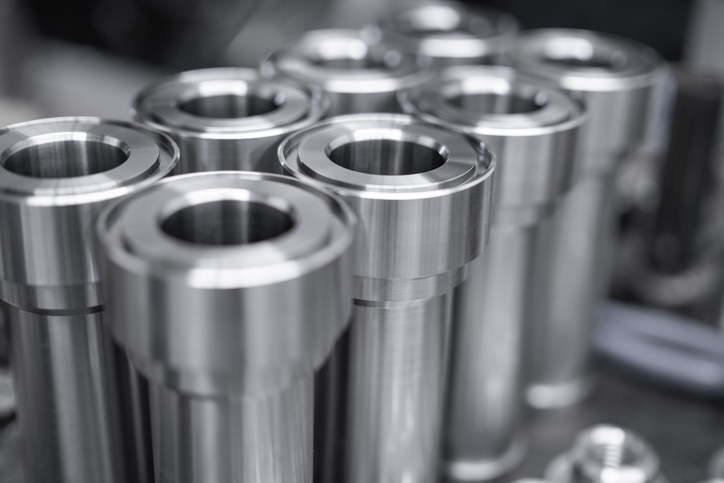
India’s steel sector registered steady growth during the first quarter of FY2026, with crude steel production, finished steel output and domestic consumption recording healthy year-on-year increases, reflecting sustained demand across key sectors of the economy.
According to the Ministry of Steel, crude steel production rose to 42.1 million tonnes (MT) during April-June 2026, registering a 3 per cent increase over 40.8 MT produced during the corresponding period last year. Finished steel production also increased by 5.9 per cent to 41 MT, while hot metal production grew 1.4 per cent to 23.5 MT.
In June 2026 alone, crude steel production stood at 14.1 MT, up 3.9 per cent year-on-year, while finished steel production rose 6 per cent to 13.8 MT.
The country’s steelmaking capacity remained at 221.9 million tonnes per annum (MTPA), supporting India’s long-term objective of achieving 300 MTPA capacity under the National Steel Policy by 2030.
Domestic steel demand remains strong
Domestic consumption of finished steel continued its upward trajectory during the quarter.
Finished steel consumption increased by 8.3 per cent year-on-year to 41.6 MT during April-June 2026, compared with 38.4 MT in the same period last year. Consumption during June alone rose 7.2 per cent to 14.2 MT, indicating sustained demand from infrastructure, construction and manufacturing sectors.
India remains net importer of finished steel
Steel imports and exports both witnessed significant growth during the quarter, although imports continued to outpace exports, making India a net importer of finished steel.
Finished steel imports rose 49.2 per cent to 2.06 million tonnes during the April-June period, while export volumes increased 31.4 per cent to 1.59 million tonnes.
In value terms, imports stood at ₹20,214.5 crore, while exports were valued at ₹12,475.2 crore during the quarter.
Steel prices ease in June
Domestic steel prices softened marginally during June compared with May.
The average price of 10 mm TMT bars declined by 4.7 per cent month-on-month to ₹60,068 per tonne, while hot rolled coils fell 0.5 per cent to ₹70,108 per tonne.
Cold rolled coils and galvanised sheets also recorded modest declines during the month. However, compared to June 2025, prices across major steel products remained significantly higher, with galvanised sheets registering a 15.8 per cent annual increase.
Raw material prices show mixed trend
Among key steelmaking inputs, NMDC increased iron ore prices during June, with Baila Lump ore rising 3.6 per cent to ₹5,700 per tonne and fines increasing 3.2 per cent to ₹4,850 per tonne.
Meanwhile, manganese ore prices declined 5 per cent, while imported HMS-II scrap prices fell 4.4 per cent during the month.
Government pushes digitalisation and industry reforms
The Ministry continued to advance its digital transformation agenda through a Chintan Shivir held in June, encouraging wider adoption of artificial intelligence, automation, predictive maintenance, digital mining and smart manufacturing technologies to improve operational efficiency across the sector.
The Ministry also granted Miniratna Category-I status to MECON Limited, providing the public sector engineering consultancy with greater financial and operational autonomy.
Meanwhile, the Directorate General of Trade Remedies (DGTR) initiated an anti-dumping investigation into imports of hot-rolled flat steel from China, Japan and Russia following complaints of unfair pricing by domestic producers.
Capacity expansion and green steel initiatives gather pace
The quarter also witnessed progress on capacity expansion and sustainability initiatives.
JSW Group announced the commencement of construction of its proposed 2 MTPA integrated steel plant in Kadapa, Andhra Pradesh.
State-owned NMDC reported a 44 per cent year-on-year increase in iron ore production during June to 5.15 MT, while cumulative production during the first quarter reached 15.10 MT.
On the sustainability front, SAIL’s Rourkela Steel Plant launched a fully ERP-SAP integrated CO₂ Dashboard to strengthen decarbonisation efforts, while SAIL’s Barsua-Taldih Iron Mines undertook large-scale plantation activities as part of Van Mahotsav 2026.


