







The Ministry of Social Justice and Empowerment will commemorate the third NAMASTE Day on July 14, marking three years since the launch of the National Action for Mechanized Sanitation Ecosystem (NAMASTE) Scheme in 2023.
The main event, along with the Divya Kala Mela, will be held at Rabindra Sadan in Kolkata, while parallel programmes will be organised across Urban Local Bodies (ULBs) nationwide to honour sanitation workers and promote mechanised sanitation.
Union Minister for Social Justice and Empowerment Dr. Virendra Kumar and Minister of State Ramdas Athawale are expected to attend the event. Senior officials from the Centre and the state government, Members of Parliament, legislators, district administration representatives, the National Safai Karamcharis Finance and Development Corporation (NSKFDC) and other dignitaries are also expected to participate.
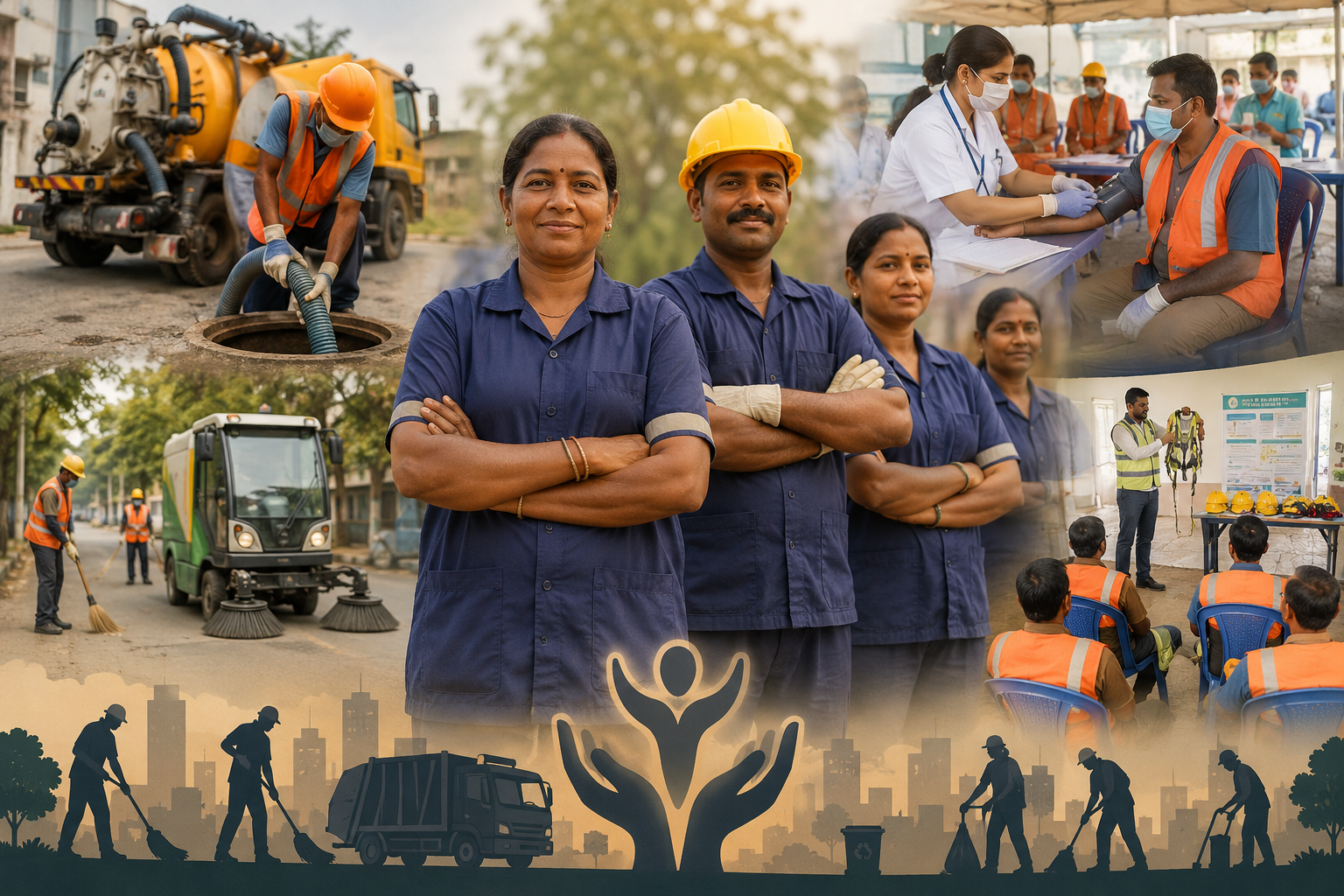
As part of the observance, Urban Local Bodies across the country will organise occupational safety training sessions, health check-up camps, facilitation of government welfare schemes, demonstrations of mechanised sanitation equipment and safety gear, and programmes recognising the contribution of sanitation workers.
NAMASTE Day is dedicated to acknowledging the role of sanitation workers, including sewer and septic tank workers, waste pickers and former manual scavengers, in maintaining public health and environmental sanitation. The observance also aims to raise awareness about their rights and welfare while promoting dignity, safety and social inclusion.
The Ministry said the initiative reflects the government’s commitment to improving the working conditions of sanitation workers through mechanised cleaning, elimination of hazardous manual cleaning practices, access to protective equipment, skill development and sustainable livelihood opportunities.
Launched in 2023-24, the NAMASTE Scheme seeks to ensure the dignity, safety and social security of sanitation workers while strengthening their socio-economic well-being.
The scheme aims to achieve zero fatalities in sanitation work, eliminate direct contact of workers with human faecal matter, promote mechanised cleaning operations, ensure sanitation work is carried out by trained personnel, strengthen Emergency Response Sanitation Units (ERSUs), and encourage entrepreneurship and self-employment through the formation of Self-Help Groups.


