







President Droupadi Murmu on Tuesday called for deeper parliamentary engagement and expanded economic cooperation between India and North Macedonia, describing the European nation as an important partner in a stable, multipolar and prosperous global order.
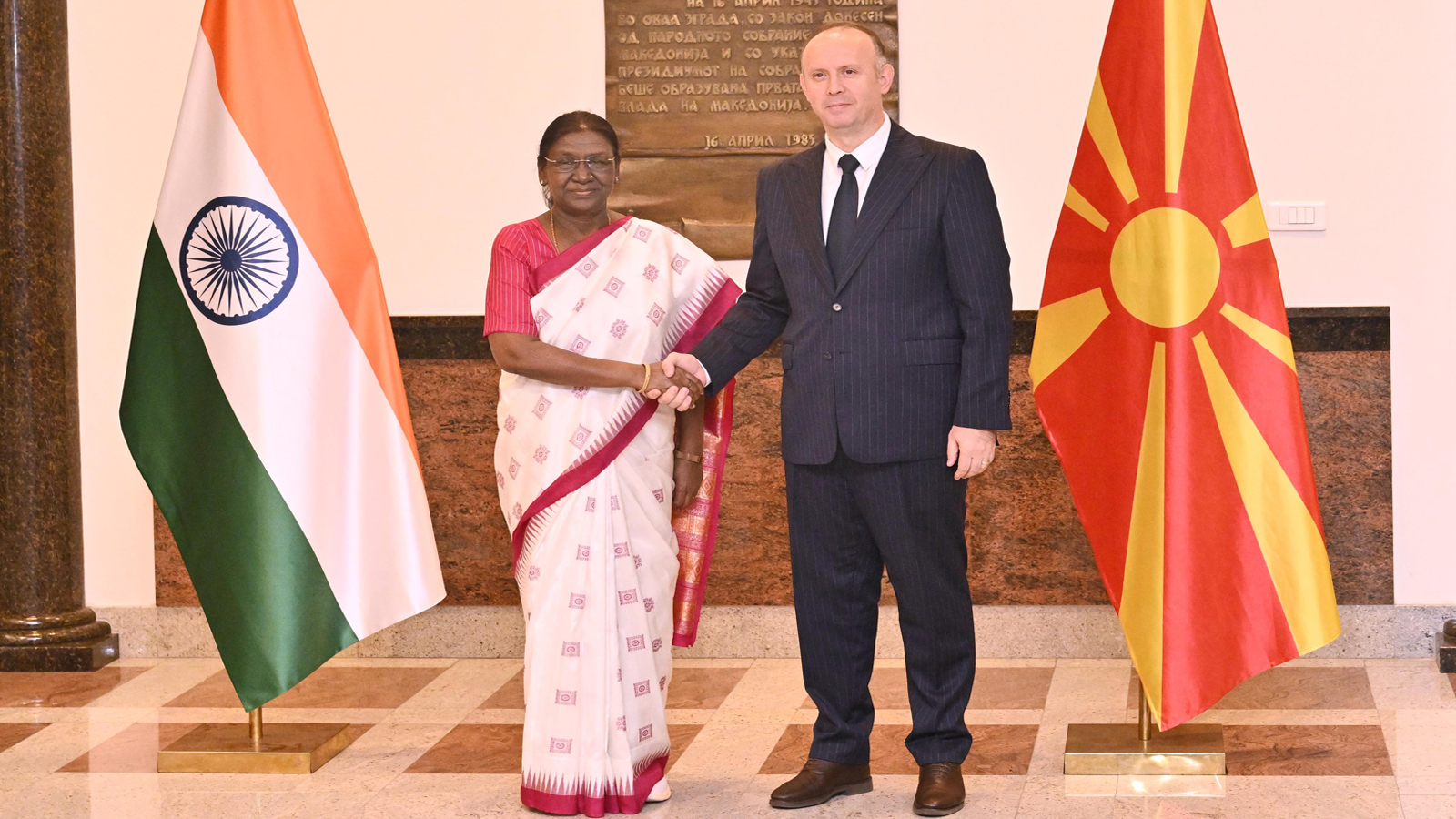
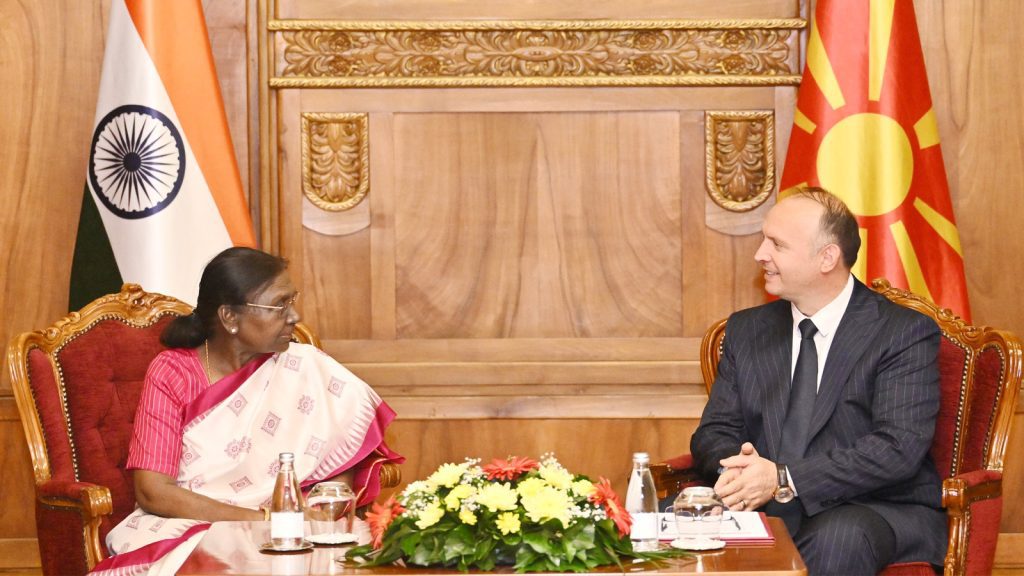
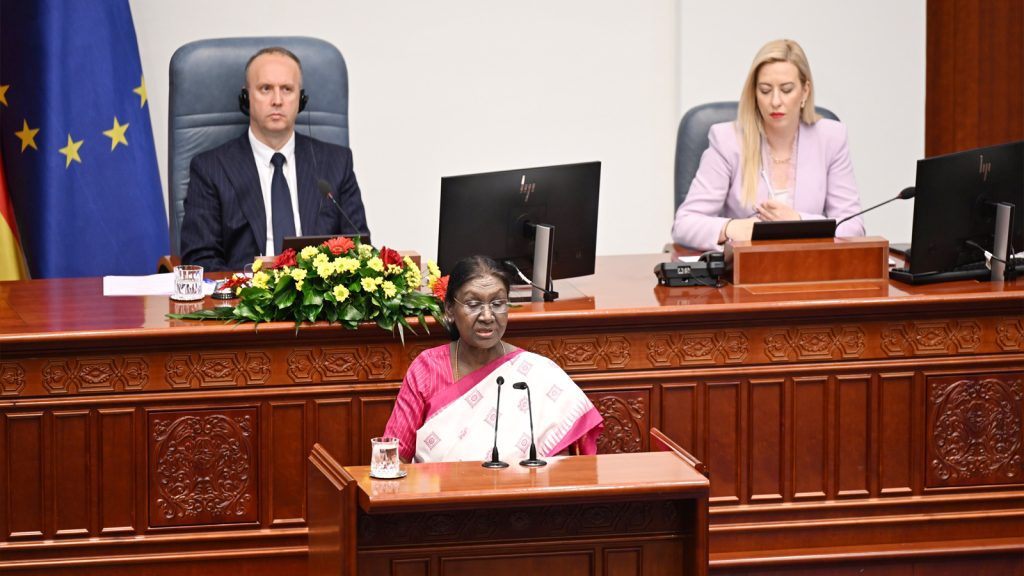
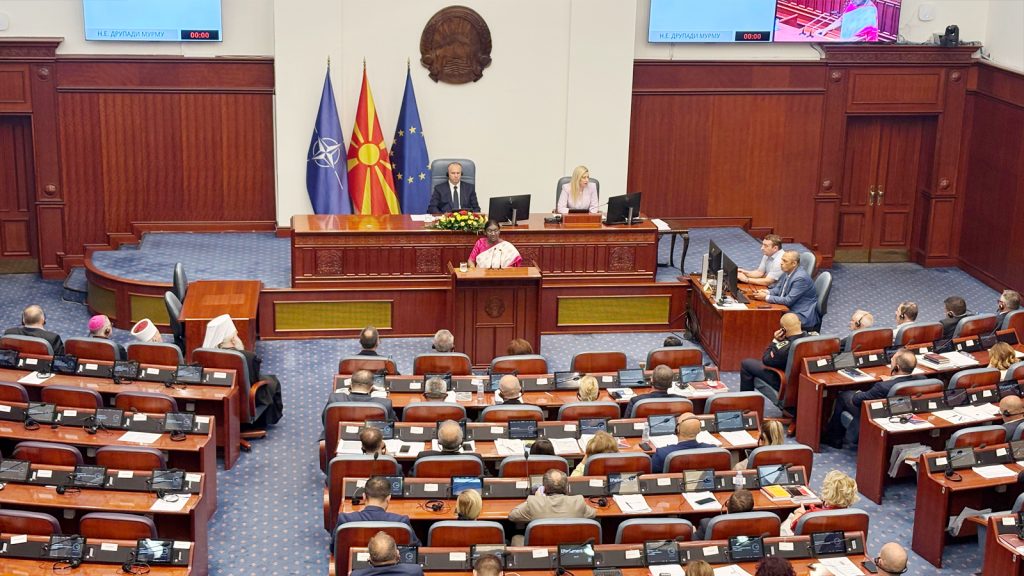
Addressing the Assembly of North Macedonia in Skopje in the presence of President Gordana Siljanovska-Davkova, President Murmu said India is committed to scaling up its engagement with North Macedonia bilaterally as well as across the wider Southeast European region through greater trade, investment and institutional cooperation.
The President said India does not view North Macedonia as a distant country but as “an important pillar in the architecture of a stable, multipolar, and prosperous global future.” She noted that the relationship between the two countries dates back more than two millennia, when trade routes and cultural exchanges connected their early civilisations.
Highlighting the shared democratic values of the two nations, President Murmu stressed the importance of parliamentary diplomacy in strengthening bilateral ties. She said interactions between Members of Parliament from both countries help build institutional trust that extends beyond changing political leadership.
Calling for greater engagement between lawmakers, the President urged young legislators from India and North Macedonia to visit each other’s countries, exchange experiences and share best practices in parliamentary functioning and public policy.
President Murmu also highlighted India’s democratic journey, describing Parliament as the institution that reflects the aspirations of more than 1.4 billion people while giving voice to one of the world’s most diverse societies. She said India’s general elections, involving nearly one billion voters, represent the largest democratic exercise in human history and demonstrate the strength of the country’s democratic institutions.
The President underscored India’s efforts to strengthen women’s participation in governance, noting that one-third of seats in the country’s Panchayati Raj institutions are reserved for women, enabling millions to participate in public life. She also referred to the recently enacted legislation providing one-third reservation for women in the Lok Sabha and state legislative assemblies, describing it as a significant step towards more inclusive democratic institutions.
Turning to regional and global developments, President Murmu said the geopolitical and economic centres of gravity are shifting, creating new opportunities for cooperation. She described Southeast Europe as an emerging hub of growth and innovation and said North Macedonia occupies a strategic position as a gateway connecting the Mediterranean with Central Europe and linking East and West.
She affirmed that India intends to deepen engagement with the country and the wider region by expanding trade, investment and other areas of cooperation.
Emphasising the importance of international collaboration, the President said India’s civilisational philosophy of “Vasudhaiva Kutumbakam” – the world is one family – remains relevant in an era marked by geopolitical conflicts and economic divisions. She said the principle calls on nations to build bridges rather than barriers and urged both countries to translate their historical and cultural ties into stronger economic partnerships.
During her address, President Murmu also highlighted the enduring cultural links between the two nations, including the universal appeal of Yoga, cinema and academic exchanges. She noted that she would pay tribute to Mother Teresa, who was born in Skopje and later made India her home, and announced that India would present a bust of Mahatma Gandhi to the people of North Macedonia as a symbol of the shared values of peace and non-violence.
Minister of State for Consumer Affairs, Food and Public Distribution Nimuben Jayantibhai Bambhaniya and Members of Parliament Dinesh Sharma and Vijay Baghel were also present during the address.


