







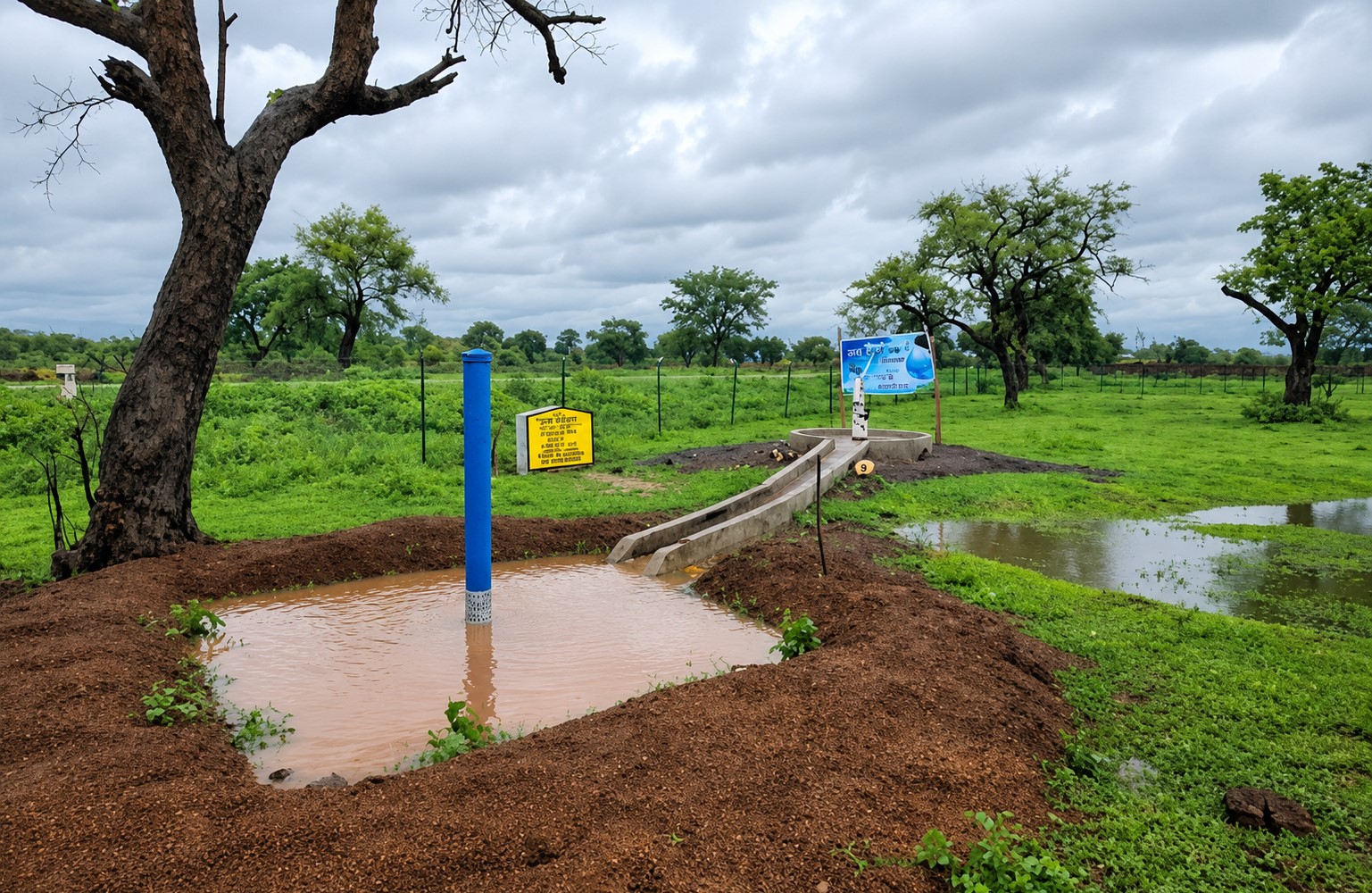
As the monsoon sets in, Rajnandgaon district in Chhattisgarh has emerged as a model for water conservation through its science-driven and community-led initiative, Mission Jal Raksha, aimed at strengthening groundwater reserves and ensuring long-term water security.
The initiative, undertaken as part of the nationwide #CatchTheRain campaign, focuses on capturing, conserving and recharging rainwater by combining scientific planning with active community participation.
Ahead of the monsoon, Rajnandgaon prepared a comprehensive framework to prevent rainwater runoff and ensure that maximum water is channelled back into the ground. Under Mission Jal Raksha, the district has used technologies such as Geographic Information System (GIS) mapping, remote sensing, aquifer mapping, Digital Elevation Models (DEM) and ridge-to-valley planning to identify suitable locations for groundwater recharge interventions.
The programme has also introduced innovative field-level measures, including the conversion of defunct borewells into recharge shafts and the construction of mini percolation tanks integrated with deep injection wells. These interventions help rainwater reach deeper aquifers, particularly in hard-rock regions.
A key feature of Mission Jal Raksha is its emphasis on Jan Bhagidari, with farmers, women, youth, Gram Panchayats and local communities actively participating in water budgeting, awareness drives and behavioural change campaigns.
The district has also promoted crop diversification, with nearly 70 per cent of summer paddy cultivation shifting towards less water-intensive crops. This has helped reduce groundwater stress while improving agricultural sustainability.
The impact of the initiative is reflected in significant achievements. More than 60,000 water conservation and recharge structures have been created across 662 villages, while over 500 defunct borewells have been converted into recharge shafts. The district has also established more than 600 injection wells linked with over 1,700 mini percolation tanks and geo-tagged more than 2,500 water bodies.
These efforts have generated over 51 lakh person-days of employment and contributed to an average groundwater level rise of around 2.04 metres, improving irrigation and drinking water availability across the district.
As the #CatchTheRain campaign continues to promote water conservation across the country, Rajnandgaon’s Mission Jal Raksha highlights how advance planning, scientific interventions and community participation can transform seasonal rainfall into a sustainable resource.
The initiative demonstrates that rainwater harvesting is not just a monsoon activity but a continuous effort towards groundwater sustainability, climate resilience and a water-secure future.


