







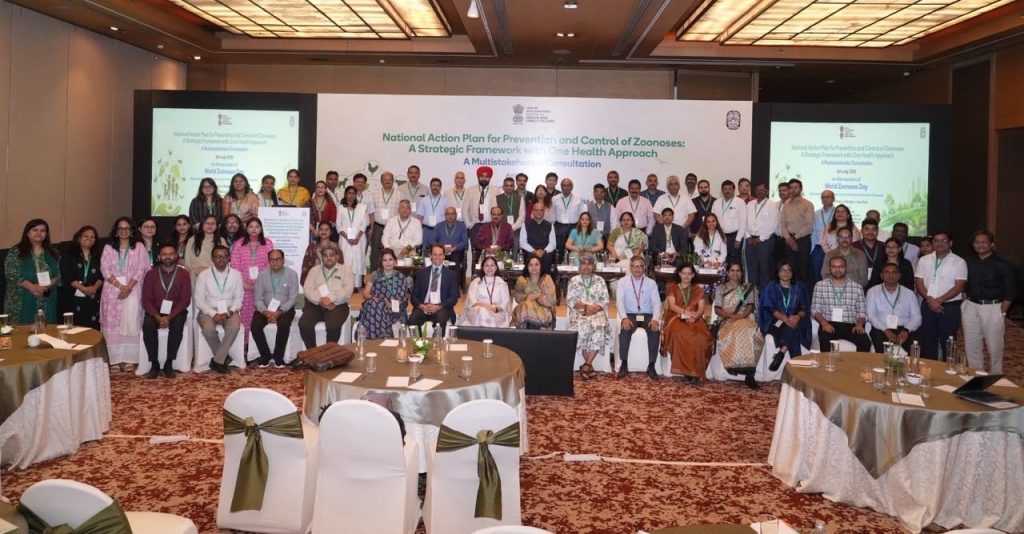
The Union Ministry of Health and Family Welfare on Monday organised a National Multistakeholder Consultation on the National Action Plan for Prevention and Control of Zoonoses: A Strategic Framework with One Health Approach, bringing together experts from the human health, animal health, wildlife, environmental, academic and development sectors to strengthen India’s preparedness against zoonotic diseases.
According to the ministry, the consultation focused on enhancing coordination across sectors and developing a comprehensive strategy for the prevention, surveillance and control of zoonotic diseases.
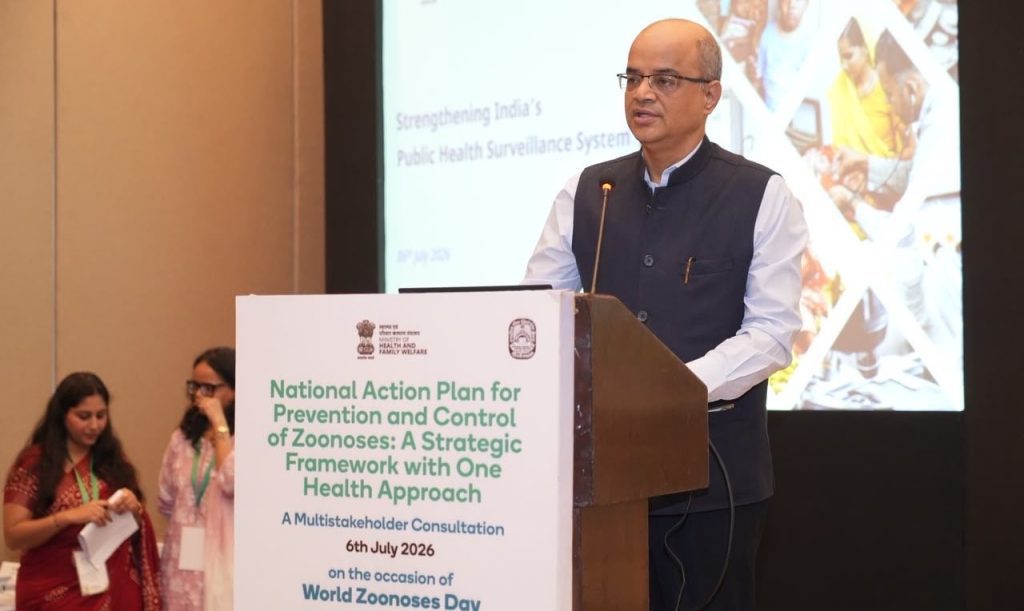
Addressing the gathering, Additional Secretary in the Ministry of Health and Family Welfare Rakesh Gupta said zoonotic diseases continue to pose significant public health, animal health and economic challenges globally and in India. He highlighted the government’s commitment to strengthening multisectoral coordination, integrated surveillance through the Integrated Health Information Platform (IHIP) 2.0, laboratory networks, workforce capacity, digital innovations and evidence-based decision-making.
Gupta said the proposed National Action Plan would provide a comprehensive framework to strengthen governance, surveillance, laboratory systems, preparedness and response, risk communication, research and innovation, monitoring and evaluation, and sustainable financing. He added that it would also support states and Union Territories in preparing context-specific action plans aligned with national priorities.
Additional Director General of Health Services Sujata Chaudhary stressed the need for sustained coordination among ministries and stakeholders to operationalise the One Health approach and improve the country’s preparedness against zoonotic diseases.
National Centre for Disease Control (NCDC) Director Ranjan Das underscored the growing public health significance of zoonotic diseases and reiterated the NCDC’s commitment to strengthening integrated disease surveillance.
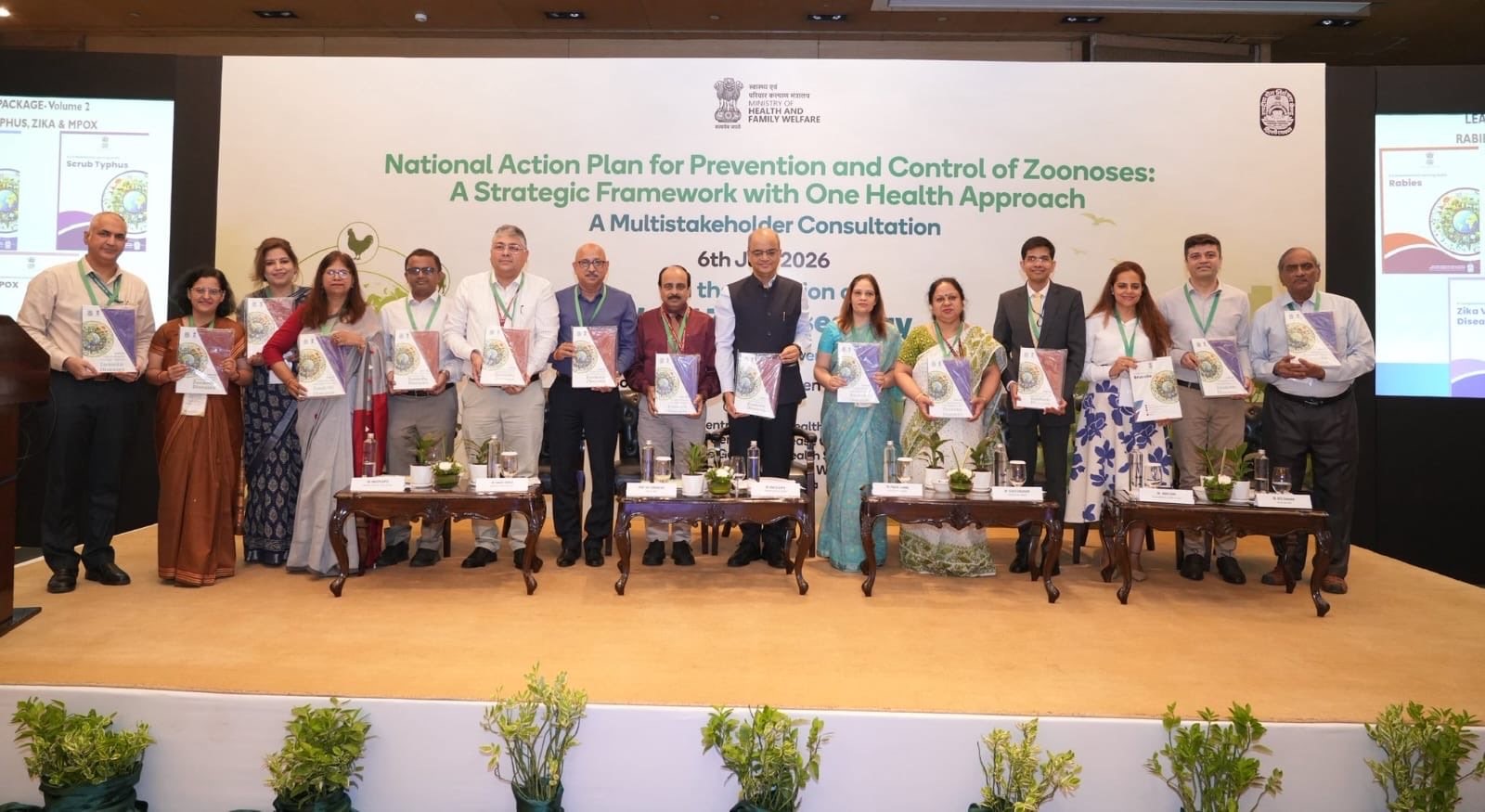
During the inaugural session, the ministry launched two technical resources under the National One Health Programme for Prevention and Control of Zoonoses—a Learning Resource Package on 10 Priority Zoonotic Diseases and a comprehensive suite of e-learning modules.
The learning package covers 10 priority zoonotic diseases: Anthrax, Brucellosis, Kyasanur Forest Disease, Crimean-Congo Haemorrhagic Fever, Nipah, Mpox, Rabies, Leptospirosis, Scrub Typhus and Zika. According to the ministry, the resources have been developed to strengthen the knowledge and skills of healthcare professionals, veterinarians, public health officials and other frontline personnel involved in disease surveillance, prevention and control.
The consultation included thematic technical sessions to review draft chapters of the National Action Plan, with discussions focusing on governance, surveillance and early warning systems, laboratory strengthening, prevention and preparedness, outbreak response, research and innovation, risk communication, workforce development, financing, monitoring and evaluation, and implementation strategies.
Participants also emphasised expanding sentinel surveillance sites, strengthening laboratory networks, promoting timely data sharing through IHIP 2.0, and building the capacity of frontline professionals. They highlighted the potential of digital technologies and artificial intelligence to improve disease intelligence, early warning systems and outbreak prediction.
The ministry said recommendations from the consultation would be incorporated into the final National Action Plan, which will serve as the national strategic framework for coordinated multisectoral action and guide states and Union Territories in preparing context-specific action plans based on the One Health approach.
According to the ministry, the initiative marks a significant step in advancing India’s One Health agenda by institutionalising collaboration across the human health, animal health, wildlife and environmental sectors. The proposed framework is expected to strengthen national health security, improve preparedness for future public health emergencies and contribute to global efforts to prevent and control emerging infectious diseases.
(With ANI inputs)


