







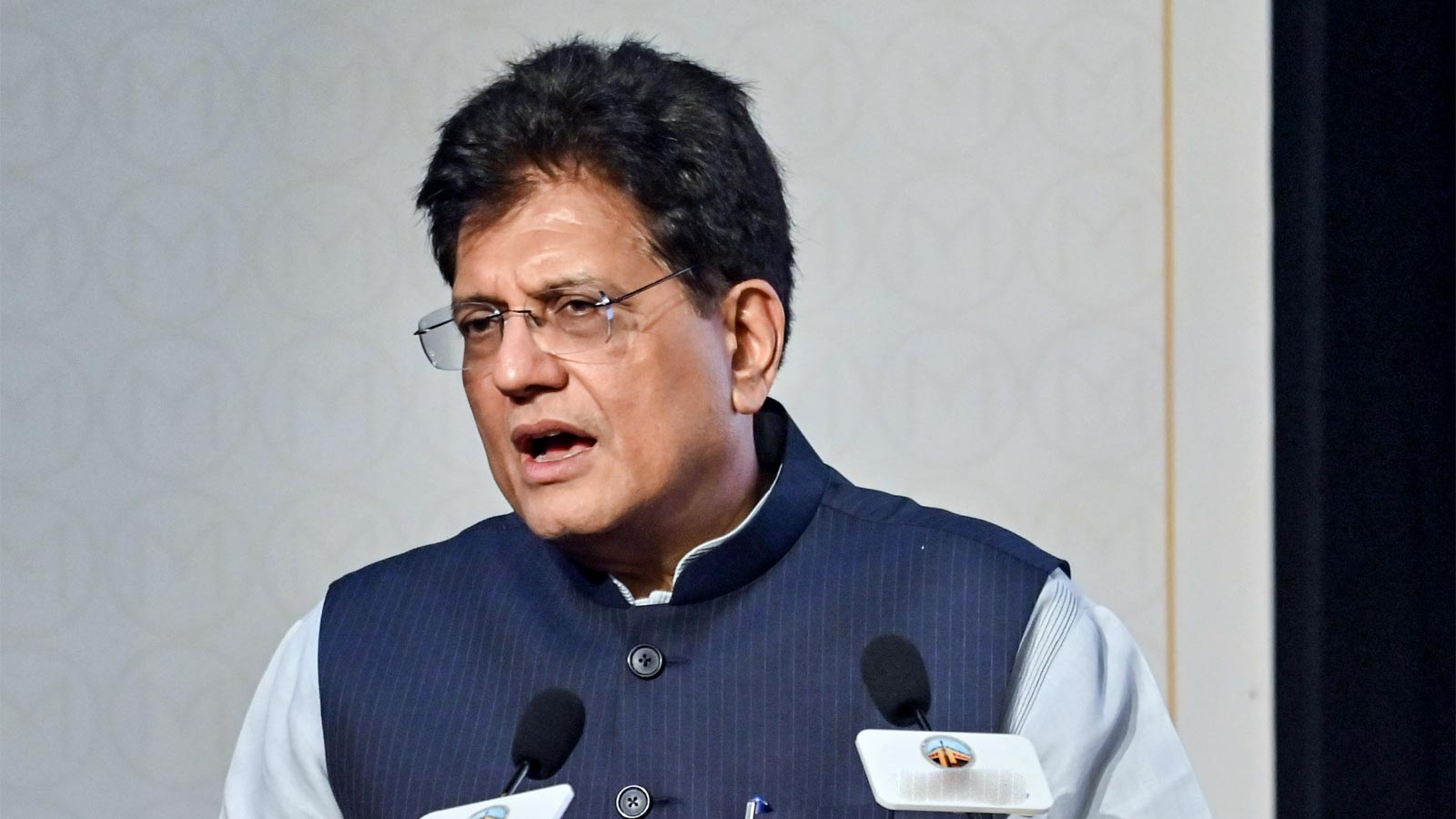
The Government is working to strengthen supply-chain resilience and diversify sourcing across critical sectors, including energy, fertilisers, electronics, semiconductors, pharmaceuticals, medical devices and critical minerals, Union Commerce and Industry Minister Piyush Goyal informed the Lok Sabha on Tuesday.
In a written reply to the House, Goyal said the Government has identified several strategic manufacturing sectors that require stronger supply-chain resilience and greater diversification amid rising demand for critical industrial inputs.
On energy security, the Minister said the Government is focusing on domestic production, diversification of sources, expansion of refining infrastructure, ethanol blending and biofuels, strategic petroleum reserves and renewable energy.
In the fertiliser sector, domestic production met nearly 73 per cent of the country’s total requirement in 2025, he said.
Highlighting the importance of critical minerals, Goyal said minerals such as lithium, cobalt, nickel, graphite, rare-earth elements and copper are essential for clean-energy technologies, electric vehicles, electronics, semiconductors and advanced manufacturing.
He said the National Critical Mineral Mission seeks to secure both domestic and overseas supplies while strengthening the entire value chain, from exploration and mining to processing, recycling and advanced manufacturing.
Critical minerals are also being prioritised in India’s trade and investment engagements, including free trade agreement negotiations, he added.
On the Production Linked Incentive (PLI) scheme, Goyal said that as of March 31, 2026, a total of 892 applications had been approved under the scheme.
These investments have resulted in actual investments of more than ₹2.40 lakh crore, production and sales exceeding ₹22.66 lakh crore and employment generation of over 14.15 lakh, including 8.4 lakh direct jobs.
The Government has so far disbursed ₹35,354 crore in cumulative incentives under the PLI scheme.
Goyal said the scheme has also resulted in significant gains across key manufacturing sectors. Mobile phone production has increased nearly 2.4 times, while imports have declined by around 77 per cent. Domestic manufacturers now produce about 99.2 per cent of mobile phones used in the country.
In the pharmaceutical sector, cumulative sales under the PLI scheme have crossed ₹3.64 lakh crore, while domestic manufacturing of 1,931 products has been enabled, including 191 bulk drugs produced in the country for the first time.
A bulk-drug capacity of around 55,000 metric tonnes has also been established across 26 critical active pharmaceutical ingredients, the Minister said.
In the medical devices segment, 22 applicants have commenced operations and 55 unique medical devices have been commissioned.
The telecom PLI scheme, meanwhile, has supported the development of indigenous 4G technology and strengthened domestic manufacturing capabilities for 5G equipment.
The Government’s efforts are aimed at strengthening domestic manufacturing capacity, reducing import dependence and building more resilient supply chains across strategically important sectors.
-ani


