







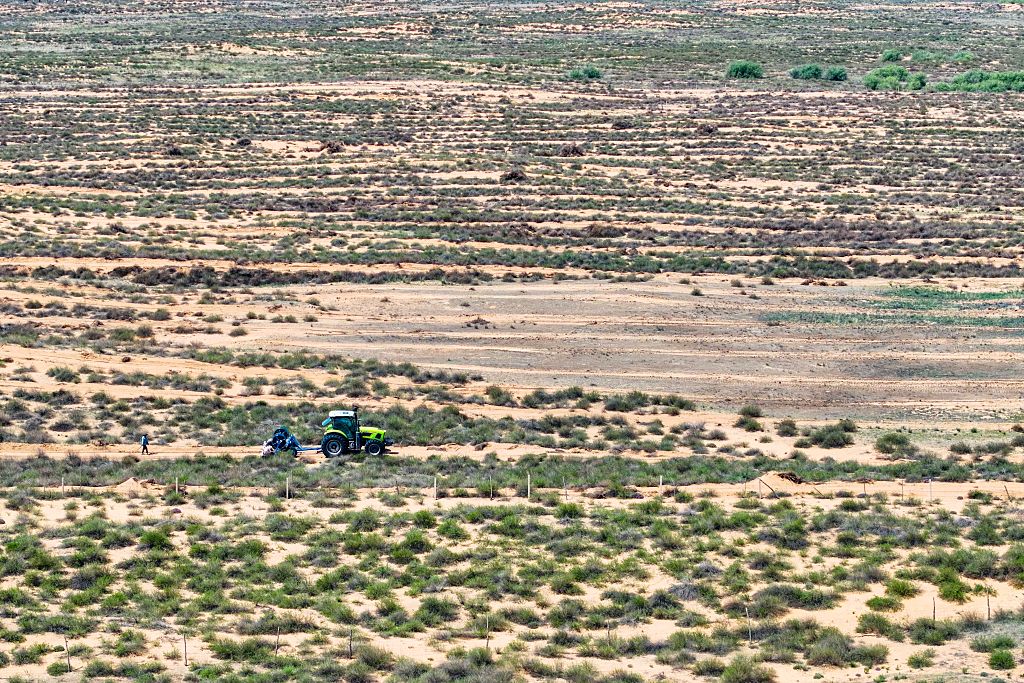
Countries have restored an area of land roughly twice the size of France under United Nations-backed efforts to reverse land degradation, but the progress remains far below their own restoration commitments, according to a study by the International Union for Conservation of Nature (IUCN), the world’s largest conservation network.
The IUCN said countries had rehabilitated 124.3 million hectares, equivalent to just 10.4 per cent of their combined national restoration pledges.
Land degradation can be caused by events such as wildfires and droughts, which scientists say have become more likely due to human-induced climate change.
The report was released ahead of a meeting in Ulaanbaatar, Mongolia, scheduled to continue until August 28, where countries are discussing land restoration as part of wider United Nations efforts to combat drought and desertification.
According to UN estimates, up to 40 per cent of the world’s land is degraded, affecting food production, water availability and livelihoods.
The situation is particularly severe in Mongolia, where nearly 77 per cent of land is degraded. Overgrazing has compounded the problem, alongside increasing desertification linked to climate change.
The collective target of restoring 1.2 billion hectares was established under four different UN frameworks, with varying timelines, although most of the targets converge around 2030, the IUCN said.
IUCN Director General Grethel Aguilar said greater investment in land restoration could help address biodiversity loss while also generating economic benefits.
“Restoration isn’t just an environmental fix, it’s one of the smartest investments we can make,” Aguilar said.
-Reuters


