India wrapped up its campaign at the 2026 Commonwealth Games in Glasgow with 39 medals — 13 gold, 17 silver and nine bronze — to finish fourth in the overall standings. On paper, it was India’s lowest medal haul at the Commonwealth Games in 24 years, down from the 61 medals won in Birmingham in 2022.
But the headline number tells only part of the story.
The Glasgow edition was unlike any other in recent Commonwealth Games history. Originally awarded to the Australian state of Victoria, the Games had to be relocated after the state withdrew as host in 2023 due to escalating costs. Glasgow stepped in at short notice to host a scaled-down edition, with only 10 sports on the programme compared with 19 at Birmingham 2022.
The reduced schedule had a significant impact on India’s medal prospects. Several of the country’s most successful disciplines — including shooting, wrestling, badminton, table tennis and hockey — were left out. Together, these sports have accounted for hundreds of India’s Commonwealth Games medals over the years and formed the backbone of India’s campaigns in previous editions.
With fewer medal events on offer, India could no longer depend on its traditional powerhouses. Instead, athletes had to deliver in disciplines where the country has historically enjoyed fewer medal-winning opportunities.
Despite the smaller programme, India retained its fourth-place finish behind Australia (171 medals), England (110) and Canada (63). The result reflected the country’s ability to remain competitive despite a much narrower field of events.
Boxing takes centre stage
If one sport defined India’s campaign, it was boxing.
Indian boxers produced the country’s best-ever Commonwealth Games performance, winning 10 medals, including seven golds — the most by any nation in boxing at a single edition of the Games. The historic haul came through Preeti Pawar, Jaismine Lamboria, Sakshi Chaudhary, Priya Ghanghas, Arundhati Choudhary, Sachin Siwach and Ankush Panghal, highlighting India’s growing strength across men’s and women’s boxing.
Sakshi Chaudhary emerged as one of India’s standout performers, while Olympic medallist Lovlina Borgohain added another highlight to the campaign by winning silver in the women’s 75kg category.
Judo creates history
Judo delivered one of the biggest breakthroughs of the Games.
Asmita Dey became India’s first Commonwealth Games judo champion after winning gold in the women’s 48kg category, while Harsh Singh secured the country’s first men’s judo gold medal in the 60kg division. Their victories brought attention to a sport that has traditionally remained on the fringes of India’s Commonwealth Games success.
Athletics: Bigger medal haul with smaller contingent
India’s athletics contingent produced a better medal return at the Commonwealth Games 2026 despite sending fewer athletes than the previous edition. The 32-member squad in Glasgow won 10 medals — five silver and five bronze — surpassing the eight-medal haul achieved by the 37-member team at Birmingham 2022.
The campaign was led by Neeraj Chopra, who won silver in the men’s javelin throw. Gulveer Singh became the first Indian track and field athlete to win two individual medals at a single Commonwealth Games, claiming silver in the men’s 10,000m and bronze in the 5,000m. Tejaswin Shankar scripted history as India’s first Commonwealth Games decathlon medallist.
Para athletes enjoy record run, Sharmila Dhankar scripts history
India’s para athletes produced their best-ever Commonwealth Games campaign in Glasgow, returning with seven medals — three gold, two silver and two bronze. The haul reflected the growing depth of the country’s para sports programme, with Indian athletes delivering podium finishes across multiple track and field events.
Leading the charge was Sharmila Dhankar, who created history by becoming the first Indian woman para athlete to win a Commonwealth Games gold medal. Her victory in the women’s shot put F57 event added another historic chapter to India’s campaign and highlighted the progress made by the country’s para athletes on the global stage.
Double delight in javelin
India scripted history in the men’s javelin throw as Neeraj Chopra won silver and debutant Yashvir Singh secured bronze, giving the country its first-ever double podium finish in the event at the Commonwealth Games. While Chopra missed out on adding another gold medal to his collection, sharing the podium with a young talent like Yashvir was a reminder of how far Indian javelin has come in recent years.
Chopra produced a season-best throw of 85.83 metres to finish second, while Yashvir registered a personal-best effort of 85.41 metres on his final attempt to secure bronze and announce his arrival on the big stage.
Mirabai Chanu adds another golden chapter
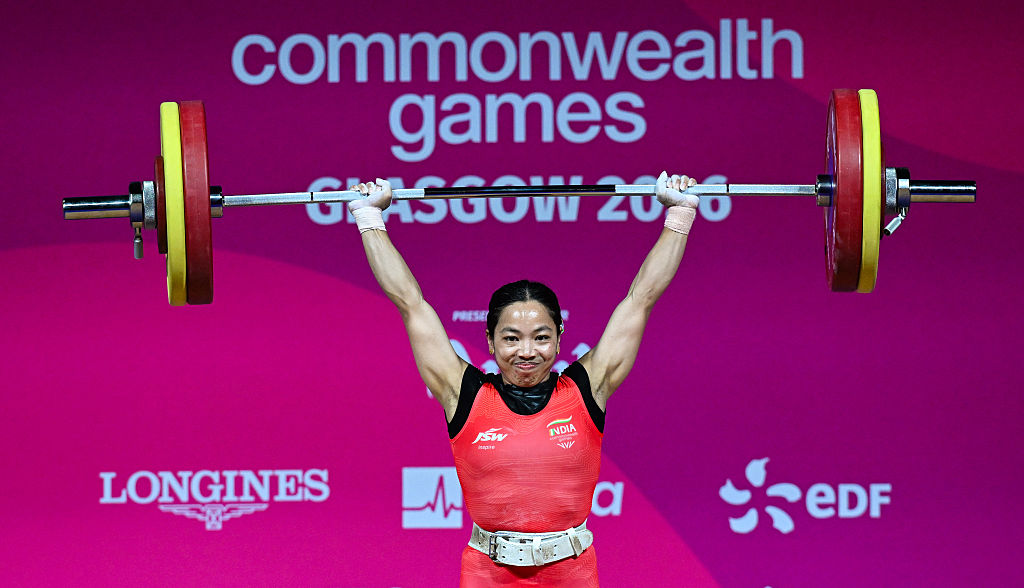
Weightlifting continued to be one of India’s reliable medal sources at the Commonwealth Games, with Mirabai Chanu adding another golden chapter to her remarkable career. She won her third successive Commonwealth Games gold medal after triumphs in 2018 and 2022, becoming only the second Indian to achieve the feat. Along with the silver she won in 2014, the latest victory further strengthened her status among India’s greatest weightlifters.
Judged purely by numbers, Glasgow 2026 was India’s least successful Commonwealth Games in over two decades. Judged in context, however, the campaign tells a different story.
Without some of its traditional medal-winning disciplines, India had to look beyond its usual strengths at Commonwealth Games 2026. The country found success across boxing, judo, athletics, para sports and weightlifting, showing that its sporting achievements are now coming from a wider range of disciplines.
The medal tally may have been lower than previous editions, but the campaign offered a bigger picture. It reflected a growing pool of athletes and a more balanced sporting setup, with India finding champions beyond its traditional strongholds and showcasing the growing depth of its sporting landscape.