







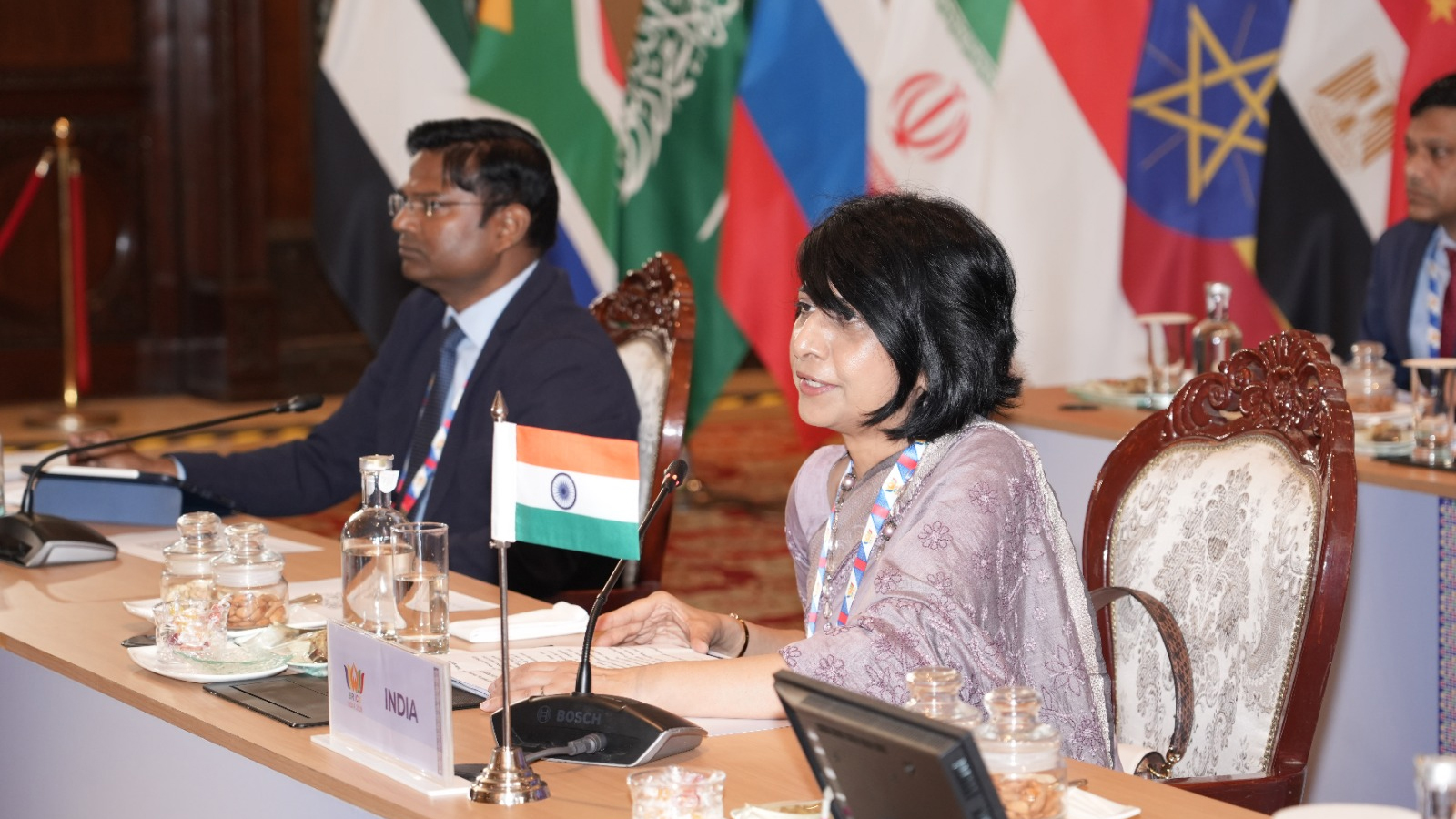
India successfully hosted the Second Meeting of the BRICS Anti-Corruption Working Group and the Second Meeting of the BRICS Expert Network on Asset Recovery in Hyderabad on August 4-5 under its BRICS Presidency 2026, with member countries agreeing to strengthen cooperation on combating corruption, tracing fugitive offenders, asset recovery and tackling emerging financial risks.
Organised by the Department of Personnel and Training (DoPT), the meetings were held under the theme of India’s BRICS Presidency, “Building for Resilience, Innovation, Cooperation and Sustainability.” Senior policymakers, anti-corruption experts, financial intelligence officials and law enforcement representatives from all BRICS member countries participated in discussions on enhancing international cooperation and promoting transparent governance.
Inaugurating the meetings, DoPT Secretary Rachna Shah reiterated India’s policy of zero tolerance towards corruption, stressing that integrity remains fundamental to good governance, sustainable development and public trust. She underlined the importance of strong institutions, technology-driven governance, transparency, accountability and sustained international cooperation in combating corruption.
Shah noted that the BRICS Anti-Corruption Working Group is evolving beyond a forum for dialogue into a platform for practical action. She highlighted the need for timely information sharing, early engagement among competent authorities and trusted practitioner-level communication channels to complement formal mutual legal assistance and extradition mechanisms.
A key outcome of the meeting was significant progress on India’s proposal to establish a BRICS Network of Law-Enforcement Practitioners aimed at enhancing cooperation in tracing fugitive offenders wanted in corruption cases and supporting extradition efforts. Member countries held detailed discussions on the objectives, scope and operational framework of the proposed network and reached an in-principle agreement to continue deliberations on creating the practitioner-level platform. The proposed mechanism is expected to facilitate informal cooperation while complementing existing formal extradition processes.
The participants also welcomed the creation of a BRICS Repository on Informal Cooperation for tracing fugitive offenders sought in corruption cases and supporting extradition. The repository will serve as a practical resource by compiling information on national practices and existing channels for informal cooperation among member countries.
During the Second Meeting of the BRICS Expert Network on Asset Recovery, members reached consensus on standardised formats to facilitate timely information exchange among practitioners during the early stages of investigations, while continuing to complement formal mutual legal assistance procedures.
The Expert Network also endorsed a Directory of Focal Points and Experts to enable direct communication among competent authorities across BRICS nations. Members supported the inclusion of additional subject-matter experts and periodic updates of the directory by future BRICS Presidencies to keep it operationally relevant.
Delegates exchanged national experiences, institutional approaches and case studies related to international asset recovery, highlighting the importance of continued knowledge sharing and closer cooperation among investigators and enforcement agencies.
A dedicated side event on “Ethical Governance through Innovation and Tech-Driven Systems” showcased technology-enabled governance initiatives adopted by member countries. Discussions highlighted how end-to-end digital procurement platforms can improve transparency, traceability, fair competition and efficiency while reducing corruption risks. Participants also explored the role of artificial intelligence, machine learning and big data analytics in shifting oversight from post-facto detection to preventive vigilance through real-time risk identification, while emphasising the need for appropriate institutional safeguards and human oversight.
Another thematic session focused on “Emerging Risks from Financial Technology and Virtual Digital Assets.” Delegates acknowledged that while fintech and virtual digital assets have advanced financial inclusion and innovation, they also present opportunities for concealing and laundering illicit proceeds due to their speed, cross-border nature and relative anonymity.
The participants stressed the importance of developing clear, risk-based regulatory frameworks that strengthen anti-money laundering and counter-terrorist financing measures while preserving the legitimate benefits of emerging technologies. They also called for greater cooperation among Financial Intelligence Units (FIUs), enhanced cross-border coordination and faster information exchange to keep pace with evolving digital financial crimes.
The meetings concluded with BRICS members reaffirming their commitment to strengthening practical cooperation in combating cross-border corruption, recovering illicit assets, tracing fugitive offenders, addressing emerging financial risks and promoting transparent, accountable and technology-driven governance.
According to DoPT, the outcomes of the meetings have laid a strong foundation for future BRICS Presidencies to build trusted and operational platforms that enhance cooperation among anti-corruption and law enforcement authorities across member countries.


