







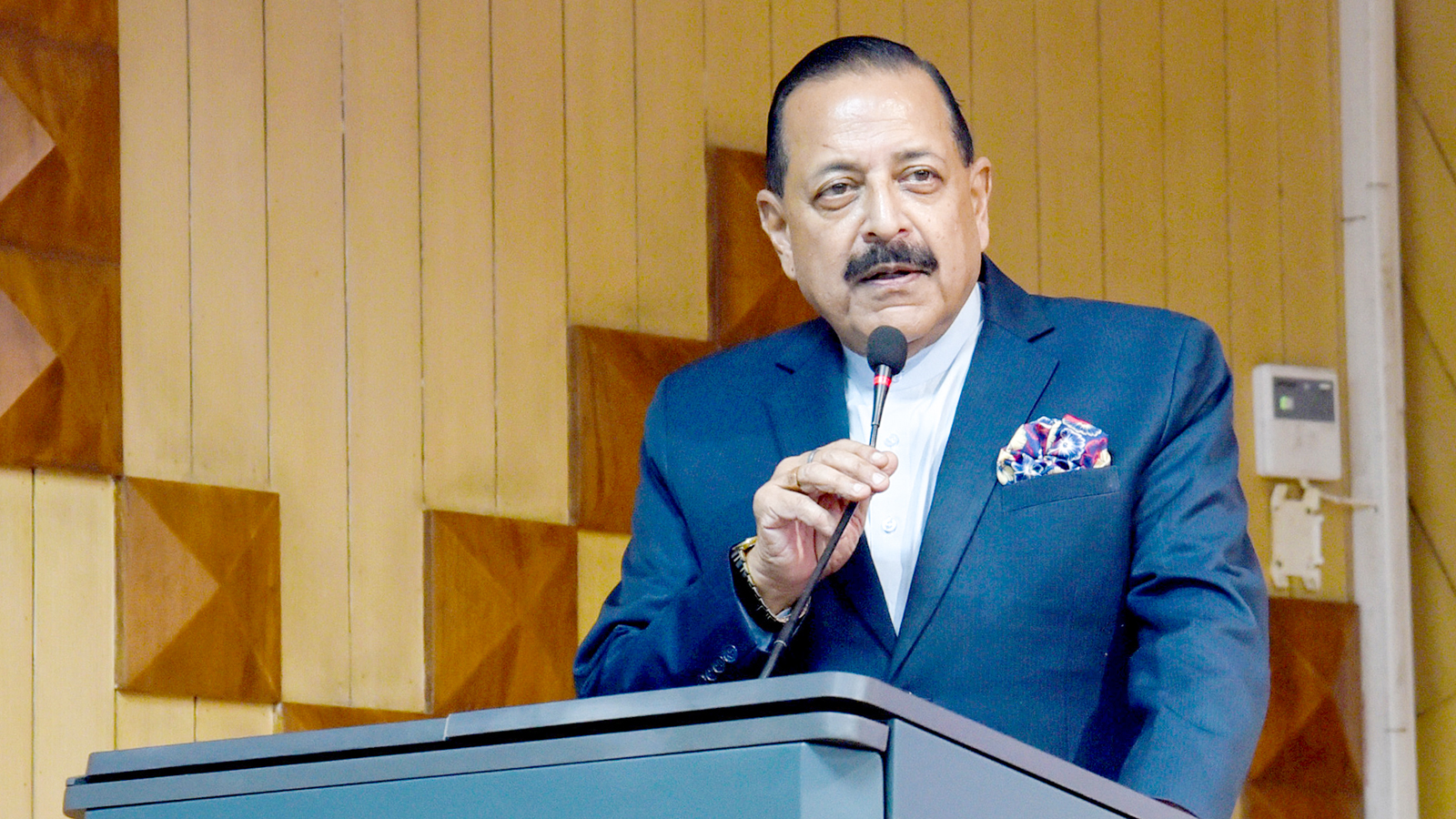
India is poised to become an essential player in the next industrial revolution, which is expected to be driven primarily by biotechnology and artificial intelligence, Union Minister Jitendra Singh said on Sunday, asserting that the country has moved from being a technology follower to emerging as a global leader in several frontier areas.
Addressing a media conclave attended by technology developers, industry leaders and other stakeholders, Singh said India was late in participating in the last industrial revolution, which was largely driven by information technology, but is now well positioned to shape the next phase of technological transformation.
“India will be an essential player in the next industrial revolution which will be biotechnology and AI driven,” Singh said, highlighting the country’s growing capabilities in emerging technologies.
The minister said India is among the few countries with a dedicated biotechnology policy, the BioE3 initiative, besides having launched the National Quantum Mission and IndiaAI Mission. He said rapid progress in space and other frontier sectors has further strengthened India’s position in the global technology landscape.
Singh said India’s space economy, which was once almost negligible, has grown to around USD 9 billion and is projected to reach USD 40-45 billion over the next eight to nine years. He attributed the transformation largely to policy reforms that opened the space sector to private participation in 2020.
The emergence of Indian space start-ups, including companies that have developed rockets and achieved unicorn status within a few years, demonstrates the country’s technological and entrepreneurial potential, he said.
The minister said India’s scientific and technological journey has undergone a major transformation, with the country now competing against global benchmarks in several fields. Citing the Chandrayaan mission’s detection of evidence of water molecules on the Moon, he said Indian scientists are increasingly contributing to global scientific knowledge.
Singh said India has never lacked scientific talent or human resources, but what was required was an enabling policy environment capable of converting these capabilities into tangible outcomes.
He said the global economy is gradually shifting towards emerging sectors such as biotechnology, artificial intelligence, the circular economy and recycling, alongside traditional manufacturing. Biotechnology, he said, is likely to have a growing impact on healthcare, agriculture and food production while creating new avenues for employment and economic growth.
Singh also pointed to the Government’s increasing efforts to bring private industry into sectors that were traditionally dominated by the public sector. Referring to the opening of the nuclear sector to private participation, he said the move would create new opportunities but industry would have to develop the capabilities required to operate in emerging areas.
He said India has limited time to prepare for the opportunities linked to the country’s 2047 vision and every sector would have to evolve to strengthen India’s position in the global economy. The private sector, he added, must be prepared to participate in new and emerging areas.
Technology is also helping democratise access to education and opportunities, particularly for young people in smaller towns and cities, Singh said. Recalling his interaction with a student from a financially constrained family who cleared the IIT-JEE examination using digital learning resources, he said technology had made educational opportunities accessible to sections of society that previously faced significant barriers.
The minister said India’s start-up ecosystem also reflected this broader transformation, with young entrepreneurs increasingly emerging from smaller cities rather than only from major metropolitan centres.
Singh further highlighted government efforts to simplify governance by removing outdated laws and procedures. He said nearly 2,000 obsolete laws had been repealed, while several reforms had expanded rights and benefits for citizens, including changes related to family pension rights for single daughters, nomination rights for women government employees and pension provisions for families of employees who die before completing 10 years of service.
He also referred to the removal of the requirement for gazetted officer attestation for a large number of documents, describing it as a measure that reflected greater trust in citizens and the youth.
For India to realise its 2047 ambitions, Singh said the country must move beyond being a follower and develop capabilities and innovations that can be adopted by other nations.
Calling for closer cooperation between the government and industry, he said earlier scepticism between the public and private sectors must give way to greater collaboration, mutual learning and the adoption of effective practices.
A “whole of government plus whole of nation” approach, Singh said, would be essential for India to achieve its broader developmental, technological and economic goals.
The minister also congratulated the winners of the Digital Appliance Awards during the event.


