







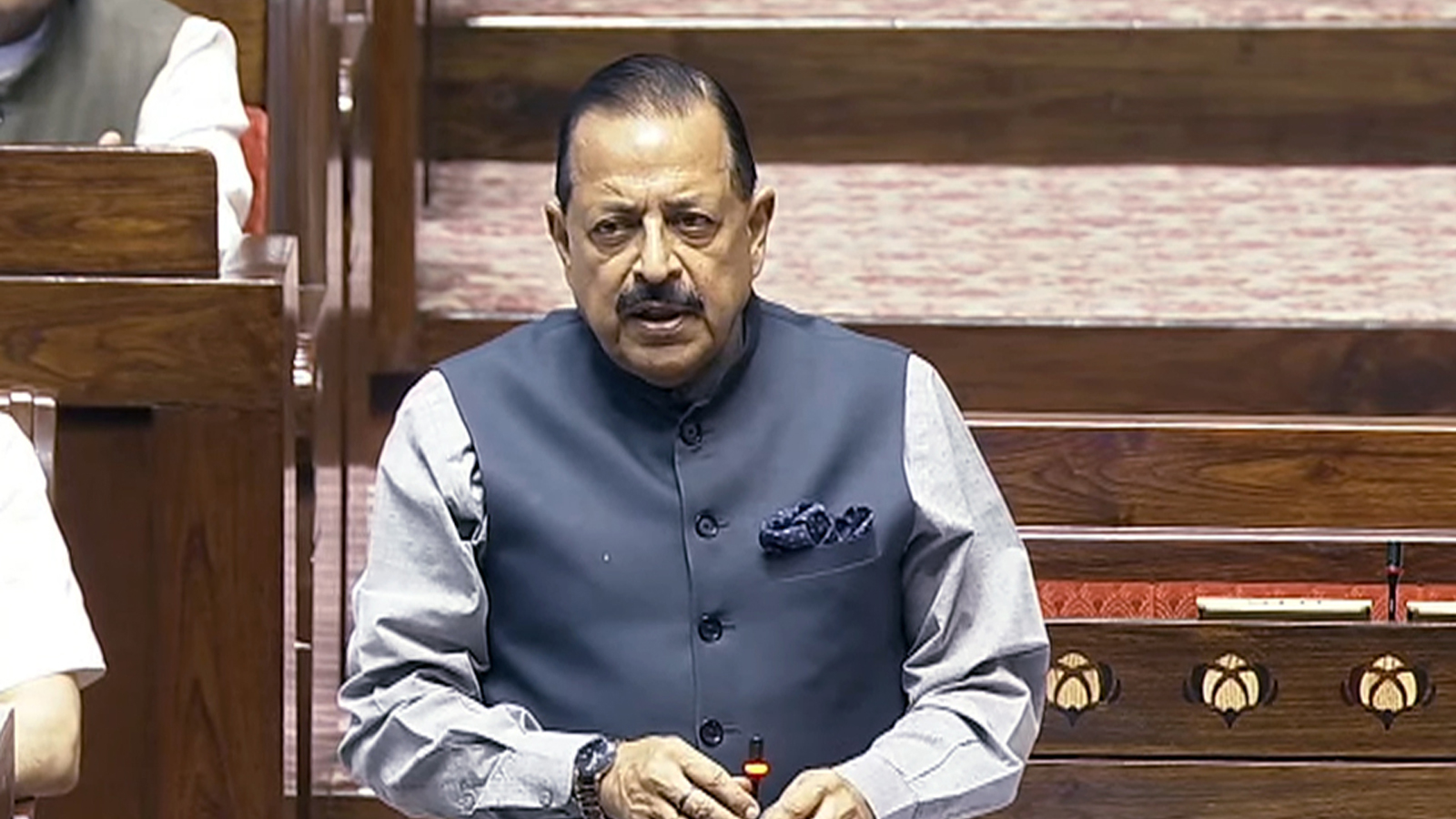
The Indian Space Research Organisation (ISRO) is taking measures to mitigate the growing risk of space debris arising from the proliferation of large Low Earth Orbit (LEO) satellite and satellite internet constellations, Minister of State for Personnel, Public Grievances & Pensions and Prime Minister’s Office Jitendra Singh said in the Rajya Sabha on Thursday.
Singh said the growing number of satellites in large constellations, which can comprise thousands of spacecraft, has increased the risk of collisions in heavily populated orbital regions. While several satellite systems have autonomous collision-avoidance capabilities, failed or non-manoeuvrable spacecraft can still pose significant risks.
He also highlighted the threat posed by small and difficult-to-track debris. Such objects may be impossible to avoid through collision-avoidance systems and may cause mission-ending damage if they strike operational satellites. Collisions or accidental fragmentation events could generate additional debris and further increase risks in already crowded orbital shells.
Debris Free Space Mission to support space sustainability
The Minister said ISRO’s Debris Free Space Mission will play an important role in protecting space assets and preventing further growth of the debris population.
The initiative includes measures such as Active Debris Removal (ADR) and other approaches aimed at reducing the generation and accumulation of debris. Activities that could serve as precursors to ADR have already begun through on-orbit demonstrations and are expected to develop further, he said.
Singh stressed that wider adoption of internationally recognised space debris mitigation measures and compliance with the Debris Free Space Mission framework would be crucial to safeguarding satellites and maintaining the long-term usability of orbital regions.
India has been part of IADC since 1996
India has also been actively involved in international efforts to address the space debris problem. Singh said the Inter-Agency Space Debris Coordination Committee (IADC), established in 1993, is a leading international forum dealing with space debris monitoring and mitigation, and ISRO has been a member since 1996.
India is also represented in international forums dealing with space debris and space sustainability, including the United Nations Committee on the Peaceful Uses of Outer Space (UN-COPUOS), its Scientific and Technical Subcommittee, and working groups on Long-Term Sustainability and Space Situational Awareness.
The Minister said IADC members regularly review and update space debris mitigation guidelines in response to changes in the orbital environment. India also participates in other international platforms, including the IAA Space Debris Working Group and the relevant International Organization for Standardization (ISO) working group.
Satellite disposal rules strengthened
Singh said the Indian Space Policy mandates the adoption of internationally recognised space debris mitigation guidelines, including measures for the disposal of satellites at the end of their operational lives.
The Norms, Guidelines and Procedures issued by IN-SPACe in 2024 also encourage Indian space-sector entities to implement adequate post-mission disposal measures or ensure that their satellites have limited orbital lifetimes through natural orbital decay.
He identified Space Situational Awareness (SSA) as a critical requirement for long-term space sustainability. Other important measures include ensuring satellite manoeuvrability and trackability, registration of space objects, sharing appropriate points of contact and maintaining a robust regulatory framework.
Focus on indigenous monitoring and global cooperation
Singh said international cooperation and data sharing would remain essential for comprehensive space situational awareness. At the same time, India would continue developing indigenous capabilities to monitor space objects and strengthen its ability to respond to emerging challenges.
He also called for greater awareness among space-sector stakeholders about the vulnerability of usable orbital regions and the need for responsible space operations.
The Minister said a combination of international cooperation, indigenous monitoring capabilities, improved compliance with debris mitigation guidelines, active debris removal and research and development would be essential to ensuring the long-term sustainability of Earth’s orbital environment.


