







India’s transition to electric mobility is gathering unprecedented momentum, transforming the country’s transportation landscape while strengthening economic growth, energy security and environmental sustainability. Backed by policy support, technological innovation and rising consumer adoption, electric vehicles (EVs) have emerged as a key pillar of India’s vision for a cleaner and more self-reliant future.
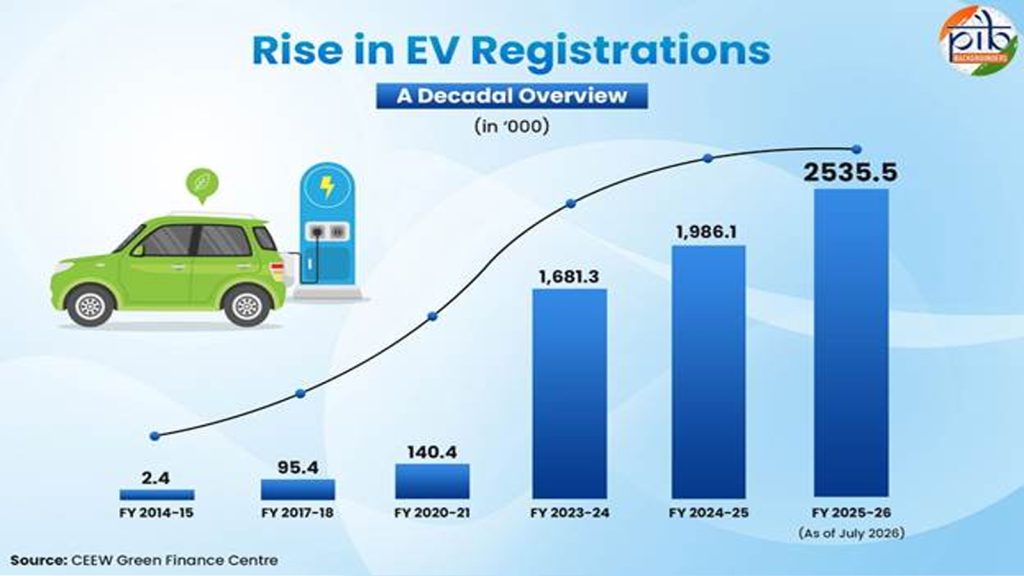
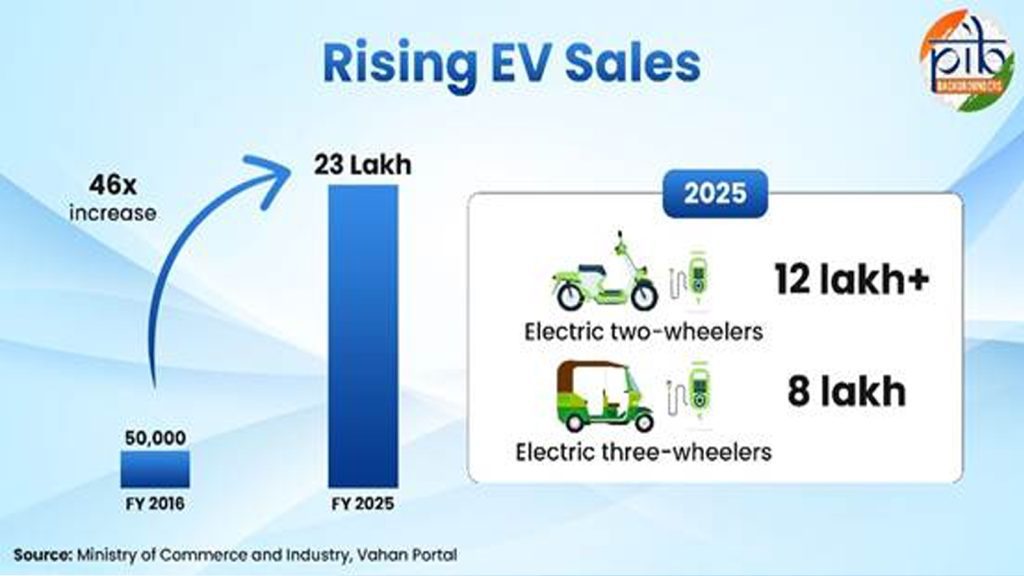
Over the past decade, the country has witnessed remarkable growth in EV adoption. From around 50,000 electric vehicles sold in 2016, annual sales have surged to 2.3 million units in 2025, representing nearly 46-fold growth. EV adoption has also increased significantly, rising from just 0.08 per cent in FY 2015-16 to 8.26 per cent in FY 2025-26. The growth has been particularly strong in electric two-wheelers and three-wheelers, reflecting their increasing acceptance among both individual and commercial users.
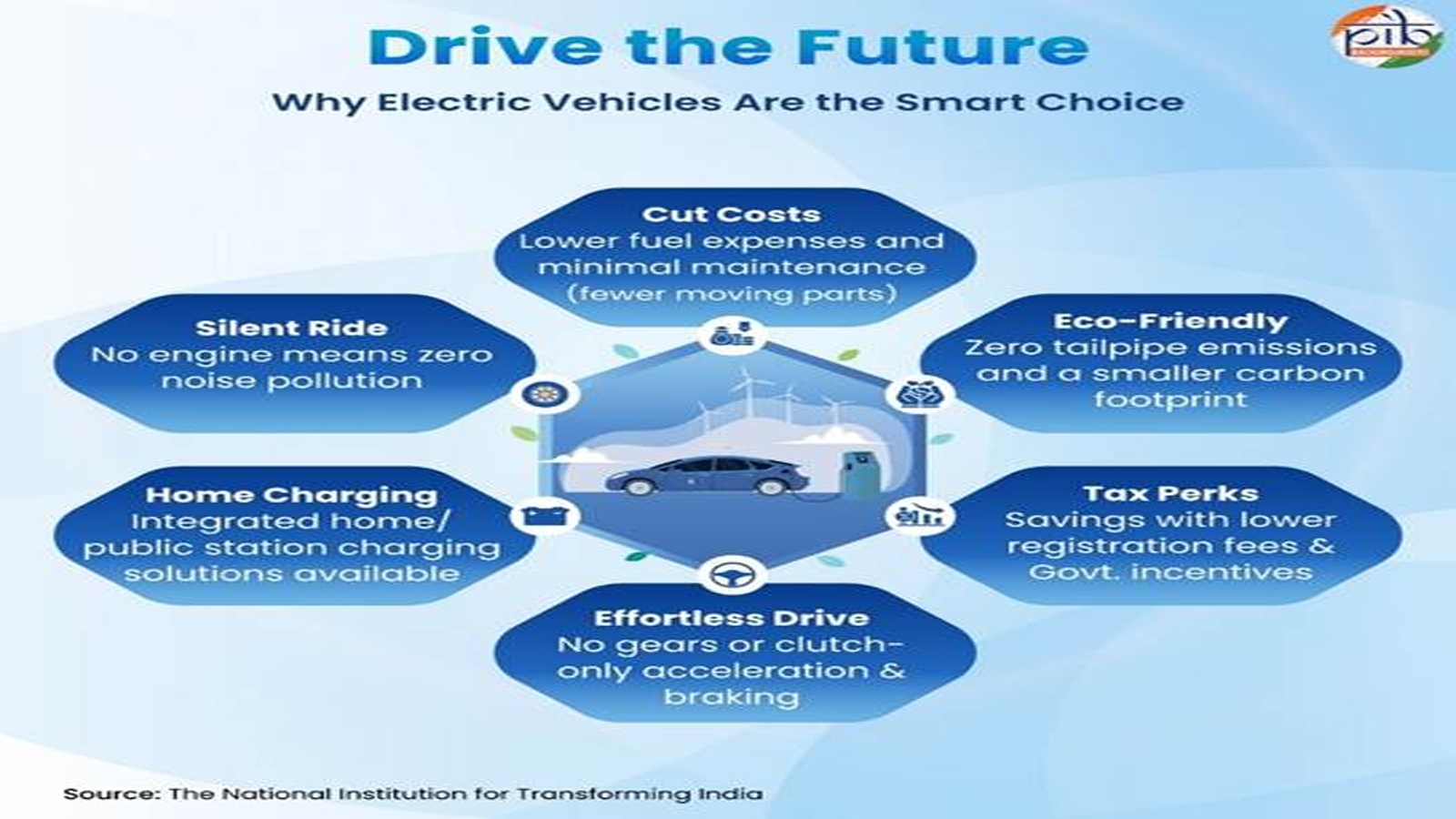
The shift towards electric mobility is being driven by multiple factors, including government incentives, technological advancements, greater environmental awareness and expanding charging infrastructure. Besides reducing dependence on imported fossil fuels, the transition is expected to play a significant role in lowering greenhouse gas emissions from the transport sector, which contributes around nine per cent of India’s total emissions.
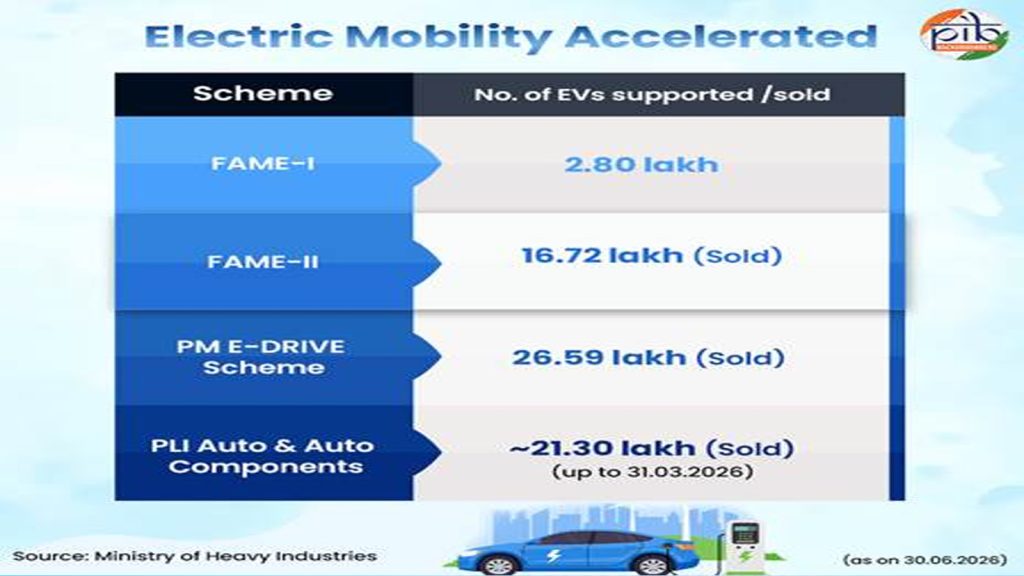
India’s electric mobility journey formally began with the launch of the National Electric Mobility Mission Plan (NEMMP 2020), which laid out a roadmap to accelerate EV adoption and domestic manufacturing. Under this framework, the Faster Adoption and Manufacturing of Hybrid and Electric Vehicles (FAME India) Scheme was introduced in 2015 to provide incentives for EV buyers, support charging infrastructure and encourage manufacturing. Phase I continued until March 2019, followed by Phase II, which remained operational until April 2024.
Government support has helped create a vibrant EV ecosystem that now extends well beyond vehicle manufacturing. Domestic production has expanded to include battery packs, motors, drivetrains, power electronics, charging equipment and related components. Leading Indian automobile manufacturers have increased investments in research and development, dedicated EV platforms and manufacturing capacity, while global companies have also shown growing interest in establishing production facilities in India.
India has also emerged as an exporter of electric vehicles. EV exports have increased sharply from USD 1.2 million in 2020 to USD 84 million in 2024, with Nepal, Indonesia and Japan among the leading destinations, highlighting the country’s growing role in global electric mobility.
Charging infrastructure is expanding rapidly to support this growth. As of July 2026, Bharat Heavy Electricals Limited (BHEL) reported that India had 52,718 public charging stations, including 16,561 fast charging facilities. Industry players are also strengthening charging networks by installing ultra-fast charging stations in major cities and along key highways.
To monitor the progress of electric mobility across the country, NITI Aayog launched the India Electric Mobility Index (IEMI) in August 2025. The framework evaluates States and Union Territories on transport electrification, charging infrastructure readiness, and research and innovation. Delhi, Maharashtra and Chandigarh have emerged as frontrunners with strong and well-developed EV ecosystems.
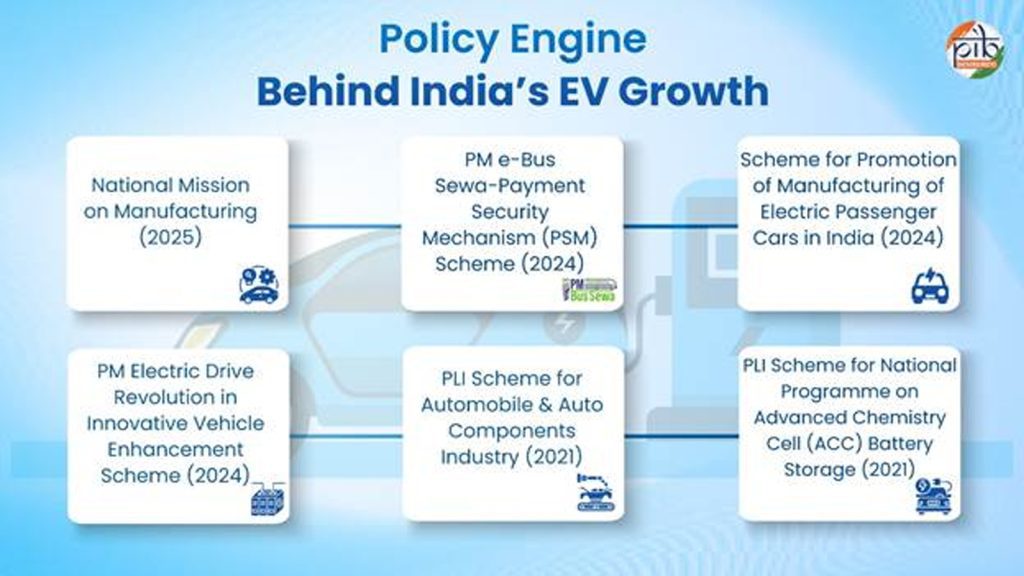
India’s manufacturing ambitions have received further support through the National Mission on Manufacturing (NMM), launched in 2025, which identifies electric vehicles as a priority sector for innovation-led industrial growth. The mission aims to substantially increase manufacturing’s contribution to GDP, create employment opportunities and strengthen India’s position in global manufacturing value chains.
The PM Electric Drive Revolution in Innovative Vehicle Enhancement (PM E-DRIVE) Scheme has become another major driver of electric mobility. With an outlay of ₹10,900 crore, the scheme supports demand incentives, domestic manufacturing and charging infrastructure for electric two-wheelers, three-wheelers, buses, trucks and ambulances. More than 22.12 lakh EVs have already been sold under the scheme as of January 2026.
The government has also prioritised electrification of public transport. Under the PM E-DRIVE Scheme, ₹4,391 crore has been allocated for 14,028 electric buses, with 13,800 buses earmarked for seven major cities, including Bengaluru, Delhi, Mumbai, Hyderabad, Ahmedabad, Pune and Surat. Additional support has been provided for nationwide public charging stations and vehicle testing infrastructure.
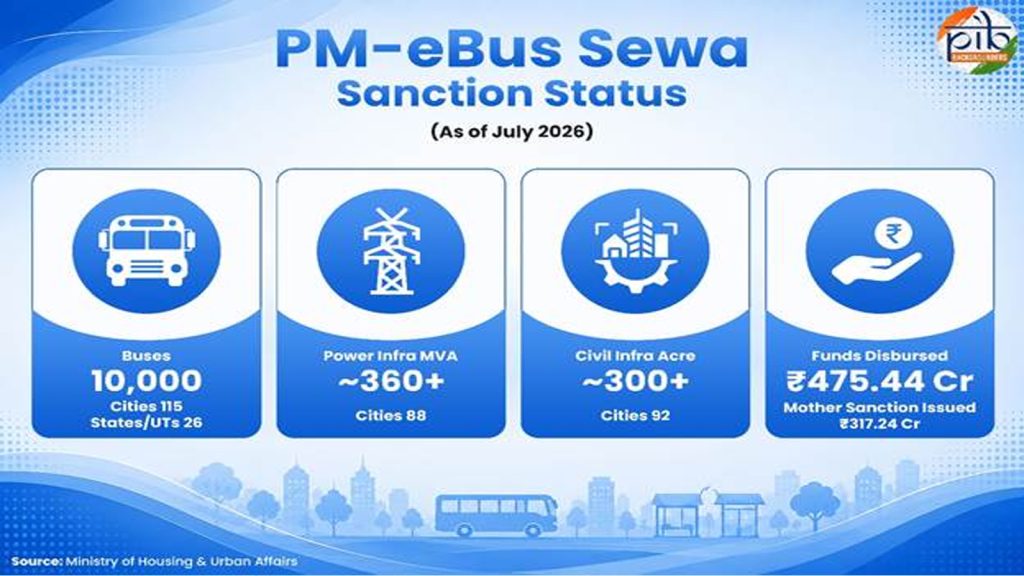
Complementing these efforts, the PM e-Bus Sewa-Payment Security Mechanism Scheme aims to deploy 10,000 electric buses through the Public Private Partnership model while strengthening urban public transport through charging networks, depot infrastructure and operational support.
To encourage domestic production of electric passenger cars, the Scheme for Promotion of Manufacturing of Electric Passenger Cars in India (SPMEPCI) requires manufacturers to invest at least ₹4,150 crore while progressively increasing domestic value addition over five years. Similarly, the Production Linked Incentive (PLI) Scheme for Automobile and Auto Components provides financial incentives for advanced automotive technologies, including electric vehicles, with more than ₹2,319 crore already allocated to EV manufacturers across different vehicle categories.
Battery manufacturing, considered critical for reducing EV costs, has received a significant boost through the ₹18,100 crore Production Linked Incentive Scheme for Advanced Chemistry Cell (ACC) Battery Storage. The initiative aims to establish 50 GWh of domestic battery manufacturing capacity while strengthening India’s energy security and competitiveness.
Electric vehicles also benefit from a concessional Goods and Services Tax (GST) rate of five per cent, making them more affordable than conventional vehicles and encouraging wider consumer adoption.
State governments have emerged as key partners in India’s electric mobility transition. By December 2025, 29 States and Union Territories had notified EV policies, while several others were preparing similar frameworks. Incentives such as capital subsidies, land allotments, tax reimbursements and investment support have helped establish manufacturing hubs in states including Tamil Nadu, Maharashtra, Karnataka, Gujarat, Haryana and Uttar Pradesh.
The report also highlights India’s growing innovation ecosystem. Around 400 EV startups are contributing to charging infrastructure, battery technologies, affordable manufacturing and data-driven mobility solutions. Artificial Intelligence is increasingly being integrated into electric vehicles through voice-enabled navigation, intelligent route planning, connected services and accessibility features.
Investment momentum remains strong across the sector. India’s EV ecosystem attracted more than USD 1.4 billion in investments during FY 2025, nearly 27 per cent higher than the previous year, with EV manufacturers accounting for the majority of the funding.
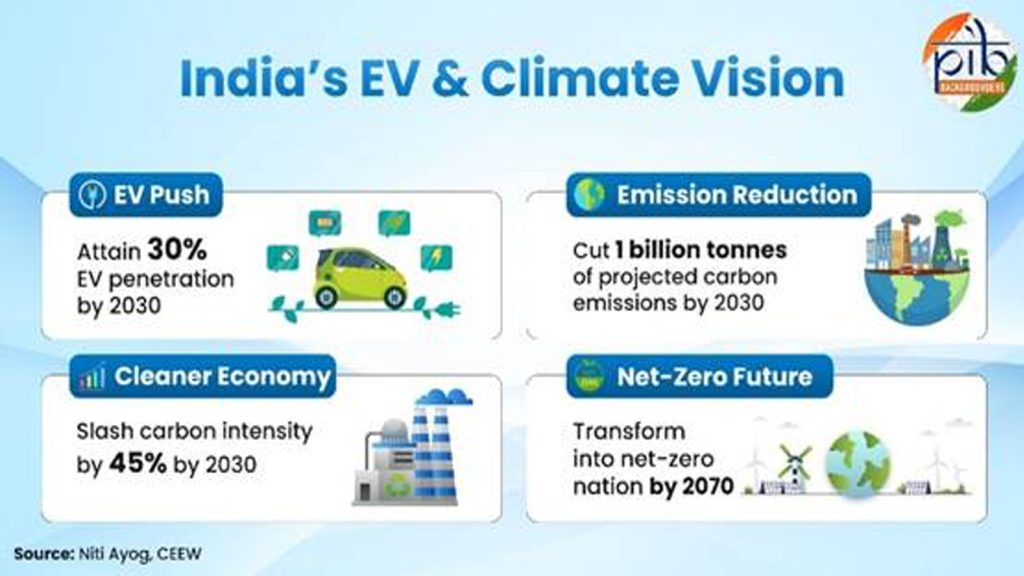
Looking ahead, India aims to ensure that 30 per cent of all vehicle sales are electric by 2030, in line with the global EV30@30 initiative. The country also plans to establish 1.32 million charging stations by 2030 while continuing to strengthen domestic manufacturing, localisation of batteries and supply chain integration.
Future policy measures include stricter Corporate Average Fuel Efficiency (CAFE) norms for the periods 2027-2032 and 2033-2037, introducing tighter carbon dioxide emission standards and mechanisms designed to encourage higher EV sales.
According to the report, India’s EV market, valued at USD 3.71 billion in 2025, is projected to expand to USD 191.04 billion by 2034. The EV battery market is also expected to witness substantial growth during the same period.
As demand rises, manufacturing scales up and technology advances, India is positioning itself as a global hub for electric vehicle production, research and innovation. Supported by sustained policy reforms, expanding infrastructure, domestic manufacturing capabilities and increasing investments, the country’s electric mobility ecosystem is poised to play a pivotal role in achieving energy security, sustainable development and the vision of Viksit Bharat by 2047.


