







The Tripura government has highlighted progress made in the state’s healthcare sector over the past four years under the “Niramay Arogya Initiatives in Tripura (2022-2026)”, citing expanded medical infrastructure, improved healthcare services and a decline in infant mortality.
According to a release issued by the Health and Family Welfare Department, healthcare remains a key priority of the state government, which has undertaken a series of initiatives to strengthen infrastructure and service delivery across Tripura in line with Prime Minister Narendra Modi’s vision of “Sabka Saath, Sabka Vikas, Sabka Vishwas, Sabka Prayas”.
The department said the initiatives over the past four years included the expansion of medical infrastructure, modernisation of hospitals, strengthening of primary healthcare, improved diagnostic and emergency care facilities, expansion of ambulance services and healthcare manpower, and implementation of people-centric schemes.
The state has also notified the Tripura University of Health Sciences to streamline medical education, the release said.
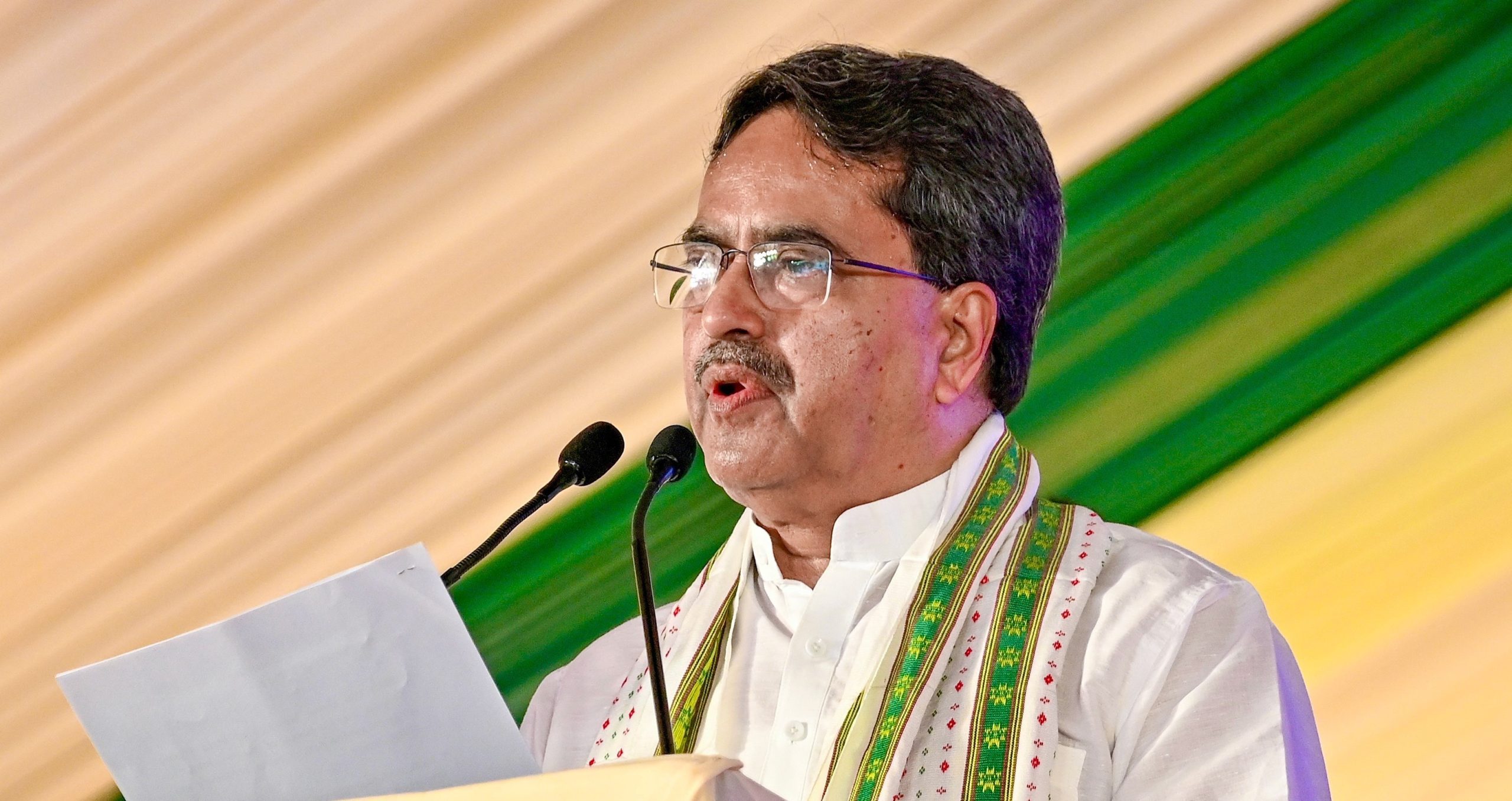
Chief Minister Manik Saha said healthcare remained among the government’s highest priorities.
“Healthcare remains one of the highest priorities of our government. I appreciate the dedicated efforts of doctors, nurses, paramedical staff, ASHA workers, health officials, and all frontline healthcare workers whose tireless service has significantly contributed to strengthening the healthcare system in Tripura,” he said.
“I extend my best wishes to everyone associated with this initiative and reaffirm the Government’s commitment to building a healthy and prosperous Tripura,” Saha added.
The release cited the expansion and upgradation of medical institutions, district and sub-divisional hospitals, trauma care centres and oxygen plants, along with the strengthening of the Tripura Health Assurance Scheme for the Poor (THAPS), as key achievements.
It said the implementation of programmes related to antenatal and postnatal care, child immunisation, nutrition management and institutional deliveries had contributed to reducing infant and child mortality.
According to the Sample Registration System (SRS) Bulletin published by the Registrar General of India in September 2025, Tripura recorded an Infant Mortality Rate (IMR) of 15 per 1,000 live births, the lowest ever recorded in the state’s history, the release said.
“This remarkable progress stands as a testament to the dedicated efforts of the Government and healthcare workforce,” Secretary to the Chief Minister Kiran Gitte was quoted as saying.
The effective convergence of the Ayushman Bharat-Pradhan Mantri Jan Arogya Yojana (AB-PMJAY) and the Chief Minister Jan Arogya Yojana, 2023 has also strengthened access to free and affordable healthcare services, benefiting thousands of people, according to the release.
The government said continuous improvements in the healthcare system had enabled complex procedures, including kidney transplants, to be performed in the state.
An MoU has also been signed between the Health and Family Welfare Department and AIIMS, New Delhi, to develop medical colleges and hospitals in Tripura as centres of excellence in medical education and super-speciality healthcare.
The state government aims to develop the Agartala Government Medical College (AGMC) and GBP Hospital as a major medical hub, drawing on the expertise and standards of AIIMS, New Delhi.
A meeting between Chief Minister Saha and an AIIMS delegation led by Prof. (Dr.) M. Srinivas was held on June 9, 2025, to discuss improvements in healthcare services and medical education at AGMC and GBP Hospital. AIIMS has since arranged training programmes for doctors, nurses and laboratory technicians from Tripura, the release said.
The government also highlighted the Agartala Government Dental College, inaugurated by Prime Minister Narendra Modi on December 18, 2022, as a major milestone. Located in the IGM Hospital complex, it is the state’s first government dental college.
The institution began functioning in the 2023-24 academic session with 50 BDS seats, which have since been increased to 63. Construction of a new building and hostels is underway at an estimated cost of Rs 202 crore with support from the Ministry of Development of North Eastern Region, the release said.
The college has introduced facilities and services including laser treatment, 3D printing laboratories and TENS therapy for orofacial pain management.
The release further said dedicated institutions for alternative medicine are being developed, including a Homoeopathy College at Renters Colony and an Ayurvedic College at Tepania.
Programmes such as the Mukhyamantri Sustha Shaishab Sustha Koishor Abhiyaan, Mukhyamantri Niramay Arogya Abhiyan and Rashtriya Bal Swasthya Karyakram are also being implemented to improve the health of children and adolescents.
According to the department, Tripura’s health infrastructure has expanded significantly since 2022-23. The number of medical colleges increased from two to four by 2025-26, while sub-divisional hospitals rose from 12 to 15. Primary health centres, including urban PHCs, increased from 118 to 122, and sub-centres from 999 to 1,018.
The number of OST centres increased from 16 to 52, while FICTCs rose from 133 to 142, the release said.
As part of its outreach efforts, the state conducted 1,034 health camps through medical officers, covering 74,337 clients, and 191 camps through specialist medical officers, covering 65,871 clients.
(With ANI inputs)


