







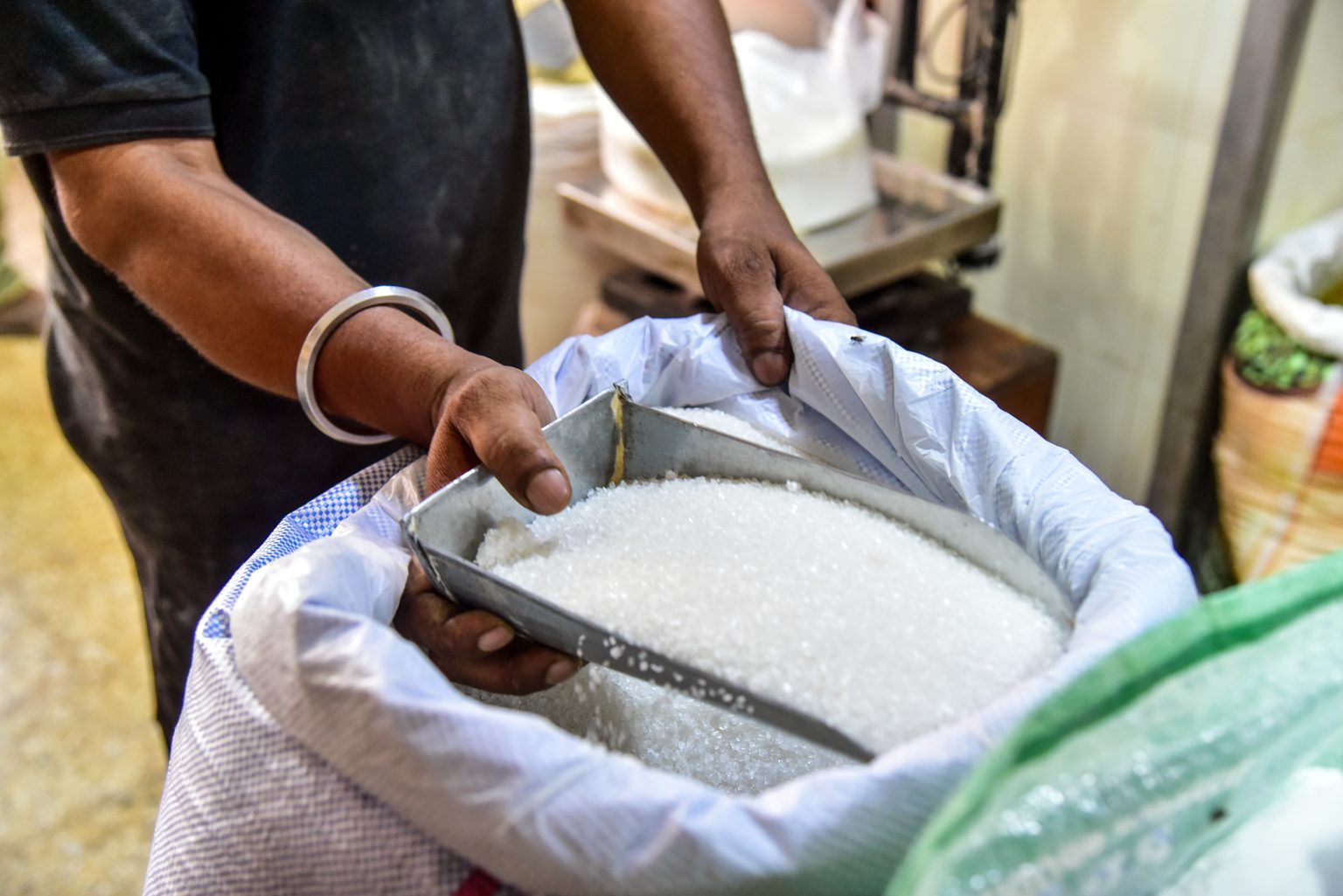
The Government has relaxed the existing stockholding limit for bulk consumers of sugar from 15 days to 30 days, allowing them to maintain additional stocks during the upcoming festival season. However, the quantity held beyond the existing 15-day limit will have to be sourced exclusively from sugar imported under the Advance Authorisation Scheme (AAS) and Tariff Rate Quota (TRQ).
The stockholding limit for sugar purchased from the open market will remain unchanged at 15 days’ consumption.
The Government has also introduced a mechanism for the declaration and weekly disclosure of sugar stocks by bulk consumers. Under the arrangement, bulk consumers will be required to disclose their sugar stocks every Friday through the Department of Food and Public Distribution’s online portal.
The decision follows detailed consultations held by the Government with major bulk consumers of sugar. The Government said their suggestions were considered with the objective of maintaining a stable and orderly sugar market.
At present, bulk consumers using or consuming more than 10 metric tonnes of sugar per month as a raw material for production, consumption or other use are permitted to hold sugar stocks for a period not exceeding 15 days of their consumption.
Bulk consumers had represented that the existing stockholding limit should be enhanced, particularly in view of the upcoming festival season. They had also suggested that they be permitted to directly source sugar from importers holding sugar imported under the Advance Authorisation Scheme and Tariff Rate Quota.
According to the Government, such sourcing would help ensure uninterrupted availability of sugar for industrial consumption without adversely affecting domestic supplies.
The Government said the relaxation is intended to balance the interests of bulk consumers with the need to maintain stability in the domestic sugar market. It will provide greater operational flexibility to genuine industrial consumers during the upcoming festival season while ensuring that stocks beyond the existing 15-day limit are sourced from imported sugar rather than placing additional pressure on domestic stocks.
Retail sugar prices decline by around 10%
The Government also highlighted a decline of around 10% in retail sugar prices from their peak. Retail prices have fallen from ₹65 per kg in August to ₹58.50 per kg.
However, ex-mill sugar prices have already declined by nearly 25%. The Government observed that the slower decline in retail prices indicates that the benefit of the reduction in ex-mill prices has not yet been fully transmitted through the supply chain to consumers.
In a joint meeting held on September 18 with representatives of the Indian Sugar & Bio-energy Manufacturers Association (ISMA), the National Federation of Cooperative Sugar Factories and the sugar trade, the Secretary, Department of Food and Public Distribution, underlined that the reduction in ex-mill sugar prices had not yet been fully reflected in retail prices.
The Government made a strong appeal to sugar traders, wholesalers and retailers to immediately pass on the benefit of the significant reduction in ex-mill sugar prices to consumers.
It emphasised that the decline in retail prices should keep pace with the correction already achieved at the mill level. The Government also called upon the entire sugar value chain to collectively ensure that sugar and sugar-based products remain affordable and within the reach of consumers during the forthcoming festival season.
Government stresses balance between farmers and consumers
The Secretary, Department of Food and Public Distribution, emphasised that farmers and consumers are the two central pillars of India’s sugar policy.
The Government said it has consistently worked to balance the interests of sugarcane farmers with the need to maintain stable and reasonable sugar prices for consumers.
With the commencement of the new sugar season from October 1, 2026, sugarcane farmers will receive the increased Fair and Remunerative Price (FRP) of ₹365 per quintal.
The Government said it has been increasing the FRP every year to ensure remunerative returns to sugarcane farmers while maintaining balance in the sugar sector.
The Government will continue to closely monitor the availability and prices of sugar in the domestic market and take appropriate measures, as necessary, to ensure adequate availability of sugar for consumers as well as for the requirements of the food-processing and other industries.


