







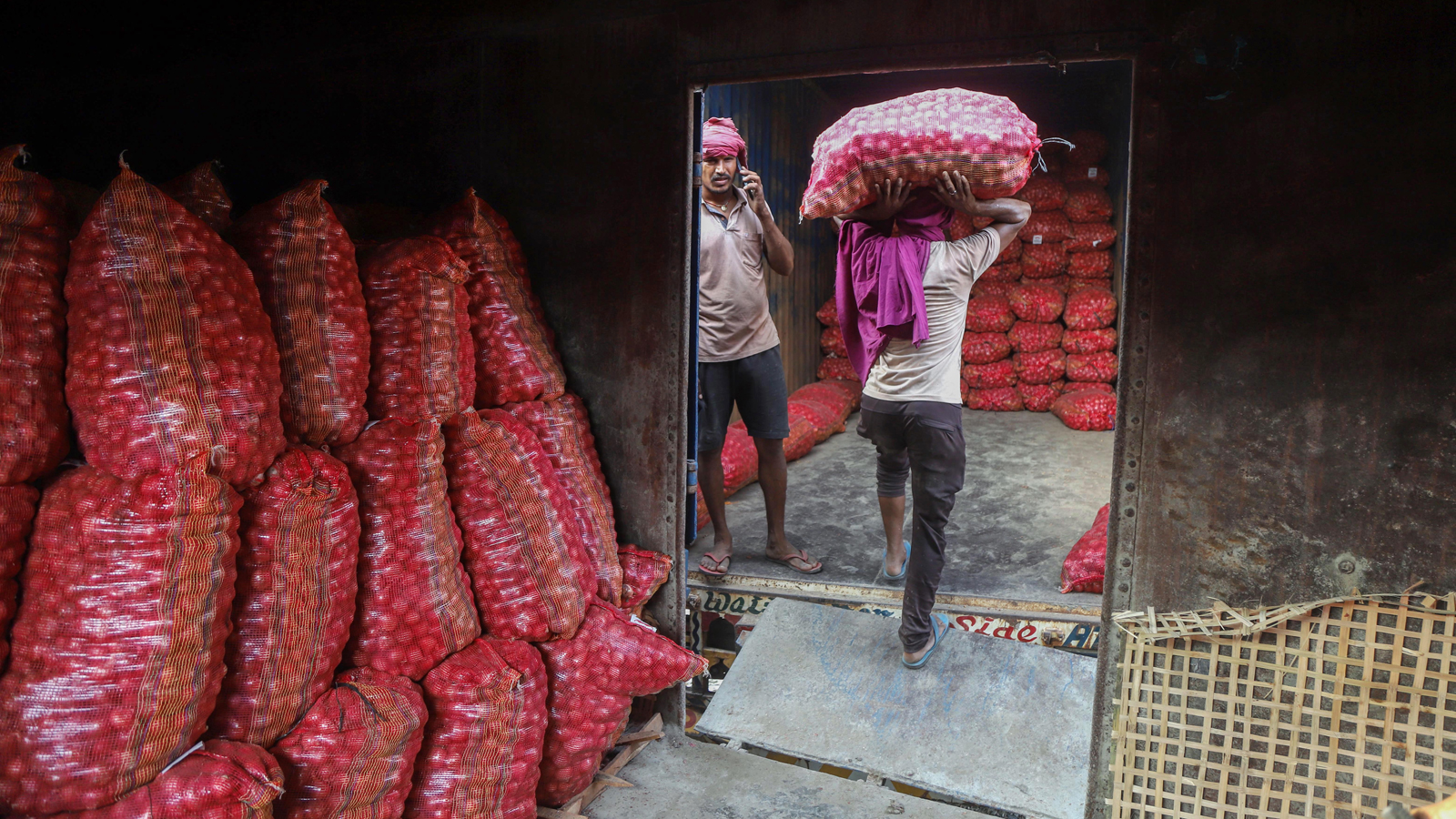
The government has expanded the calibrated release of onion buffer stocks through a hybrid transportation model involving railway rakes, known as Kanda Express, and road transport to major consumption centres, with the aim of ensuring adequate availability and moderating seasonal price pressures.
The disposal of onions from the Price Stabilization Fund (PSF) buffer began on August 24 through NAFED and NCCF. The government said the initiative has now expanded to 19 cities, with railway consignments and more than 30 trucks being deployed across the country.
Two Kanda Express consignments dispatched
Two Kanda Express consignments have so far been dispatched from Nashik.
The first rake, carrying 450 metric tonnes (MT) of onions, reached Delhi late on August 27. Of this, 140 MT was subsequently distributed to Varanasi, Lucknow, Chandigarh and Amritsar, while the remaining quantity was distributed across the Delhi-NCR region.
The second rake, carrying 840 MT, reached Chennai on August 31. The Tamil Nadu government plans to distribute these onions through the Public Distribution System (PDS), with a proposed allocation of 1 kg per ration card. The onions are expected to be distributed across districts in northern, western, eastern, central and southern parts of the state.
Around 1,000 MT being moved by road
Alongside the railway consignments, around 1,000 MT of onions is being transported by road to major consumption centres based on prevailing market conditions and price trends.
The retail intervention has been expanded to 19 cities, with more than 30 trucks deployed to improve availability. The cities include Delhi, Jaipur, Jammu, Dehradun, Shimla, Amritsar, Chandigarh, Kolkata, Guwahati, Lucknow, Varanasi, Patna, Bhojpur and Sharif in Bihar, Bhubaneswar, Chennai, Madurai, Thrissur and Kochi.
The retail initiative was also launched in Lucknow by Minister of State for Consumer Affairs, Food and Public Distribution B.L. Verma.
Onions available at Rs 35 per kg
The government said onions continue to be sold at Rs 35 per kg through NCCF, NAFED, Kendriya Bhandar outlets and mobile vans to ensure affordable supplies for consumers.
Around 669 MT of onions has been sold so far. This includes 223 MT through bulk channels, including the e-NAM portal and similar online platforms at prevailing mandi prices, and 446 MT through retail channels across the country.
According to the government, the release of buffer stocks has improved market availability and helped moderate prices, particularly in centres such as Varanasi, Amritsar, Delhi and nearby markets. Prices have declined from the day after disposal began, with further supplies expected to support price stability.
Rs 210 crore paid directly to onion farmers
The government has also highlighted measures to ensure timely payments to farmers. Around Rs 210 crore has been paid directly to approximately 3,400 farmers.
The government said the direct payment mechanism is aimed at ensuring timely payments while supporting onion growers alongside efforts to maintain adequate and affordable supplies for consumers.
Security measures have also been put in place to prevent leakages and address security concerns during the transportation and disposal of large quantities of onions through railway rakes.
The government said the calibrated release through both rail and road channels is intended to strengthen supply to major consumption centres, ease seasonal price pressures and maintain affordable onion availability while safeguarding farmers’ interests.


