







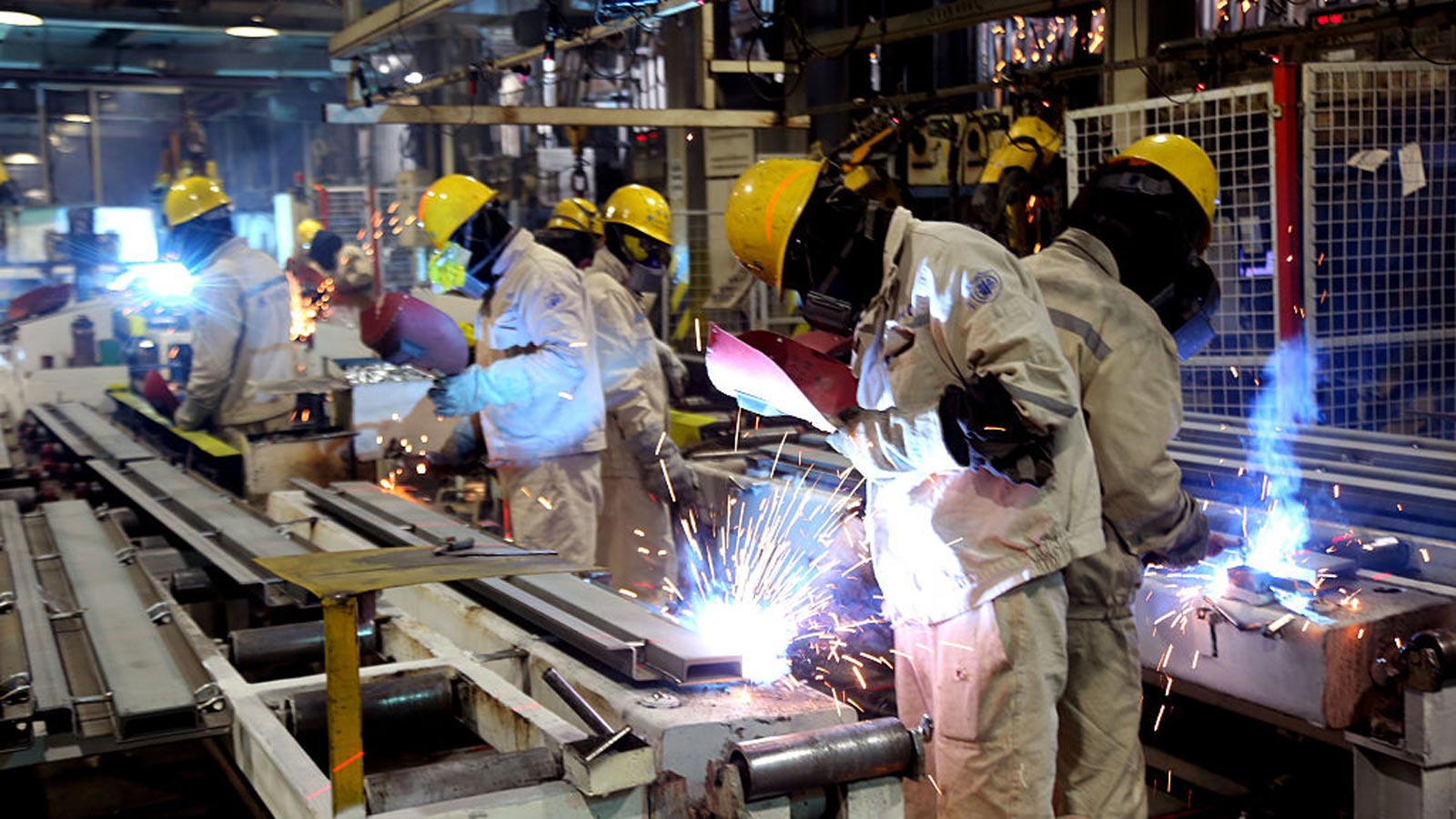
India is entering a new phase of industrial growth, with technology-intensive and strategic sectors such as space, semiconductors, electronics, data centres, solar manufacturing and aerospace emerging as major opportunities for private investment and domestic value addition, according to a Jefferies report.
The report highlights that large domestic market opportunities, policy reforms and targeted government incentives are encouraging greater private participation across these emerging industries. Measures such as opening the space sector to private players, tax incentives for data centres and large-scale incentive programmes for semiconductors, electronics and solar manufacturing are helping create an enabling environment for investment and innovation.
The report also points to localisation requirements and strategic purchases of computing infrastructure as factors shaping India’s emerging technology ecosystem.
Space sector moves towards greater private participation
India’s space sector is emerging as one of the country’s key industrial frontiers following its opening to private participation in 2020. The government is targeting nearly a fivefold expansion of the space economy between 2023 and 2030, with the sector expected to reach US$40-45 billion.
Indian space startups are increasingly moving beyond early-stage innovation towards commercial execution. Companies such as Skyroot, Pixxel, Agnikul and Digantara are developing capabilities across launch vehicles, earth observation, propulsion and space surveillance.
Skyroot is advancing its orbital launch capabilities, while Pixxel is developing high-resolution observation satellites for commercial and strategic applications. Agnikul is working on rocket technology based on 3D-printed rocket engines, while Digantara is developing capabilities focused on surveillance satellites.
Semiconductor ecosystem expands
India’s semiconductor ambitions are also moving from policy formulation towards implementation. According to the report, the sector has attracted approximately US$20 billion in investments, including a chip fabrication facility currently under construction.
Several Outsourced Semiconductor Assembly and Test (OSAT) projects are also progressing towards production. A new incentive programme worth about US$13 billion is expected to further strengthen the semiconductor ecosystem and promote greater domestic value addition, including in chip design.
The developments are aimed at building a more complete semiconductor ecosystem in India, covering manufacturing, assembly, testing and design capabilities.
Data centre capacity expected to reach 10GW
Data centres are emerging as a strategic component of India’s digital infrastructure, with the country’s collocation capacity having expanded fivefold over the past five years to approximately 2GW.
The report attributes the expansion to growing cloud adoption, digitisation and data localisation requirements. Capacity is expected to increase another fivefold to around 10GW over the next five years.
Favourable cost economics, policy support and rising demand from hyperscalers are expected to support this expansion. The report estimates a US$9 billion revenue opportunity for data-centre operators, along with approximately US$45 billion in investment opportunities across power, cooling, construction and network infrastructure.
Electronics industry shifts towards deeper localisation
India’s electronics industry is increasingly moving beyond assembly towards domestic value addition and component manufacturing.
The report identifies initiatives such as the Electronics Component Manufacturing Scheme (ECMS) and MPMS (Mobile 2.0) as key measures supporting deeper backward integration and reducing import dependence.
ECMS is expected to cover nearly 50 per cent of mobile component value, or Bill of Materials (BoM), over the next six to seven years, compared with less than 20 per cent currently.
Printed circuit boards, including HDI and multi-layer PCBs, are identified as an important focus area. The segment represents an estimated US$5 billion total addressable market, with imports accounting for around 85-90 per cent, indicating significant scope for domestic manufacturing.
Solar manufacturing expands domestic value chain
India has emerged as the world’s second-largest solar PV manufacturer, with approximately 35GW of solar cell capacity already operational and another around 100GW under construction, according to the report.
Government measures including the Approved List of Models and Manufacturers (ALMM), domestic content requirements and Production-Linked Incentive schemes are encouraging greater integration across the solar manufacturing chain.
The measures are supporting backward integration into cells, wafers and ingots, with India expected to localise approximately 90 per cent of the solar manufacturing value chain by 2030.
Aerospace emerges as a global manufacturing opportunity
India’s aerospace sector is also positioned to benefit from the global demand-supply imbalance in the industry. The country’s cost-competitive manufacturing capabilities and engineering talent are creating opportunities to expand its role as a global aerospace manufacturing hub.
The report estimates that Boeing and Airbus source around US$1.4–1.6 billion annually from India, reflecting the country’s growing role in global aerospace supply chains.
Indian companies including Aequs, Azad, DYTC, BHFC, RW, MOTHERSO and SANSERA are expanding their presence as global original equipment manufacturer (OEM) and Tier-1 suppliers.
The growth of aerospace manufacturing is expected to provide further opportunities for Indian companies to integrate into global supply chains and increase domestic value addition.
Emerging sectors offer new investment opportunities
The report underlines that India’s industrial transformation is increasingly extending into technology-intensive and strategic sectors. The combination of a large domestic market, government policy support, private investment and localisation is creating opportunities across the entire value chain – from space and semiconductor manufacturing to digital infrastructure, electronics, renewable energy and aerospace.
Together, these developments are positioning emerging industries as important contributors to India’s next phase of industrial growth, while strengthening domestic capabilities, innovation and integration with global supply chains.


