







Scientists at the International Advanced Research Centre for Powder Metallurgy and New Materials (ARCI), an autonomous institute under the Department of Science and Technology (DST), have developed a bi-layered single-piece dental implant that combines titanium alloy and zirconia to improve durability, stability and biocompatibility while reducing the need for multiple surgical procedures.
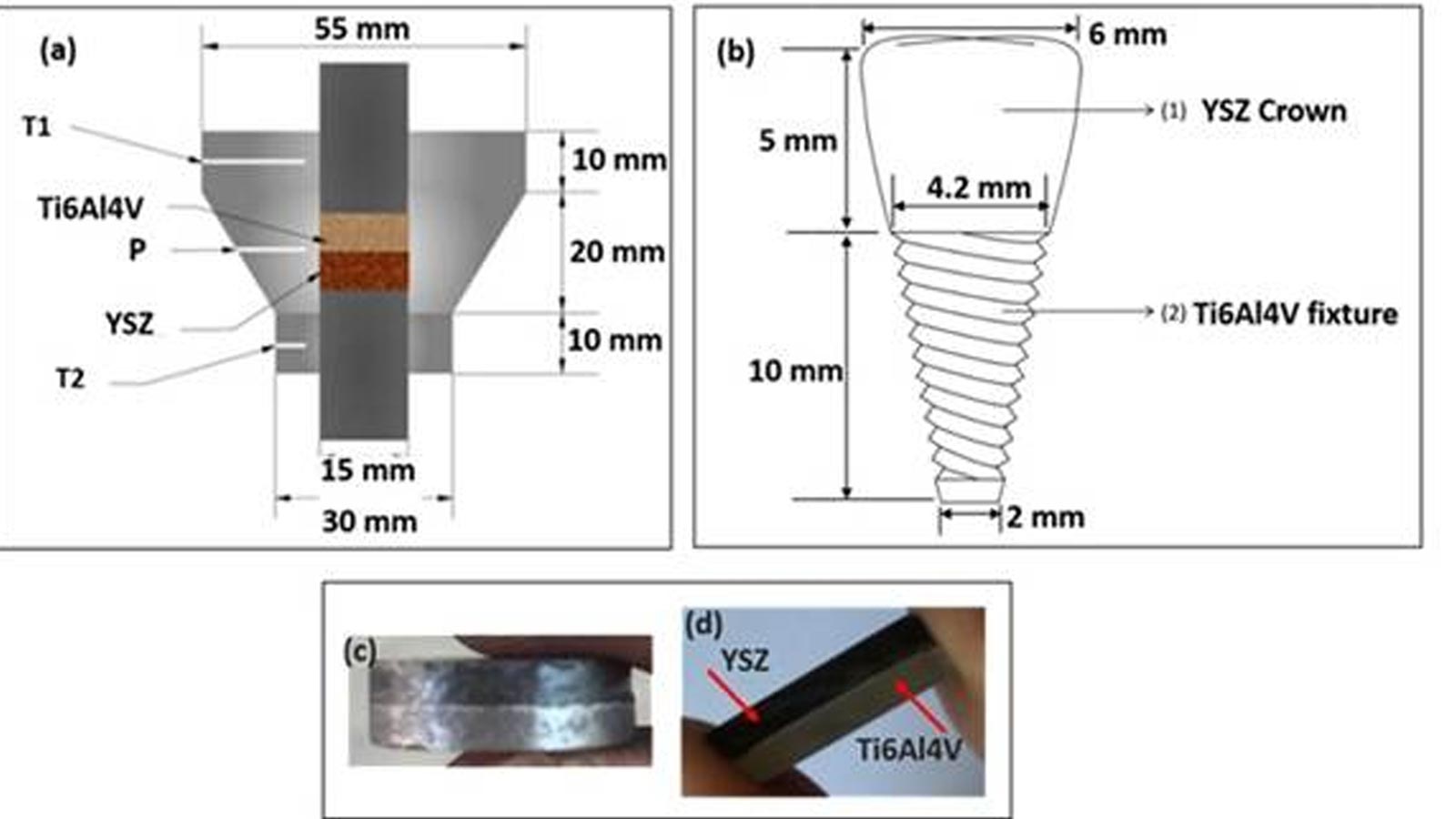
The researchers have developed a functionally integrated structure combining Ti6Al4V titanium alloy and yttria-stabilised zirconia (YSZ) into a unified dental implant architecture. The innovation is aimed at addressing some of the limitations associated with conventional multi-component dental implants.
Traditional dental implants generally consist of three components – a fixture embedded in the jawbone, an abutment connecting the fixture to the crown, and the crown itself. According to the researchers, micromovements at the abutment interface can compromise osseointegration, or the process through which the implant integrates with the jawbone, potentially leading to implant loosening.
Such multi-component systems may also require two or three surgical procedures, increasing patient discomfort and clinical complexity.
Combining strengths of titanium and zirconia
The new implant is designed to use the strengths of both materials in different regions of the structure. Ti6Al4V forms the load-bearing fixture, providing mechanical strength and supporting integration with the jawbone, while YSZ forms the crown region, offering wear resistance and improved aesthetic properties.
Both materials are widely used in biomedical applications because of their mechanical properties and biocompatibility, but each has limitations when used independently. Titanium alloys can be susceptible to corrosion and gum recession in the oral environment, while zirconia, despite its aesthetic and corrosion-resistant properties, can undergo degradation over time due to hydrolysis.
The researchers sought to address these limitations by integrating the two materials into a single-piece structure.
Fabricated using advanced sintering technology
The implant was manufactured using Spark Plasma Sintering (SPS), an advanced powder-metallurgy technique. Researchers developed a customised tapered graphite die to precisely control temperature during the sintering process.
The approach enabled the simultaneous densification of Ti6Al4V and YSZ despite their significantly different sintering temperatures.
The resulting material achieved a density of 99.5 per cent, producing a dense and defect-free bi-layered structure in a single processing step.
Following sintering, researchers conducted machining trials using a five-axis computer numerical control (CNC) machine to produce the threaded implant shape. Some challenges were observed in moving the machining tool along curved surfaces, and optimisation of the process is currently underway.
According to the researchers, the fabrication process is highly reproducible and has potential for scaling up to industrial production.
Strong interface and mechanical performance
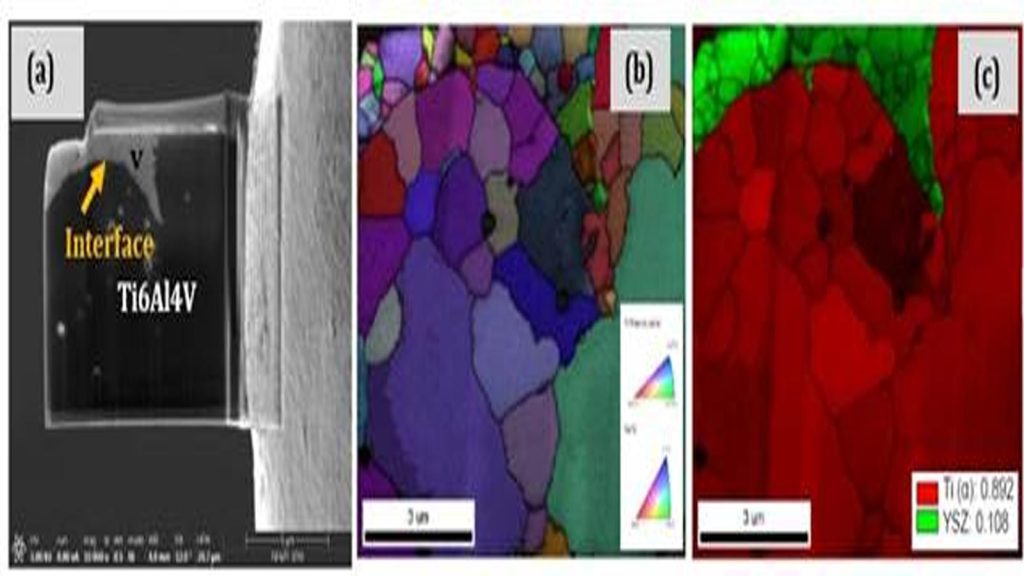
Testing of the material showed a distinct and well-bonded interface between the titanium alloy and zirconia, with no cracks, delamination, pores or secondary phases.
The analysis also showed fine YSZ grains of around 0.3 micrometres, while Ti6Al4V grains near the interface were refined to between 0.3 and 1 micrometre, compared with the bulk material.
No significant elemental diffusion was observed across the interface, indicating a stable transition zone between the ceramic and metal components.
Mechanical testing showed hardness values of up to 1,350 HV, compressive strength of approximately 1,550 MPa and flexural strength of around 310 MPa. The researchers said these properties are comparable to, or exceed, those of commercially available implant materials.
Biological tests show high compatibility
In vitro biological studies also indicated that the material was non-cytotoxic and highly biocompatible.
MTT assays, a colorimetric test used to measure cellular metabolic activity, were conducted using L929 mouse fibroblast cells. The tests showed metabolic activity of more than 90 per cent across all tested concentrations, exceeding the minimum threshold generally required for biomaterials.
Hemolysis tests also showed negligible damage to red blood cells, further supporting the material’s suitability for dental applications.
Potential to reduce surgical complexity
By combining mechanical strength, corrosion resistance, aesthetic performance and biological safety within a single-piece design, the bi-layered implant could help reduce the need for multiple surgical interventions while improving implant stability.
The researchers said the technology could contribute to the development of affordable, high-performance dental implants and strengthen indigenous biomedical device manufacturing in India.
The study has been published in Materials Letters and is available through ScienceDirect.


