







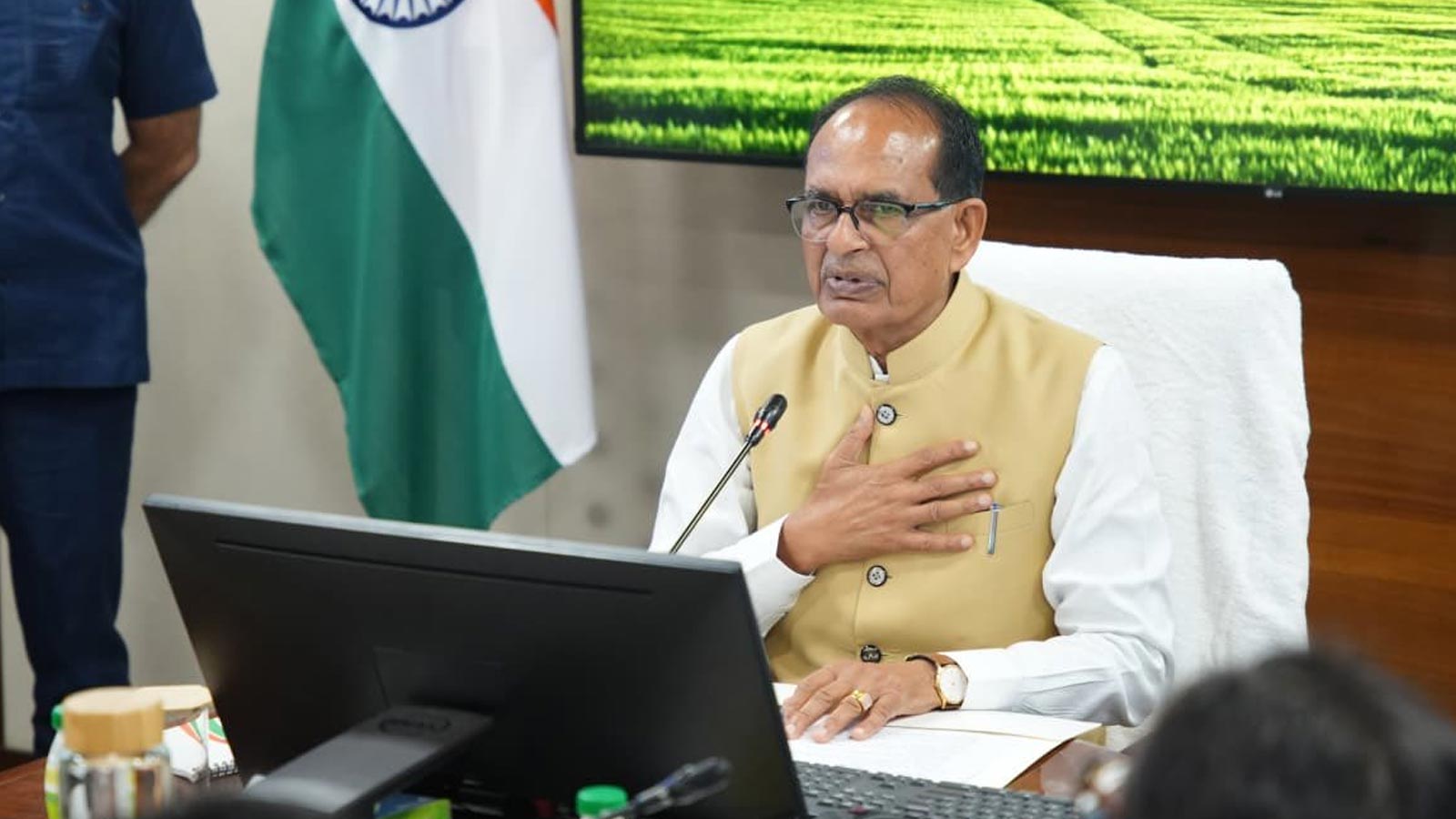
Union Agriculture and Farmers’ Welfare Minister Shivraj Singh Chouhan has stepped up consultations with farmer organisations on a proposed new Seed Act aimed at strengthening regulation, curbing the sale of fake and substandard seeds and ensuring greater accountability across the seed supply chain.
Chouhan held a consultation with representatives of farmer organisations from across the country at Krishi Bhawan in New Delhi on Thursday. Representatives from almost all states participated and around 20 farmer organisations submitted their views and suggestions on the proposed legislation.
Existing 1966 law needs overhaul
Chouhan said the existing Seed Act was enacted in 1966, while the Seeds Control Order came into force in 1983. Given the major changes in Indian agriculture over the past six decades, the current regulatory framework is no longer adequate to address emerging challenges, particularly fake and poor-quality seeds and gaps in fixing responsibility.
The government had invited suggestions on the draft Seed Act in November-December 2025 and received around 18,000 suggestions from farmers and farmer organisations. Chouhan said there would be no haste in finalising the legislation and that no deadline had been fixed.
He added that consultations with farmers and other stakeholders would continue before the government moves ahead with the draft.
70% of seeds outside existing law
Chouhan said nearly 70% of seeds currently fall outside the ambit of the existing Seed Act. He also pointed to differences in seed-related procedures across states and inadequate penalties for violations.
The proposed legislation seeks to establish a stronger and uniform regulatory framework to tackle the sale of fake and substandard seeds.
Farmers’ traditional seed rights protected
Chouhan assured farmers that their existing rights would remain protected under the proposed law. Farmers would continue to be free to use, exchange and sell traditional and farmers’ varieties of seeds.
Registration would not be mandatory for traditional seeds, although farmers could voluntarily register their varieties. Farmers producing seeds for personal use, distribution within their village or even for a company would not be required to undertake digital registration under the proposed provisions.
Up to ₹30 lakh penalty for serious offences
The proposed law categorises violations into three levels. Minor violations would attract a warning for the first offence and a penalty of up to ₹50,000 for the second.
Deliberate violations, including failure to affix a QR code, failure to provide required information or incorrect branding, would attract penalties of ₹1 lakh for the first offence and ₹2 lakh for the second.
Serious offences such as selling fake seeds, operating without registration or deliberate fraud would invite a penalty of up to ₹30 lakh along with imprisonment.
QR codes for end-to-end traceability
A key feature of the proposed legislation is mandatory registration and traceability. All seeds and planting material would have to be registered in a national register, with unregistered seeds prohibited from being sold in the market.
Every seed packet would carry a QR code through which farmers could trace its origin, manufacturer, laboratory clearance and movement through the supply chain. The system is intended to make it easier to identify responsibility in cases of seed failure.
States to get greater powers
The proposed law would empower state governments to release new seed varieties based on recommendations from state-level committees while adhering to national standards.
This is expected to enable states to introduce varieties suited to local climatic and regional requirements more efficiently. All varieties would be recorded in a single national online register accessible to both the Centre and states.
Compensation within 15 days
The proposed legislation also envisages a Seed Security Fund in every state, to be managed by the respective state governments. Penalties and recoveries collected under the Seed Act would be deposited into these funds.
In cases of seed failure or losses suffered by farmers, a verification committee would facilitate compensation within 15 days. Farmers would also retain the right to seek compensation under the Consumer Protection Act.
Chouhan said the government would carefully examine the suggestions received from farmer organisations and incorporate feasible proposals into the final draft. He reiterated that farmer consultation would remain central to the government’s effort to create a stronger, more transparent and accountable seed regulatory system.


