







Nutrition is not simply about putting food on the plate. For a child, it can determine how the brain develops, how well they learn and grow, and ultimately how healthy and productive they become. For a mother, adequate nutrition during pregnancy and lactation can influence both her own health and the well-being of her child.
With this broader understanding of nutrition, the 9th Rashtriya Poshan Maah is set to begin on September 9, placing India’s vast network of Anganwadi Centres at the centre of a month-long nationwide campaign.
This year’s overarching theme – “Hamari Anganwadi, Hamari Jimmedari” – seeks to turn Anganwadi Centres into stronger hubs of community participation, nutrition, childcare and early childhood development while encouraging citizens to take collective responsibility for their functioning.
The campaign will be launched at the Rudraksh International Cooperation and Convention Centre in Varanasi, Uttar Pradesh.
From nutrition awareness to community ownership
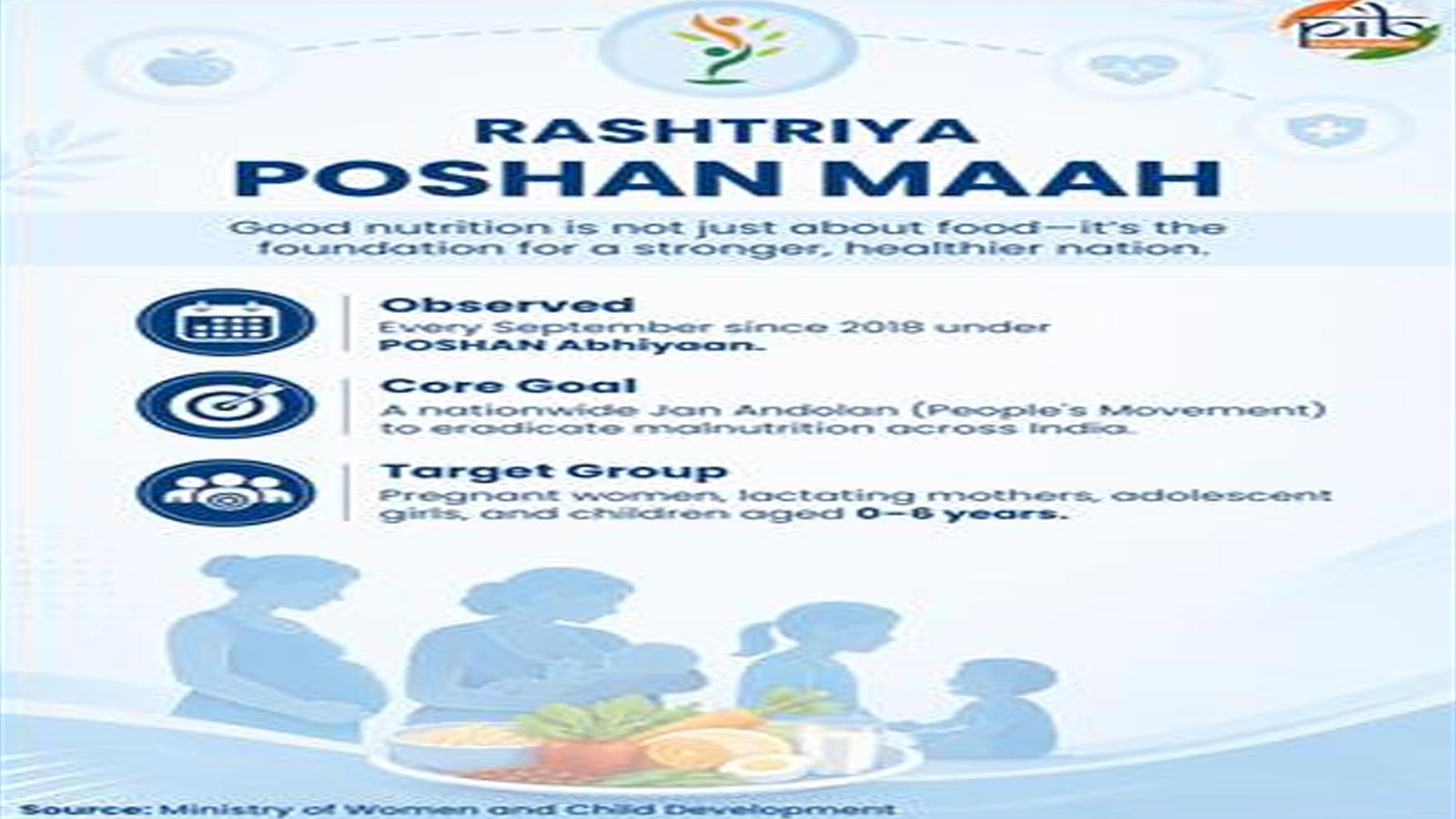
Observed every September, Rashtriya Poshan Maah is one of the country’s largest platforms for mobilising communities around nutrition, health and caregiving practices. It brings together efforts aimed at pregnant women, lactating mothers, children, adolescents and their families.
Over the years, the campaign has expanded its focus from basic nutrition awareness to maternal nutrition, infant and young child feeding, growth monitoring, hygiene, early childhood development and healthy lifestyles.
The approach is rooted in POSHAN Abhiyaan, launched by the government in March 2018 as a multi-ministerial convergence mission to place nutrition at the centre of India’s development agenda.
The programme was subsequently brought under Mission Poshan 2.0, which consolidated POSHAN Abhiyaan, Anganwadi Services and the Scheme for Adolescent Girls under a unified national nutrition framework led by the Ministry of Women and Child Development.
The emphasis is increasingly on making nutrition a people’s movement – a Jan Andolan – rather than treating it solely as a government service.
Why Anganwadi Centres matter
The choice of Anganwadi Centres as the focal point of Poshan Maah 2026 reflects their role as the grassroots delivery points for nutrition and early childhood services.
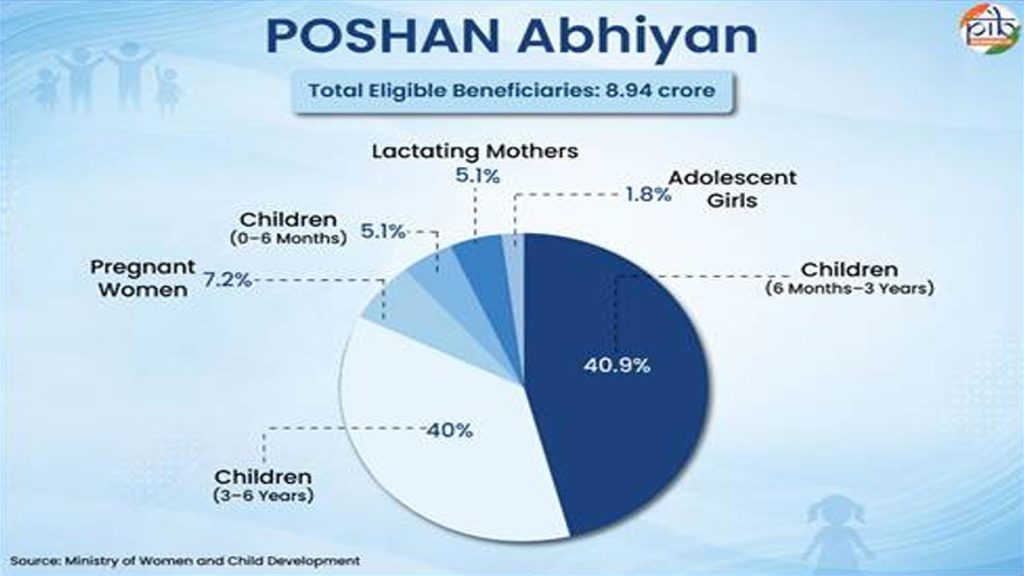
As of July 31, 2026, the country’s nutrition infrastructure comprised nearly 13.99 lakh Anganwadi Centres staffed by about 13.30 lakh Anganwadi workers, collectively reaching nearly 8.94 crore beneficiaries.
Children aged six months to six years account for more than 7.2 crore beneficiaries, highlighting the importance of Anganwadi services in early childhood nutrition and development.
Nearly 1.1 crore pregnant women and lactating mothers are also covered, underscoring the focus on maternal health during the critical first 1,000 days of a child’s life.
Poshan Maah 2026 seeks to build on this extensive network by strengthening community participation, improving the quality of services and making local communities more accountable for nutrition outcomes.
Five priorities for Poshan Maah 2026
The campaign will revolve around five interconnected priorities, beginning with the most fundamental element of nutrition — what people eat.
The first priority is promoting dietary diversity and adequate protein intake. Families will be encouraged to include a wider range of foods such as cereals and millets, pulses, fruits and vegetables, nuts and seeds, milk and milk products and eggs.
Anganwadi Centres will organise healthy recipe demonstrations and Poshan Melas to showcase affordable, locally available and nutritious foods. A special focus will be placed on protein-rich foods from both plant and animal sources.
Produce from Poshan Vatikas, along with seasonal and locally available foods, will also be promoted for regular use in household meals and complementary feeding.
The second priority is improving the quality of fresh hot cooked meals served at Anganwadi Centres under the Supplementary Nutrition Programme.
States and Union Territories will be encouraged to introduce weekly menu rotation using locally available ingredients, including millets, pulses and seasonal vegetables. Demonstrations, community tasting sessions and food-quality testing will form part of the effort.
In collaboration with the Food Safety and Standards Authority of India (FSSAI), nationwide testing of hot cooked meals is also proposed to strengthen food safety and quality assurance.
Making communities stakeholders in nutrition
The third priority is community ownership and accountability.
The recently constituted Anganwadi Management Committees (AMCs) are expected to play a greater role in monitoring nutrition services and strengthening community participation. At least one AMC meeting is proposed to be conducted during Poshan Maah.
The campaign will also promote the display of Supplementary Nutrition Programme Menu Boards at Anganwadi Centres. These boards will make daily menus and beneficiary entitlements more visible and allow communities to monitor meal quality, quantity and adherence to prescribed menus.
Mothers’ groups, Panchayats, self-help groups and other community stakeholders are also expected to participate in monitoring and awareness activities.
The idea is simple: better nutrition outcomes depend not only on the services provided by the government but also on whether families and communities actively participate in making those services work.
Nutrition and the developing brain
The fourth theme brings together two factors that are often discussed separately – nutrition and early childhood stimulation.
The campaign emphasises that adequate nutrition and responsive caregiving during the first 1,000 days are crucial for brain development. Undernutrition during this period can have lasting effects on cognitive, motor and socio-emotional development.
The revised Home Visit Scheduler, which includes a structured package of 34 developmental milestones for children aged 0–3 years, is intended to help Anganwadi Workers provide more effective counselling and follow-up.
The campaign will also promote the Navchetna and Aadharshila curricula to strengthen early childhood care and education, age-appropriate learning and school readiness.
Greater awareness will be created around identifying developmental delays and referring children to health systems and Rashtriya Bal Swasthya Karyakram (RBSK) teams.
The underlying message is that what a child eats and how a child is stimulated, cared for and encouraged to learn are interconnected elements of healthy development.
A decade of PMMVY
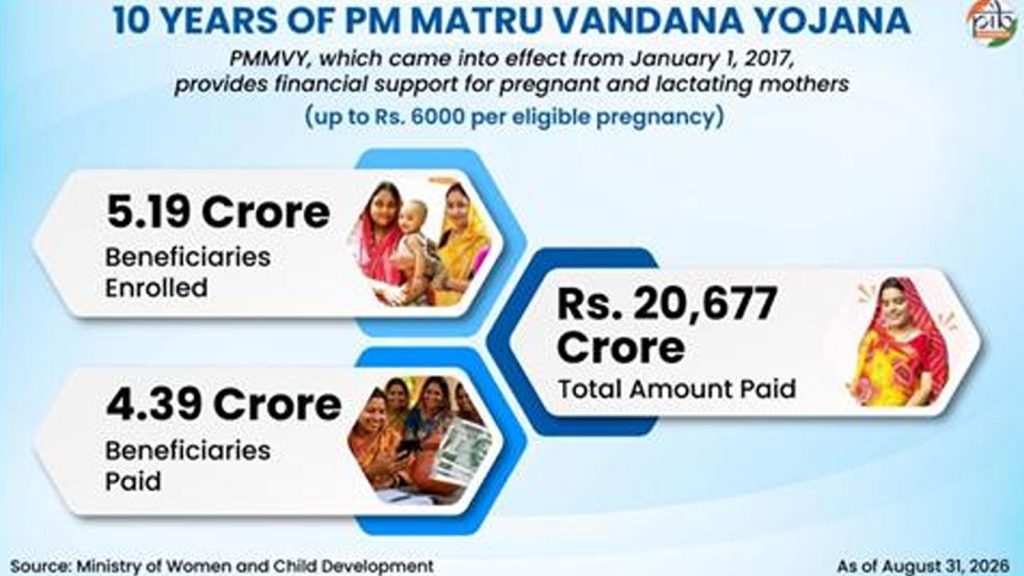
The fifth priority will mark 10 years of the Pradhan Mantri Matru Vandana Yojana (PMMVY), the government’s flagship maternity benefit programme.
Poshan Maah 2026 will be used to expand awareness and coverage of PMMVY among eligible pregnant and lactating women, with special enrolment drives planned to identify beneficiaries and facilitate timely verification, approvals and Direct Benefit Transfers.
Awareness campaigns will highlight eligibility criteria, benefits, instalments and the application process, while beneficiary experiences and success stories will be used to strengthen outreach.
The focus on PMMVY also reinforces a central principle of the nutrition campaign: maternal nutrition and healthcare during pregnancy are investments in the health and development of the next generation.
From Poshan Pakhwada to Poshan Maah
The September campaign forms part of a broader calendar of community mobilisation activities under POSHAN Abhiyaan.
Earlier this year, the 8th Poshan Pakhwada, held from April 9 to 23, focused on maximising brain development during the first six years of life.
The campaign highlighted scientific evidence that more than 85 per cent of brain development occurs by the age of six, with particularly rapid development during the first 1,000 days.
The 8th Rashtriya Poshan Maah, launched by Prime Minister Narendra Modi in September 2025 from Dhar, Madhya Pradesh, focused on nutrition literacy and healthy lifestyles, with themes including maternal nutrition, infant and young child feeding, early childhood care and education, and reducing sugar and oil consumption to address obesity.
The 2025 campaign recorded 14.33 crore activities across the country in convergence with more than 20 ministries.
Technology powering India’s nutrition network
While community mobilisation remains at the heart of POSHAN Abhiyaan, technology has increasingly become an important part of its implementation.
The Poshan Tracker, launched on March 1, 2021, functions as the principal digital governance and monitoring platform for Anganwadi Services.
It facilitates near real-time monitoring of various aspects of service delivery, including Anganwadi Centre operations, children’s attendance, early childhood care and education activities and growth monitoring.
The platform covers pregnant women, lactating mothers, children up to six years of age and adolescent girls, allowing authorities to track beneficiaries and service delivery more effectively.
From government programme to people’s movement
The evolution of Rashtriya Poshan Maah reflects a wider shift in India’s approach to malnutrition – from focusing only on food and supplementation to addressing the many factors that determine nutritional well-being.
Dietary diversity, protein intake, maternal health, early childhood stimulation, hygiene, food quality, community monitoring and digital tracking are increasingly being brought together within one framework.
At the centre of this framework are the Anganwadi Centres, which connect government services with families at the community level.
The 9th Rashtriya Poshan Maah therefore seeks to strengthen more than just nutrition awareness. Through the theme “Hamari Anganwadi, Hamari Jimmedari,” it aims to make nutrition, childcare and early childhood development a shared responsibility – involving government institutions, frontline workers, families and communities.
The larger objective is to use this nationwide mobilisation to build healthier families, support better child development and advance the goal of a malnutrition-free India.


