







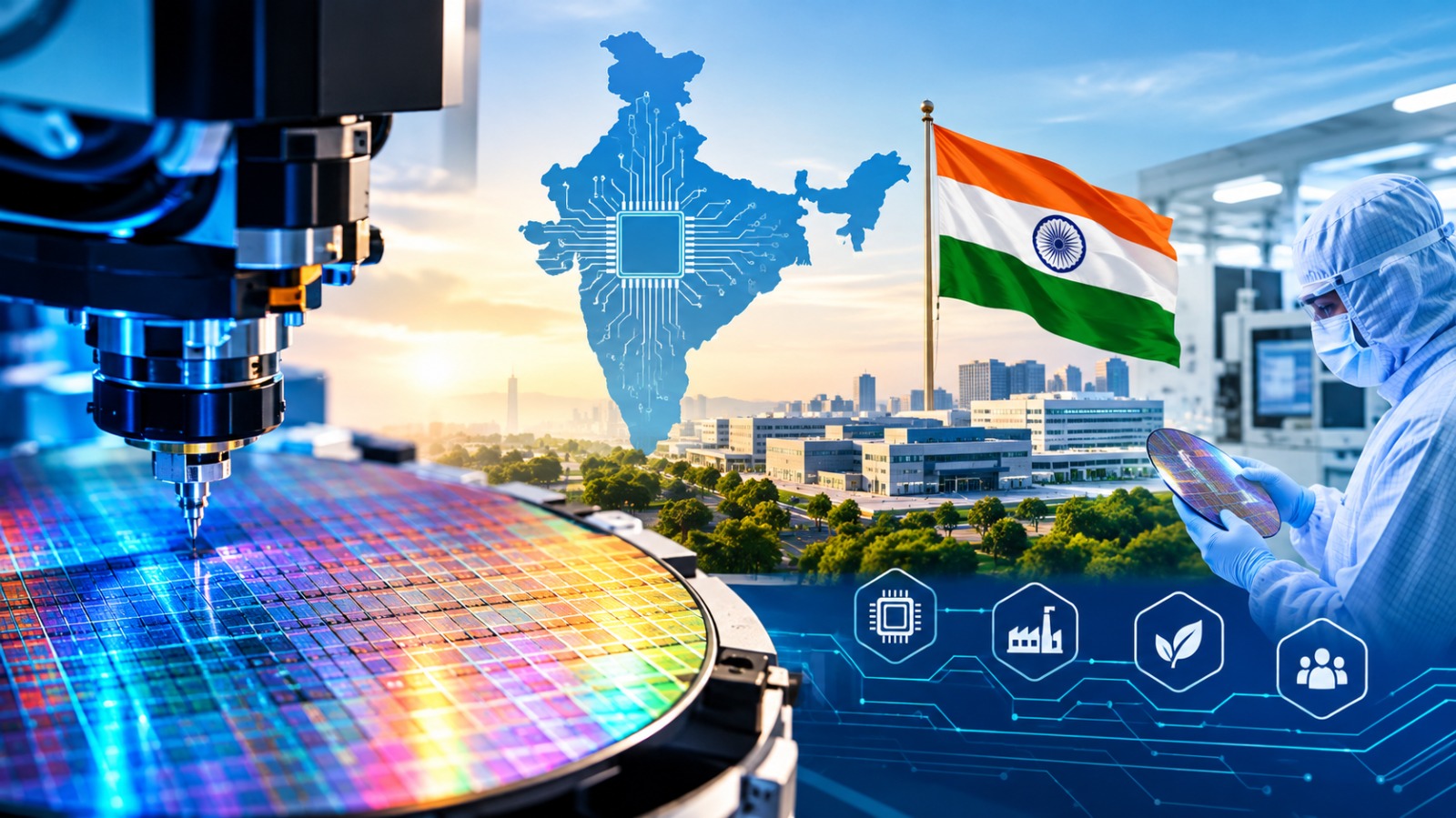
Prime Minister Narendra Modi is set to inaugurate SEMICON India 2026 at Yashobhoomi in Dwarka on September 17, bringing global chipmakers, policymakers, investors and industry leaders together as India showcases its growing semiconductor ecosystem.
The three-day event, being held under the theme “Silicon to Systems: Building the Ecosystem”, comes as India seeks to expand its semiconductor capabilities beyond chip design and manufacturing to include packaging, testing, equipment, materials, research and skilled talent.
Semiconductors have become a strategic component of the global economy, powering everything from smartphones and automobiles to aircraft, medical equipment, satellites and defence systems. The COVID-19 pandemic exposed the vulnerabilities of global chip supply chains, with automobile and electronics manufacturers facing production disruptions because of semiconductor shortages.
Against this backdrop, India has been seeking to build domestic capabilities and reduce its dependence on overseas supply chains.
India’s electronics manufacturing sector has expanded significantly over the past decade. Electronics production rose from around Rs 1.9 lakh crore in 2014-15 to Rs 13.11 lakh crore in 2025-26, while electronics exports increased from around Rs 38,000 crore to Rs 4.24 lakh crore during the same period.
Mobile phone production rose from Rs 18,000 crore to Rs 6.27 lakh crore, while exports increased from around Rs 1,500 crore to Rs 2.59 lakh crore. Smartphones, which did not figure among India’s top 100 exported goods in 2014, became the country’s largest exported commodity in FY 2025-26, ahead of petroleum products and gems and jewellery.
India now manufactures 99.2 per cent of the mobile phones used domestically and has moved from being a net importer of mobile phones to a net exporter. The electronics manufacturing sector currently supports around 2.5 million jobs.
The expansion of electronics manufacturing has provided a foundation for the country’s semiconductor push.
The government launched the Semicon India programme in 2021 with an outlay of Rs 76,000 crore to develop capabilities across the semiconductor value chain, including chip design, fabrication, packaging, testing, equipment, materials and skilled manpower.
In July 2026, the government approved Semicon India Programme 2.0 with an outlay of Rs 1,27,500 crore. The programme focuses on six key areas — chip design, semiconductor equipment and materials, fabrication facilities, advanced packaging, research and development, and talent development.
Twelve semiconductor projects have so far been approved across six states, involving investment commitments of more than Rs 1.64 lakh crore. The projects cover silicon and compound semiconductor fabrication, display fabrication and advanced packaging. Three facilities have already commenced commercial production, marking a shift from policy formulation to manufacturing activity on the ground.
Building a semiconductor talent pool
Alongside manufacturing capacity, India is seeking to develop a larger pool of semiconductor engineers and designers. The government has set a target of developing 85,000 skilled semiconductor engineers during this decade.
Under the Chips to Startup (C2S) programme, Electronic Design Automation tools have been deployed across 320 academic institutions, with more than 68,000 students trained so far. In addition, 24 semiconductor design projects have been approved for financial support, while 105 start-ups and MSMEs have received EDA tool support under the Design Linked Incentive (DLI) Scheme.
By April 2026, 211 chips had been taped out by 75 institutions, indicating the expansion of semiconductor design capabilities beyond a limited number of research laboratories. Seven of these chips have been fabricated at various technology nodes, including advanced nodes down to 12 nanometres.
The ChipIN Centre, established at C-DAC under the C2S programme and the DLI Scheme, provides shared access to advanced chip-design tools, fabrication services and specialised training.
The centre has extended its facilities to more than one lakh engineers from over 500 organisations, including 400 academic institutions and 100 start-ups. These organisations have collectively developed more than 300 chip designs for fabrication at the Semiconductor Laboratory (SCL), Mohali, and advanced foundries abroad, with more than four crore hours of chip-design tool usage recorded.
By providing access to capital-intensive design tools and services, the initiative seeks to lower entry barriers, reduce development costs and accelerate semiconductor innovation.
India’s growing role in global chip supply chains
India’s semiconductor strategy also has an international dimension. On the fifth day of the India AI Impact Summit 2026, India formally joined the Pax Silica coalition, which brings together the United States and partner countries to strengthen global silicon supply chains.
The coalition seeks to secure the wider “silicon stack”, covering critical minerals, semiconductor fabrication, advanced artificial intelligence systems and deployment infrastructure. The initiative aims to diversify supply chains, reduce dependence on a limited number of sources and strengthen cooperation among partner countries.
SEMICON India 2026 will provide a platform to showcase these developments. The event at Yashobhoomi will feature more than 600 exhibitors, including 300 international companies, across 15,000 square metres. More than 150 speakers are expected to participate.
The exhibition will include six country pavilions and 12 state pavilions, besides a start-up showcase, student hackathon, workforce development pavilion and a women’s forum.
The event comes at a time when India’s semiconductor strategy is increasingly focused on building an end-to-end ecosystem rather than developing isolated manufacturing capabilities. With investments in fabrication, packaging, chip design, talent and international partnerships, the country is seeking to establish a larger role in an industry that underpins the global digital economy.


