







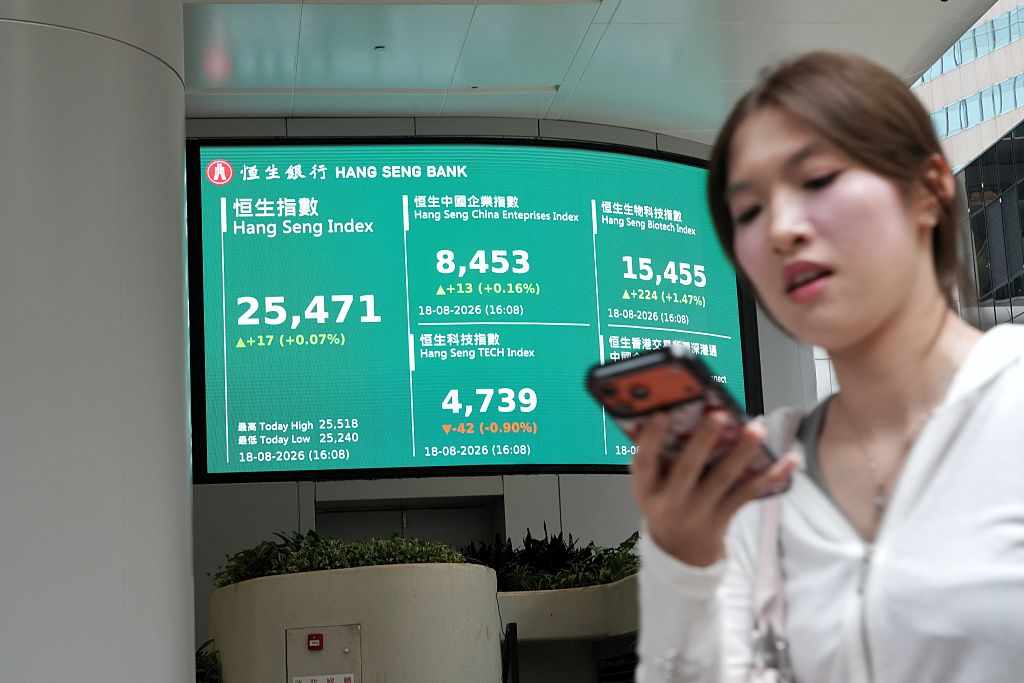
Share markets edged higher in Asia on Monday as AI’s insatiable demand for data buoyed chipmakers, and oil eased as hopes Saudi Arabia could boost supplies offset news of a Houthi attack on Riyadh.
Trade was thin with Japan on its Silver Week holiday through to Wednesday, leaving the dollar steady at 157.00 yen with investors wary in case the Bank of Japan took advantage of the lack of liquidity to intervene in support of its currency.
The yen jumped on Friday after Japanese authorities conducted rate checks in the currency market, the Nikkei newspaper reported.
Japan’s Nikkei was shut but futures rose 0.5%, while South Korea’s tech-heavy index gained 1.1%. MSCI’s broadest index of Asia-Pacific shares outside Japan rose 0.3%
S&P 500 futures ESc1 firmed 0.3%, while Nasdaq futures NQc1 added 0.4%. In Europe, 50 futures and DAX futures both rose 0.2%, while FTSE futures were flat.
Bond markets remained tense after a vicious selloff saw US 2-year yields jump 36 basis points in the past two weeks to heights not seen since mid-2024 at 4.7604%.
Hawkish guidance from the Federal Reserve last week has futures wagering on a 56% chance it will hike rates again in October, with a move by year-end considered a done deal.
“Tightening cycles are generally front-loaded, and the Fed almost never stops after one hike,” wrote analysts at BofA in a note. “With nominal consumer spending up 6.3% on the year, well above the 5% level historically associated with above-target core inflation, the Fed has little choice but to restrain demand.”
“Thus, we are retaining our call for just two more hikes, in October and December.”
OIL RESERVES RUNNING DRY
Central banks in the EU, UK, Japan, Australia and New Zealand are also expected to tighten again by year end. The Swiss National Bank, Sweden’s Riksbank and Norges Bank hold policy meetings on Thursday, but all are seen holding steady for now.
Bonds have also been dogged by deficit worries with the risk premium on French debt spiking on Friday to its widest since the euro zone debt crisis.
German debt could come under pressure later on Monday after Chancellor Friedrich Merz’s mainstream conservative party suffered its worst election results since 1949.
The news kept the euro flat at $1.1477, having shed almost 1% last week as the dollar gained broadly.
Oil prices held above $100 as Iran and the United States exchanged new threats and after the Houthis attacked Saudi Arabia’s capital. Brent LCOc1 was off 0.2% at $103.68 a barrel, while US crude CLc1 dipped 0.3% to $100.02.
There were reports that Saudi Arabia was aiming to quickly restart some flows through its main east-to-west pipeline after it was damaged in attacks last week, though details were lacking.
“The closure of the East-West pipeline has materially altered the state of the oil market,” said Vivek Dhar, head of commodities at CBA.
“We now estimate that oil markets have 5 to 10 weeks before global oil and refined product inventories deplete, compared to estimates closer to 15 to 20 weeks just a fortnight ago.”
This would increase pressure on Washington to make a deal with Iran, at least to restore some flows through the Strait of Hormuz and keep the Bab el-Mandeb passage open, he added.
US President Donald Trump will be attending the United Nations General Assembly this week, ahead of a meeting with Chinese President Xi Jinping on Thursday.
In other commodity markets, the rise in yields hampered non-interest-paying gold, which eased 0.2% to $4,370 an ounce.
(Reuters)


