







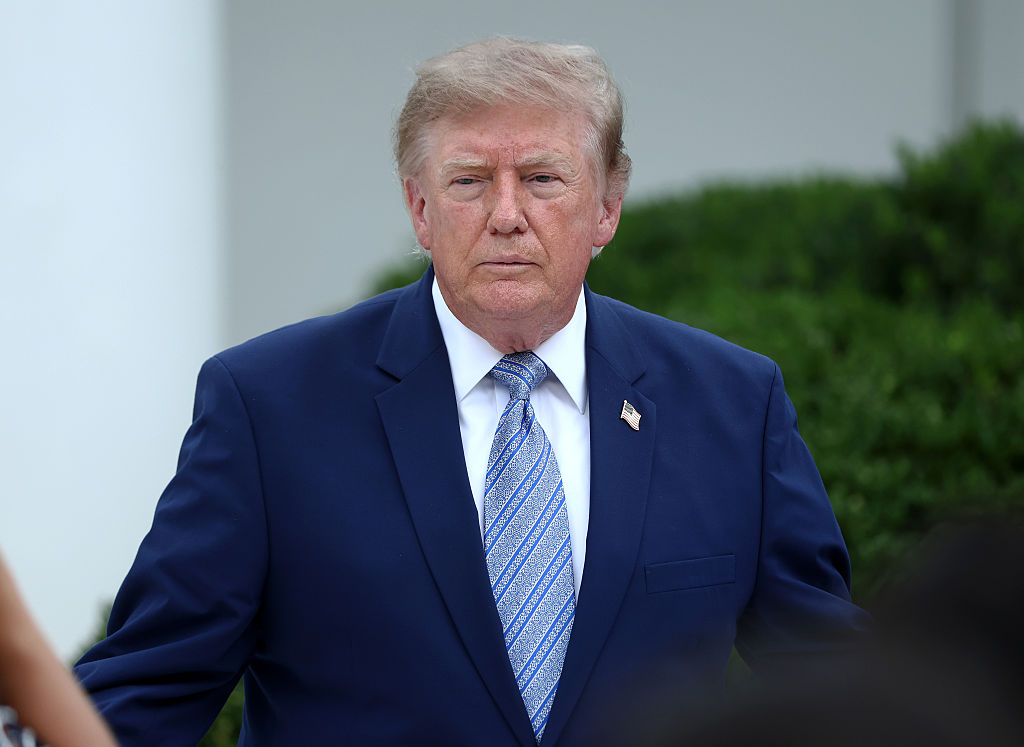
U.S. President Donald Trump attributed the win of Germany’s far-right Alternative for Germany (AfD) party in a state election to immigration rules and regulations that he cast as “horrible”.
The AfD, bolstered by public angst over the scale of mass immigration, surged into first place on Sunday in the election in Saxony-Anhalt, the first time a far-right party has come within reach of power at the state level since World War Two.
Trump has long accused various European countries including Germany of losing control of their borders, following a large influx of migrants and asylum seekers, especially from the Middle East and Afghanistan, over the past decade.
“Wow! The Populist Party in Germany just had a really big night. They finally got tired of the absolutely horrible Immigration rules and regulations which have hurt Germany so badly,” Trump wrote on Truth Social on Tuesday.
The AfD’s Ulrich Siegmund, who hopes to become the new premier of Saxony-Anhalt after Sunday’s election, has promised “deportations (of illegal immigrants) from the first minute” in an echo of Trump’s own policies.
The AfD’s victory also represents one of the biggest setbacks for Chancellor Friedrich Merz’s conservatives since they returned to power at the national level in Germany more than a year ago.
When asked about the Saxony-Anhalt election on Wednesday, Merz’s chief spokesperson, Stefan Kornelius, declined to comment directly on Trump’s social media post.
But he added that Merz has indicated in the past that interventions or comments from abroad on domestic German politics, particularly elections, are “out of the question” for the chancellor.
At the same regular press conference, Kornelius said the government had postponed a planned phone call between Merz and Trump on the upcoming 25th anniversary of the September 11 attacks in the U.S.
“The German side postponed this call today. A new date has not yet been set,” he said, declining to give a reason for the postponement.
The U.S. and Germany have traditionally been close allies, but their relationship has been put to the test since Trump’s return to office, with differing views on a host of topics, including tariffs, the U.S.-Israeli war on Iran, and support for Ukraine.
Kornelius said Germany remains ready to stand up for the values that define and unite the two countries. “These are freedom, democracy and respect,” he said.
(Reuters)


