







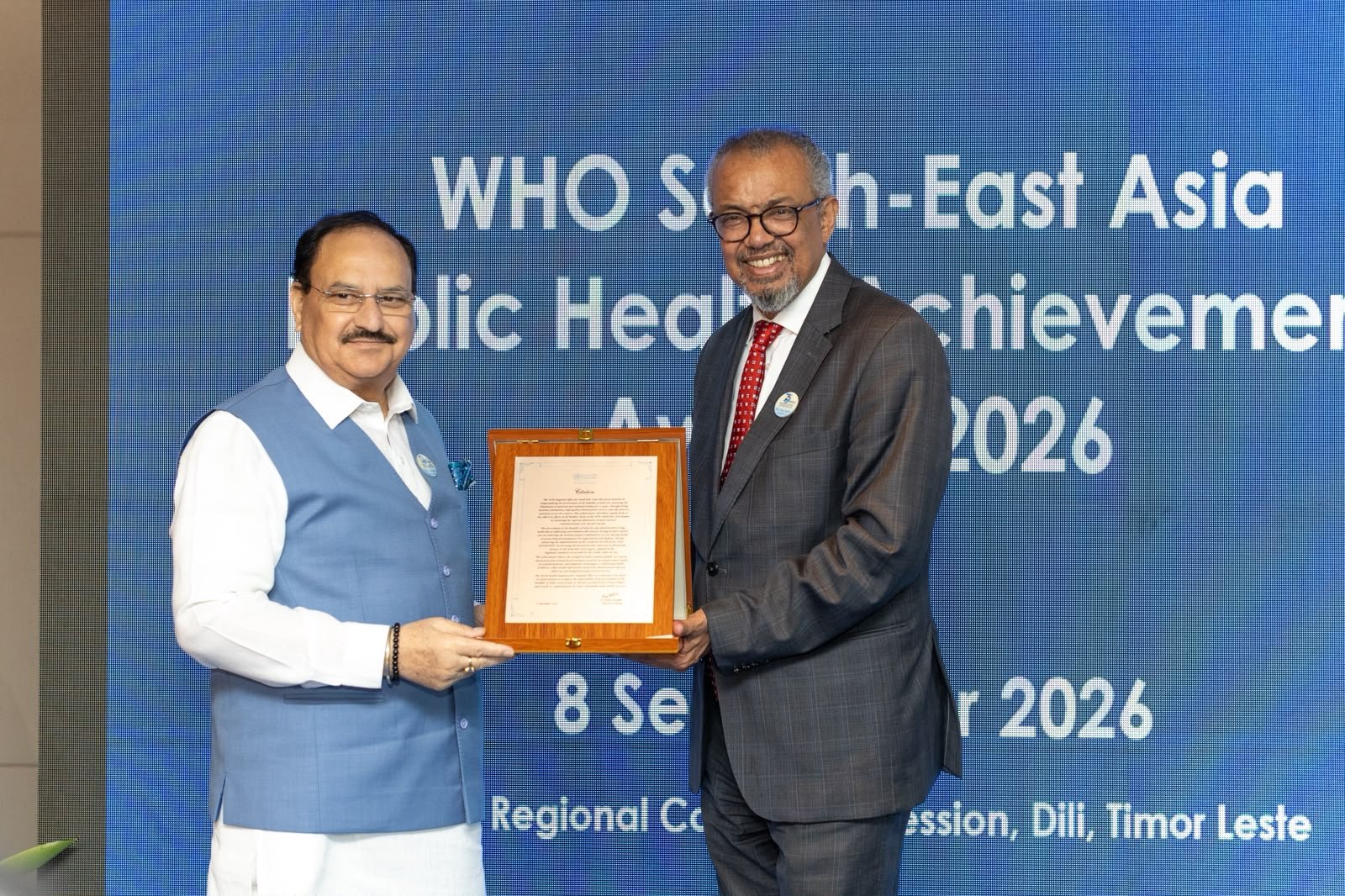
World Health Organization (WHO) Director-General Dr. Tedros Adhanom Ghebreyesus has praised India’s significant healthcare gains, particularly in maternal and child health and the fight against noncommunicable diseases, while highlighting how around 160,000 Ayushman Arogya Mandirs are bringing screening for hypertension, diabetes and common cancers closer to communities, and ASHA workers are taking healthcare services to people.
Tedros met Union Health Minister J.P. Nadda on the sidelines of the 79th Session of the WHO Regional Committee for South-East Asia being held in Dili, Timor-Leste, where the two leaders discussed India’s healthcare achievements as well as its ongoing cooperation with the global health body.
The meeting also covered India’s determined efforts to end TB, strengthen regulation of medical products and its continued support for WHO on global health priorities.
Taking to X on Thursday, Tedros said, “I met #India’s Health Minister @JPNadda and congratulated him on the country’s impressive health gains, particularly in maternal and child health and the fight against noncommunicable diseases.
Through 160,000 Ayushman Arogya Mandirs, India is bringing screening for hypertension, diabetes and common cancers closer to communities, with referral pathways for care. India’s ASHA workers are another powerful example of health care reaching people where they are, supporting mothers and children from conception through adolescence”
Tedros also praised the rise in institutional deliveries in India and its efforts to end TB.
“Together with expanded immunization and the rise in institutional deliveries from 78% to 93%, this is contributing to sustained declines in maternal and child mortality. We also discussed India’s determined efforts to #EndTB, strengthen regulation of medical products, and its important support for @WHO, including on traditional medicine and the ongoing negotiations on the Pathogen Access and Benefit Sharing system of the WHO Pandemic Agreement. #RC79”.
Nadda on Tuesday highlighted the expansion of India’s medical education and healthcare infrastructure while addressing the Ministerial Roundtable on “Human Resources for Health: Equity in Specialized Care” during the 79th Session of the WHO Regional Committee for South-East Asia (RC79) in Timor-Leste.
He said the number of medical colleges in the country has more than doubled from 387 to 858 since 2014, while MBBS seats have increased from 51,348 to 1,42,464 and postgraduate seats from 31,185 to 86,287.


