






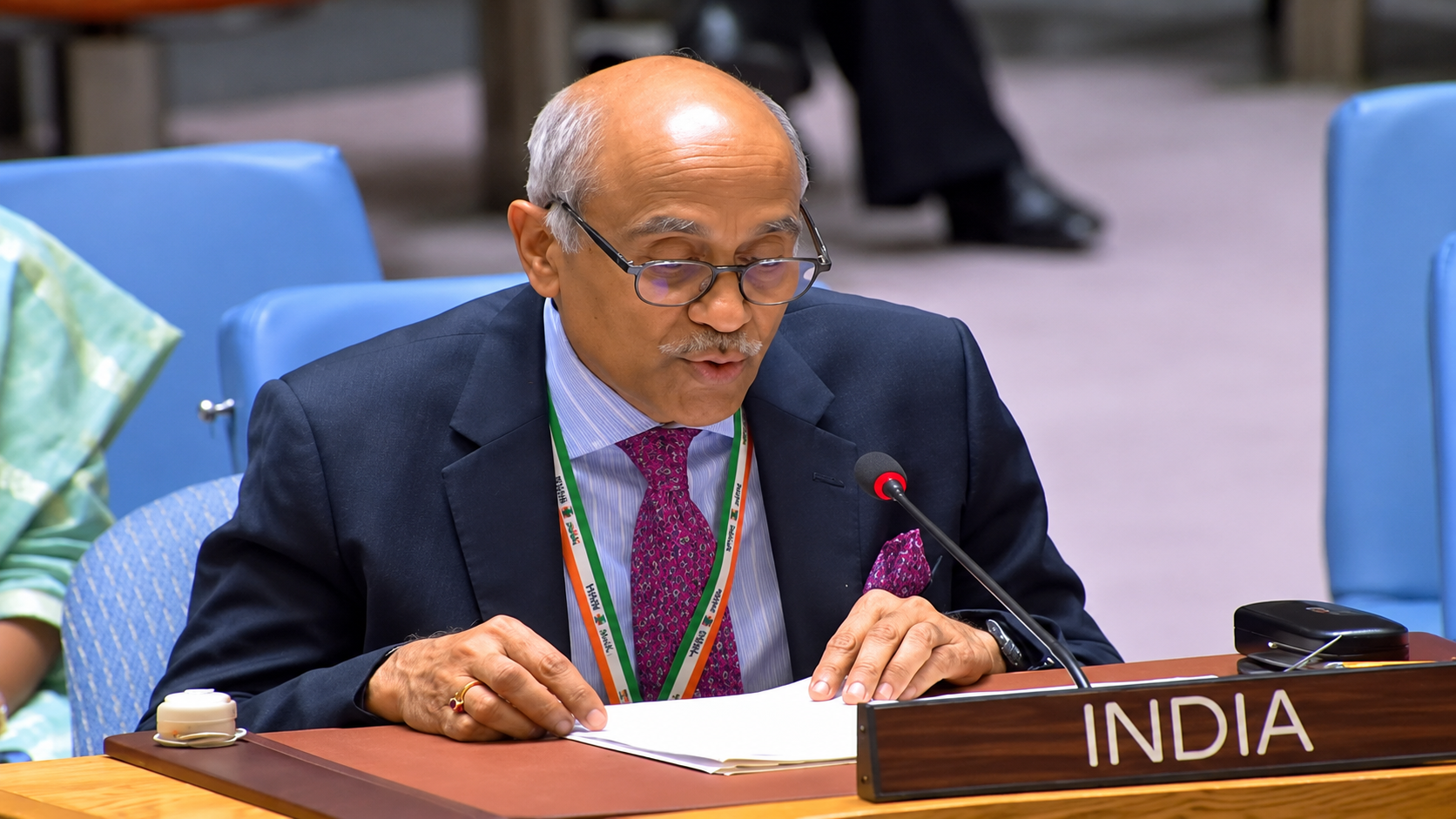
India has called for greater representation of women in the armed forces, saying their increased participation can strengthen the protection of women and girls who are disproportionately affected by armed conflicts.
Addressing the United Nations Security Council’s open debate on Women, Peace and Security (WPS) on Wednesday (local time), India’s Permanent Representative to the UN, P. Harish, stressed that greater participation of women in the military could significantly advance the WPS agenda.
Highlighting the growing risks faced by women and girls in conflict zones, Harish cited reports by Pramila Patten, the UN Secretary-General’s Special Representative on Sexual Violence in Conflict, and UN Secretary-General Antonio Guterres.
Referring to Patten’s report, he said sexual violence had become a political weapon in a world increasingly affected by conflicts. He also cited Guterres’ report, which found that nearly 750 million women and girls live within 50 kilometres of conflict zones.
“Verified cases of conflict-related sexual violence have more than doubled in a year,” Harish said, underscoring the urgency of strengthening women’s protection and participation in peacekeeping operations.
Highlighting India’s contribution to UN peacekeeping, Harish cited the work of two Indian Army officers who developed initiatives to improve the safety and welfare of women, including civilians and peacekeepers.
Major Mouiz Yaseen, serving as Force Ombudsperson and Welfare Officer with the United Nations Mission in South Sudan (UNMISS), established an accessible, confidential and victim-centred grievance-reporting mechanism using technology.
She also conducted training for peacekeepers and observers and developed a Force gender database to support evidence-based, gender-responsive planning. Yaseen received the UN Military Gender Advocate of the Year Award for 2025.
Harish also highlighted the contributions of Major Sonia Devendra Nevaskar, who served as a focal point for uniformed women and a member of the UNMISS Gender Task Force. Nevaskar established the UN Police (UNPOL) and Military Best Practice Networks to strengthen the implementation of the WPS agenda.
He said the Centre for UN Peacekeeping in New Delhi regularly conducts training programmes for women peacekeepers to enhance their operational capabilities and participation in UN missions.
Emphasising India’s efforts to promote gender equality in defence services, Harish said the country had systematically restructured its armed forces to expand opportunities for women.
He said women officers are now eligible for permanent commissions and have been inducted into combat roles.
“This commitment has opened doors for women, from fighter pilots to military diplomats, and has increased the number of Indian women serving as UN peacekeepers,” he said.
Highlighting the importance of women’s participation in conflict resolution, Harish said women play a crucial role in understanding local grievances, building consensus and addressing broader development priorities.
“Women understand local grievances, build common ground and set priorities that go beyond ending conflict to include safety, health, education and other factors of development,” he said.
He added that women’s empowerment remains essential to achieving sustainable peace and long-term solutions in conflict-affected regions.
Referring to Guterres’ report, Harish said women’s representation in political leadership and decision-making positions was critical to advancing the WPS agenda, adding that legislated gender quotas could make a significant difference.
“We attest to its potency,” he said, citing India’s Women’s Reservation Act of 2023, which provides for reserving one-third of seats for women in the Lok Sabha and state legislative assemblies, building on the reservation framework already in place in local government bodies.
(IANS Inputs)


