






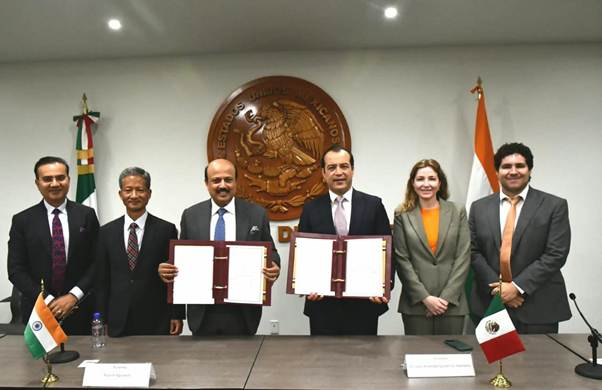
India and Mexico have formally launched negotiations for a Preferential Trade Agreement (PTA) with the signing of the Terms of Reference, marking a significant step towards strengthening bilateral trade and investment ties.
According to the Ministry of Commerce and Industry, the Terms of Reference establish the framework, scope, modalities and roadmap for negotiations aimed at expanding bilateral trade, creating business opportunities, boosting investment flows and building resilient and diversified supply chains.
The initiative follows an understanding reached between Prime Minister Narendra Modi and Mexican President Claudia Sheinbaum during their meeting on the sidelines of the G7 Summit in Canada in June 2025. The two leaders had agreed to deepen the India-Mexico partnership.
During the visit of Commerce Secretary Rajesh Agrawal, the two delegations held discussions on bilateral relations and opportunities to expand trade and investment. The Mexican side was represented by Undersecretary of Foreign Trade Luis Rosendo Gutiérrez Romano, on behalf of Secretary of Economy Marcelo Ebrard Casaubon.
The proposed agreement will cover key areas, including market access for goods, rules of origin, customs procedures and trade facilitation, dispute settlement, sanitary and phytosanitary measures, technical barriers to trade and trade remedies.
The negotiations aim to leverage the complementarities between the two economies and create greater opportunities for businesses and exporters. According to the ministry, sectors with significant potential for cooperation include automobiles, chemicals, electronics, pharmaceuticals, agri-food, energy, critical minerals, medical devices and advanced manufacturing.
The two sides also discussed ways to strengthen cooperation between their productive sectors and deepen economic engagement. They explored the possibility of organising a Mexican business mission to India in the first quarter of 2027 to facilitate business-to-business meetings, identify commercial opportunities and strengthen trade ties.
-PIB


