






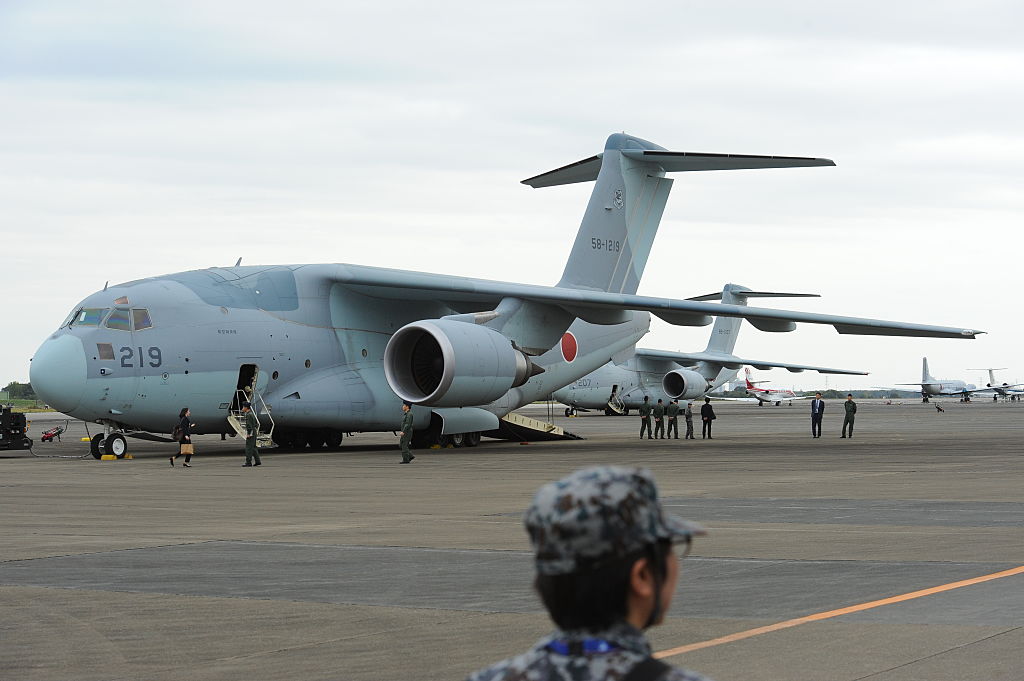
Right now, in the waters and on the islands of southern Japan, the largest joint military exercise in U.S. and Japan’s history is in full swing. It is called “Keen Sword 27”.
At least 45,000 Japanese military personnel and at least 11,000 American troops are taking part in it. That is 56,000 service members in all. Ships, aircraft, ground forces and partner nations from Europe and the Indo-Pacific are all involved. The drills run through 29th October.
The focus is crystal clear: Defending Japan’s south-western island chain — the chain that stretches towards Taiwan. One of the key locations is Yonaguni Island, It sits just 110 kilometres east of Taiwan. On that small island, and on nearby Ishigaki, American and Japanese forces have positioned advanced anti-ship missile-systems for the first time in these exercises: Systems that are designed to stop enemy ships from approaching the coast, long-range Japanese missiles that are capable of reaching far into the surrounding seas, and mobile-launchers that can move quickly — and hit hard.
The U.S. and Japan say that this is defensive training: Practice for a crisis, practice for keeping sea-lanes open and practice for responding if Japan’s remote islands come under threat.
However, Beijing is not sitting still. Chinese spy-drones and intelligence-gathering ships and aircraft have been moving and flying near the exercise areas. Japan scrambled fighter-jets after Chinese drones and a reconnaissance plane passed through the Miyako Strait and into the Pacific.
Chinese warships, including vessels that could support an aircraft-carrier, have also been spotted in the region. They are watching, collecting data and shadowing the drills.
This is the high-stakes game playing out in real time — American and Japanese forces rehearsing how they would fight together while Chinese forces practise how they would watch, track and possibly counter them.
Why does this matter so much? Because Taiwan sits at the centre of the tension. China claims the self-governing island as its own territory and has never ruled out using force to take it. Japan and the U.S. see any conflict over Taiwan as a direct threat to regional stability and to Japan’s own security.
The south-western islands are the front line for Japan. If trouble starts in the Taiwan Strait, those islands would be among the first places affected. That is why the allies are putting missiles closer than ever. That is why the drills are bigger than ever. And that is why China is responding with aggressive patrolling and surveillance.
Both sides say that they want peace. Yet both sides are preparing for exactly the opposite. One wrong move — a drone that strays too close, a ship that comes too near or a miscalculation in the fog of a live exercise — could turn this carefully-managed confrontation into something far more dangerous.
These war games are no longer just practice. They are a clear signal from Washington, D.C. and Tokyo: We are ready, we are together and we will not be surprised.
China is answering with its own signal: We are watching, we are present and we will not be intimidated.
Ramesh Ramachandran is a senior consulting editor with D.D. India


