






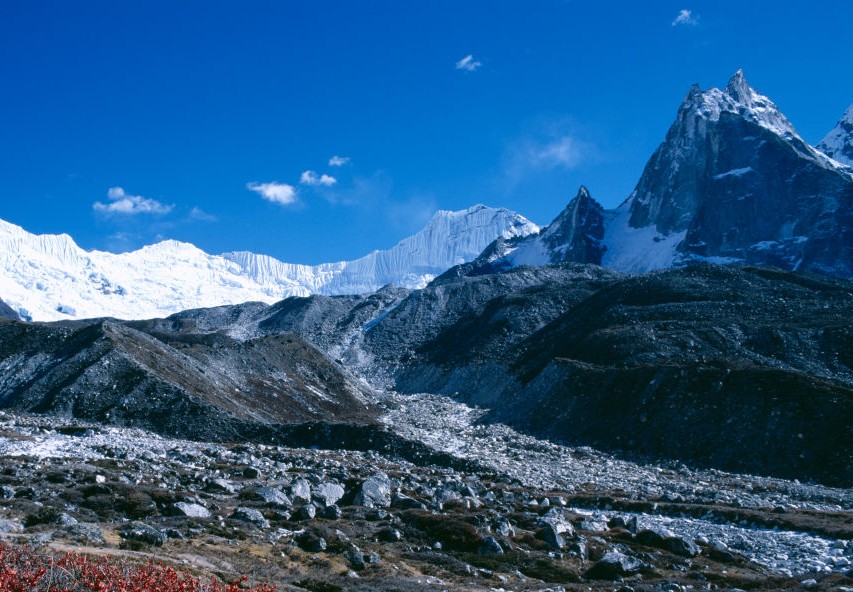
Nepal will give priority to Himalayan protection, climate-induced loss and damage, accessible climate finance and climate justice at the upcoming United Nations Climate Change Conference, COP31. Foreign Minister Shishir Khanal outlined these priorities at the National Climate Summit 2026 in Kathmandu on Thursday, as Nepal prepares to present its concerns at the global climate negotiations.
Khanal said climate change in the Himalayan region is no longer just a national concern for Nepal, but a global challenge. He stressed that the health of the Himalayas is closely linked to water security, food production, energy and economic stability.
Referring to recent floods and landslides, including the devastating disaster in the Bhote Koshi corridor in August, Khanal said climate-related disasters have caused serious damage to lives, infrastructure, livelihoods and the economy. He said preliminary estimates for reconstruction and rehabilitation following the August disaster alone stood at around 4.7 billion US dollars.
The Foreign Minister outlined four key priorities for COP31. These include giving greater prominence to Himalayan issues in international climate negotiations, addressing loss and damage caused by climate change, ensuring fair and accessible climate finance, and placing climate justice at the centre of global climate action.
He also called for continued international dialogue on mountain ecosystems, a dedicated Himalayan action plan and greater recognition of the risks facing the region in global climate discussions. Khanal emphasised the importance of the Paris Agreement’s goal of limiting global temperature rise to one-point-five degrees Celsius.
On climate finance, Khanal said Nepal needs substantial resources to adapt to climate change. He cited Nepal’s third Nationally Determined Contribution, which estimates adaptation requirements of around 18 to 20 billion US dollars between 2025 and 2035. He also stressed that funding to address climate-related loss and damage must be adequate and easily accessible.
Agriculture, Forest and Environment Minister Gita Chaudhary called for climate justice to move beyond slogans and translate into concrete action. She urged the international community to provide grants rather than loans to communities affected by climate disasters, along with technology and financial support for recovery.
Chaudhary said Nepal and Bhutan are preparing to jointly advance the mountain agenda at COP31, seeking greater recognition of the Himalayas as a distinct priority in global climate negotiations. She also stressed that climate adaptation must reach local communities and that women, children, Indigenous Peoples and marginalised groups must have a meaningful role in climate policymaking.
The National Climate Summit is part of Nepal’s preparations for COP31, which will take place in Antalya, Türkiye, from November 9 to 20. The Kathmandu summit brings together relevant stakeholders to consolidate the country’s national position paper and policy priorities before the international negotiations.
Nepal is seeking stronger global recognition of the vulnerability of mountain ecosystems and greater support for countries that contribute little to global emissions but face significant climate impacts. The summit is expected to help shape Nepal’s position on Himalayan protection, adaptation, climate finance and loss and damage ahead of COP31.
(Arvind Jain is a Special Correspondent with Prasar Bharati)


