






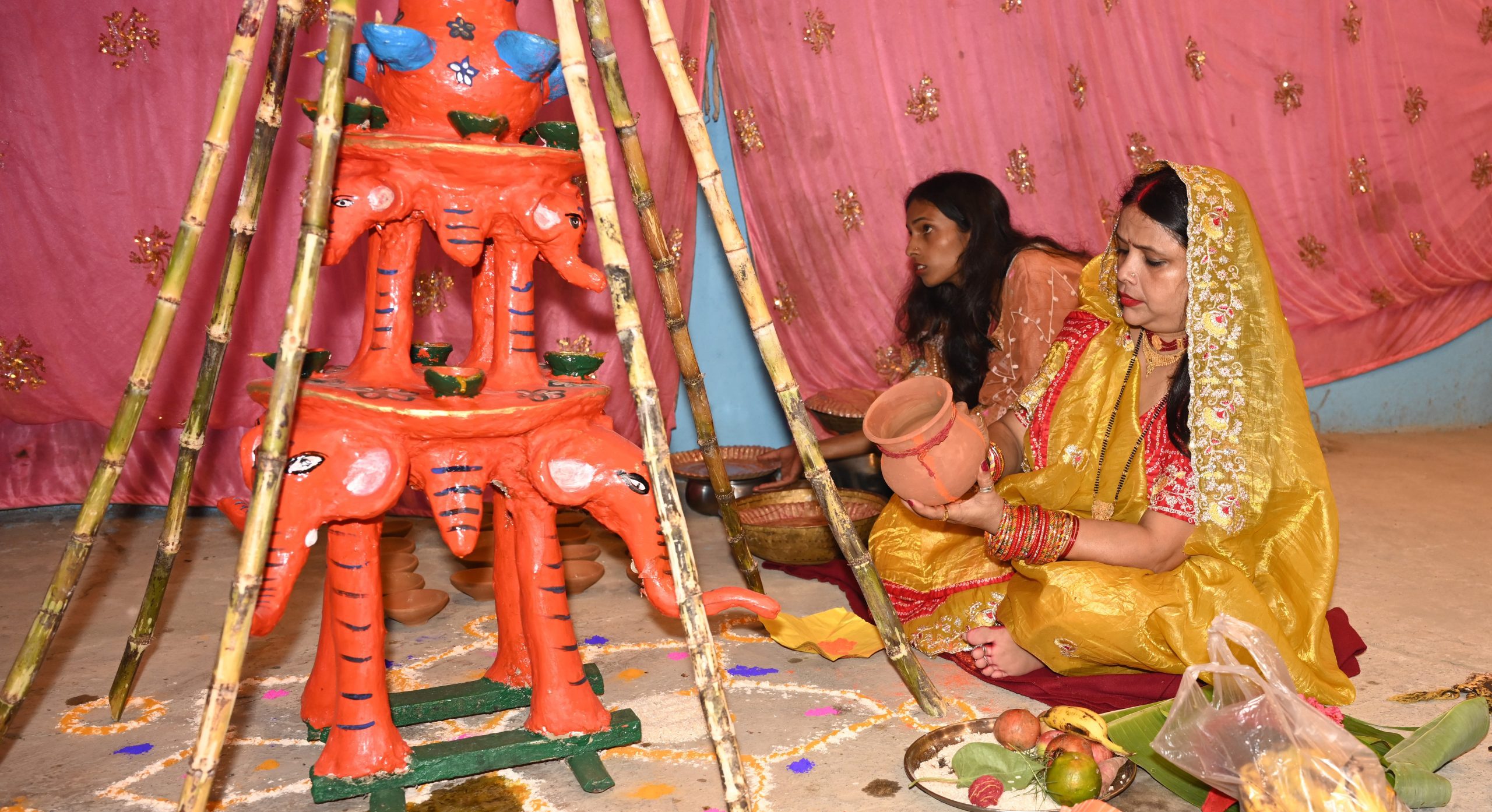
Devotees will observe ‘Kharna’, the second day of the four-day Chhath Puja festival, on Saturday by observing a day-long fast and performing special prayers in the evening.
One of the most significant festivals in Bihar and several other parts of the country, Chhath Puja began on Friday with the traditional ‘Nahay-Khay’ ritual, which marks the beginning of a period of spiritual discipline, cleanliness and devotion dedicated to the Sun God and Chhathi Maiya.
On the second day, devotees, known as ‘vratis’, prepare traditional offerings, including jaggery-based kheer, roti and other prasad. After offering the food to the deity, they consume it and distribute the prasad among family members and others.
The Kharna ritual is followed by a rigorous 36-hour ‘nirjala’ fast, during which devotees abstain from both food and water. The fast continues through the main Chhath rituals, which involve offering prayers to the setting and rising Sun.
The first day of the festival begins with devotees taking a ritual bath, wearing clean clothes and preparing food with strict adherence to traditional practices. Many also visit the Ganga and other sacred rivers, believing that a holy dip purifies the body and mind.
The traditional Nahay-Khay meal comprises arwa rice (non-parboiled rice), chana dal (split Bengal gram) and kaddu (pumpkin). Particular emphasis is placed on cleanliness and ritual purity during food preparation.
Meanwhile, markets across towns and villages witness increased activity as people purchase fruits, vegetables, ‘soop’ (bamboo winnowing baskets), ‘daura’ (bamboo baskets) and other items required for the festival.
Chhath Puja is also characterised by collective participation, with family members working together to arrange offerings and prepare for the rituals. Traditional folk songs dedicated to the festival begin resonating in homes from the first day.
Rooted in folk traditions and devotion, the festival places special emphasis on discipline, simplicity, cleanliness and community participation.
(IANS Inputs)


