






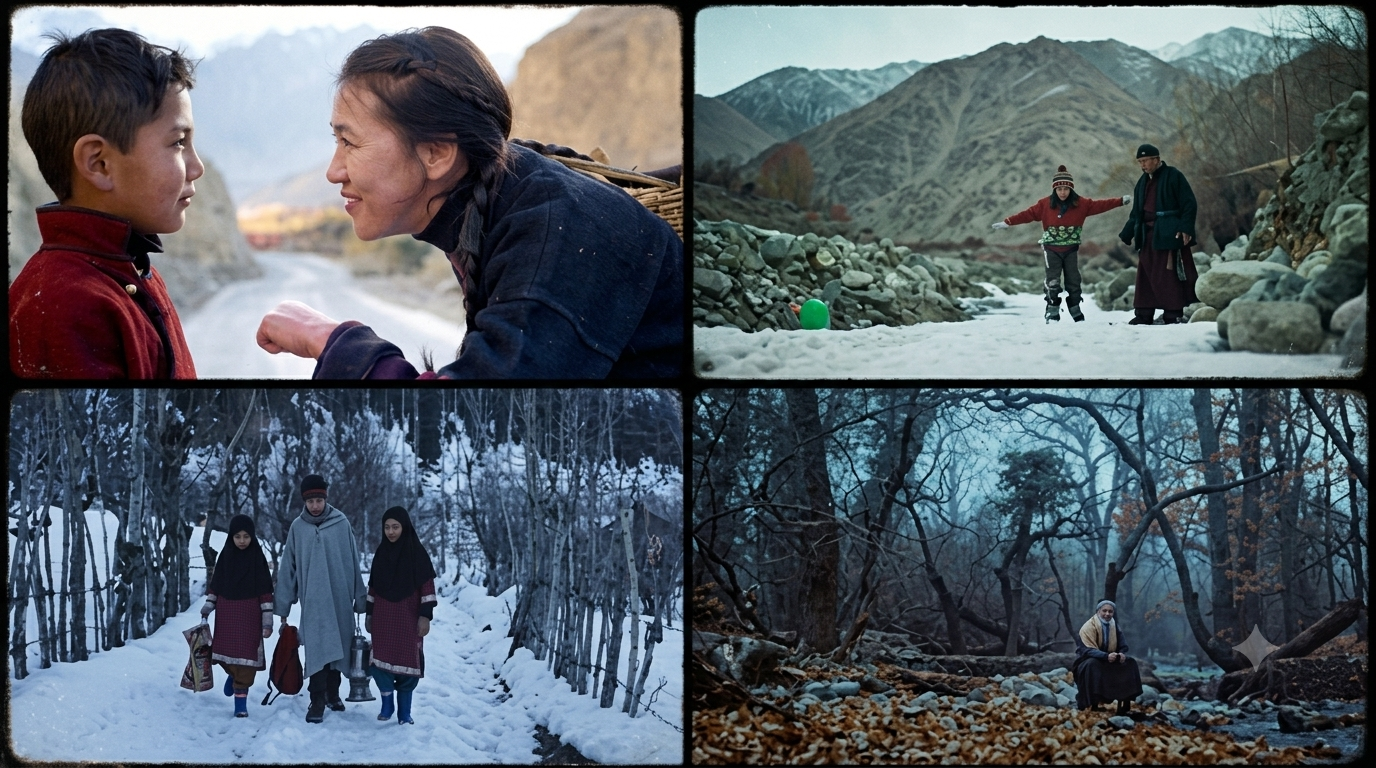
The 57th International Film Festival of India (IFFI) will showcase the cultural richness, traditions and everyday experiences of the Himalayan region through four films in Ladakhi and Kashmiri, comprising two feature films and two non-feature films.
The selection brings the landscapes, monasteries, snowbound villages, indigenous crafts and human stories of Ladakh and Kashmir to the festival in Goa. Reflecting the diversity of regional cinema, the films explore themes such as spirituality, reincarnation, childhood, family relationships, survival and the preservation of traditional heritage.
Among the highlights is Becoming, a Ladakhi short film that will serve as the Opening Film of the Indian Panorama Non-Feature Films section.
Ladakhi Cinema Explores Spirituality and Life in the Himalayas
Written and directed by Leena Yadav, Becoming is an 11-minute Ladakhi film centred on Rinchen, a young mother, and her son Agyal, who displays an unusual connection with nature from infancy.
At the age of seven, Agyal begins experiencing strange visions and develops a strong attraction towards the ancient Likir Monastery. He also recalls memories that appear to belong to another life. During a visit to the monastery, he identifies a box kept in a locked room. The objects inside lead the monks to believe that he may be the reincarnation of a respected Rimpoche.
As Agyal embarks on his spiritual journey, the film explores the ideas of rebirth, destiny and the connections between the past, present and future. The cast includes Rinchen Angmo and Tsering Wanggail.
Leena Yadav, an award-winning writer, director and producer, is known for films and projects such as Parched, Rajma Chawal and House of Secrets. She was also associated with the Oscar-nominated film Tell It Like a Woman.
Another major Ladakhi entry is Birds on Ice, an 85-minute feature film directed by Sahil Shah. Selected for the Indian Panorama Feature Films section and the Best Debut Feature Film of a Director category, the film tells the story of Tashi, a young girl living in Ladakh with her grandfather while waiting for her shepherd parents to return.
Her life takes a new direction when she receives a pair of borrowed ice-hockey skates and discovers a dream of pursuing the sport. However, growing up in the harsh Himalayan winter brings challenges that test her understanding of family, grief and survival. Determined to pursue her ambition, Tashi and her best friend find their own way forward.
The film stars Semzang Skitdon as Tashi, alongside N. Chopal, Kunga Choskyab, Padma Chorol and Sonam Stobgais. Written by Shaan Pasricha and produced by Cameo Films, the film marks Sahil Shah’s feature debut and draws inspiration from the ice-hockey community.
Kashmiri Films Highlight Childhood, Conscience and Traditional Crafts
The Kashmiri selection features stories that capture the region’s social realities, human relationships and cultural heritage.
Sledge, directed by Raja Shabir Mohammad Khan, is a 75-minute Kashmiri feature film scheduled to have its Asia Premiere at IFFI 2026. Selected for the Indian Panorama section, it will also compete in the Best Debut Director of an Indian Feature Film category.
Set in a snow-covered village near Gulmarg, the film follows Ali, whose wooden sledge is the family’s only source of income. When he leaves home for a few days, his three children, Haziq, Eashel and Raima, are left to manage on their own. During a moment of play, they accidentally break the sledge and realise that they must repair it before their father returns.
The children venture into the tourist areas of Gulmarg in search of money, facing rejection and humiliation along the way. Their situation appears to improve when they discover a lost bag containing money and chocolates. However, the temptation to use its contents brings them face to face with their conscience, turning their struggle into a story about childhood, responsibility and moral choices.
Raja Shabir Mohammad Khan is an alumnus of the Satyajit Ray Film and Television Institute. His documentary Shepherds of Paradise won a National Award. Produced by Ryhana Productions, Sledge features Haziq Mohammad Khan, Eashel Khan and Raima Khan.
The preservation of traditional Kashmiri craftsmanship is the focus of Naqsh-e-Daur, a 12-minute documentary selected for the Indian Panorama Non-Feature Films section. Directed and shot by Baba Tassaduq Hussain, the film follows Ghulam Nabi Dar, a Padma Shri awardee who has practised the traditional Kashmiri art of walnut woodcarving for more than six decades.
Set in the old streets of Srinagar, the documentary captures Dar’s dedication to creating intricate designs that reflect Kashmir’s history and cultural identity. It highlights his efforts to preserve the craft at a time when fewer people are taking it up.
Through his life and work, the film explores the importance of traditional skills, cultural continuity and passing knowledge to younger generations. Produced by BBP Studio Virtual Bharat Pvt Ltd, the documentary features a story by Bharatbala.
Himalayan Stories Connect Regional Heritage with Universal Experiences
The four films bring different dimensions of Ladakhi and Kashmiri life to the international festival platform. From the spiritual traditions surrounding reincarnation and the aspirations of a young ice-hockey enthusiast to the moral dilemmas of children and the dedication of a master craftsman, the selection reflects the region’s cultural diversity and human resilience.
Through these cinematic narratives, IFFI 2026 provides audiences an opportunity to engage with the Himalayan region beyond its scenic landscapes, highlighting its people, traditions, challenges and evolving aspirations.
The selection reinforces the festival’s broader celebration of regional storytelling, demonstrating how films rooted in distinct linguistic and cultural identities can communicate universal emotions and experiences to audiences across the world.
(PIB)


