






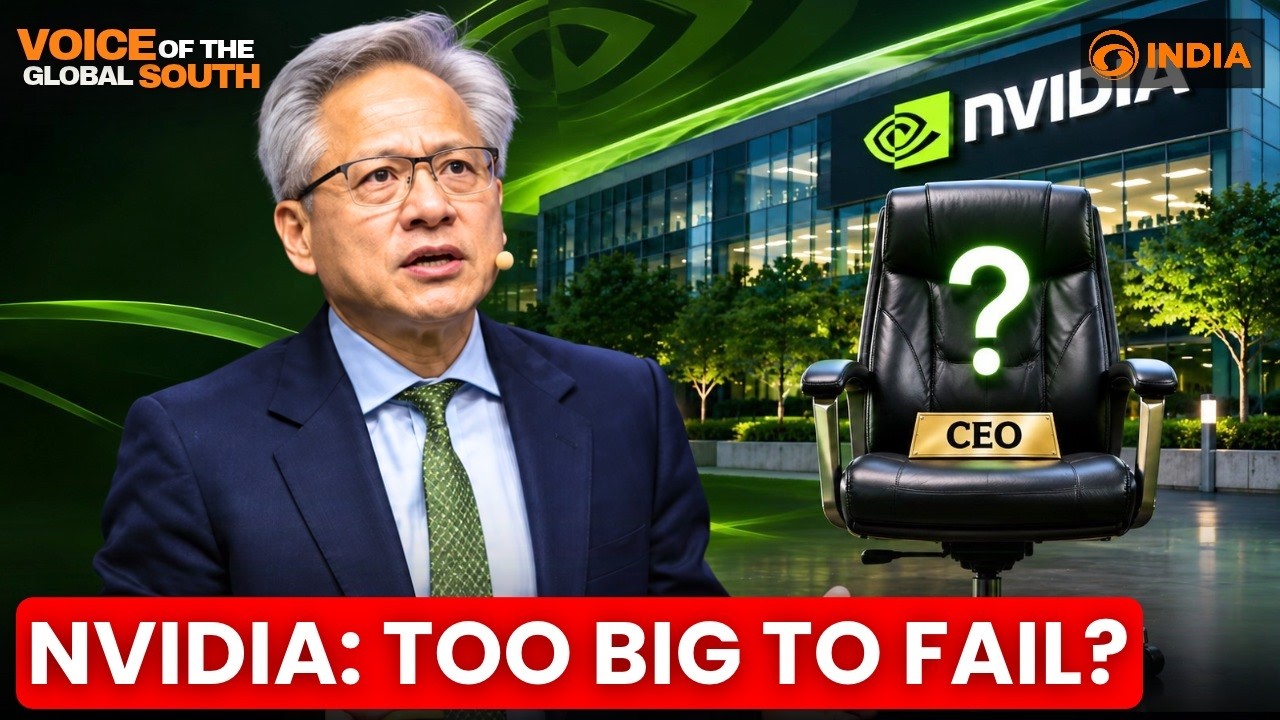
As Nvidia reels from a historic leadership shake-up and global markets react to the turmoil, a deeper question is dominating conversations across Silicon Valley: Can Nvidia survive without the man who built it? Or has the company become too big and important to fail?
Until his resignation on Thursday, Jensen Huang was the only chief executive Nvidia had ever known. Since co-founding the company in 1993, he steered it from a niche graphics-chip maker into the primary engine of the global A.I. boom, becoming the public face of the U.S.’ technological lead over China. That extraordinary concentration of power has suddenly become Nvidia’s greatest vulnerability. In its own official regulatory filings, the company has long warned investors that it relies heavily on its veteran leadership team, noting that weak succession planning could severely damage the business.
https://www.youtube.com/watch?v=MRvsn3F1hLk&feature=youtu.be
Now, those warnings are playing out in real time. For one, there is no clear successor. Huang had roughly 60 top managers reporting directly to him and had previously questioned traditional methods of grooming a successor, leaving no permanent replacement ready to step in. Then, market fallout: Following reports of multiple alleged affairs and claims that non-disclosure agreements were used to keep them quiet, Nvidia’s stock tumbled and the Board was forced into emergency mode. Market analysts immediately flagged the financial danger of Huang’s exit. Some estimates suggest that the company could lose 25 to 30 per cent of its valuation simply because investors had bet so heavily on Huang’s personal vision, industry relationships and unique management style.
Yet, the stakes extend far beyond one executive’s career or a single company’s stock price. Nvidia supplies the vast majority of the specialised chips powering the world’s most advanced A.I. systems. Its hardware underpins global cloud computing, autonomous vehicles and modern military applications. In the escalating U.S.–China tech rivalry, Nvidia functions less like a private corporation and more like vital national infrastructure. However, a prolonged leadership vacuum or a sharp erosion of corporate trust could stall A.I. development across the U.S. and its allies, severely disrupt supply-chains for the world’s largest tech firms, and give Chinese competitors crucial breathing room to catch up.
The market’s sharp reaction this week underscores just how tightly Nvidia’s fate is tied to broader economic and national security. On Thursday, the Nvidia Board officially named Chief Financial Officer Colette Kress as interim C.E.O., alongside new Board Chair Harvey C. Jones, while it conducts a search for a permanent leader. For his part, Huang has promised full cooperation with the internal investigation and maintains that he remains deeply committed to U.S. national security.
The coming months will determine whether Nvidia can execute a smooth handover or whether the loss of its founder proves that some corporate giants truly depend on a single person. In Silicon Valley, the phrase “too big to fail” used to belong exclusively to Wall Street banks. Today, it may belong to a chip company.


