






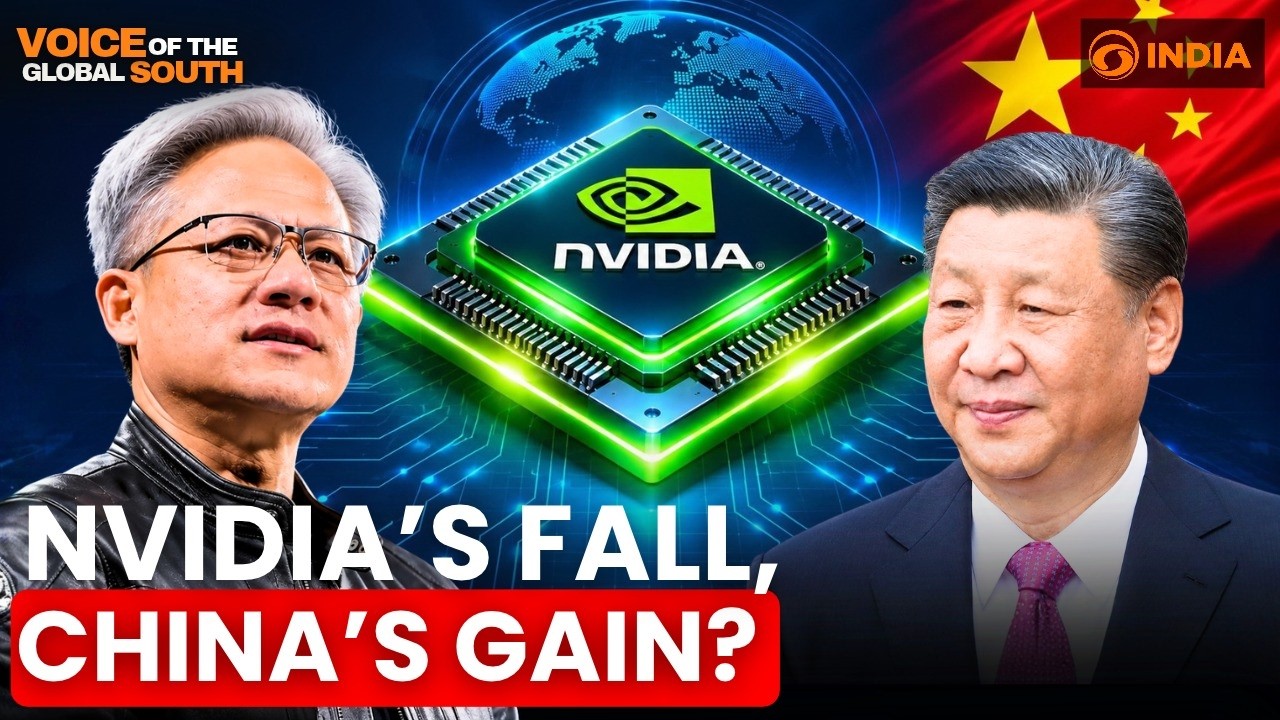
Elon Musk has weighed in on the leadership crisis engulfing Nvidia, fuelling intense speculation across Silicon Valley about what comes next for the tech giant’s ousted founder. Hours before Jensen Huang officially stepped down on 12th November, the financial blog ZeroHedge posted on X, urging the billionaire: “Elon, please hire Jensen.” Musk replied with four simple words: “That would be an honour.” Now that Huang has formally resigned as President, C.E.O. and Board member of the company he built from a gaming start-up into the undisputed powerhouse of Artificial Intelligence, Musk’s comment carries massive weight.
The resignation caps off a tumultuous few days for Nvidia. Earlier in the week, the company’s Board had stood behind Huang after he retracted a previous denial and admitted to an affair with Alice Huang, a Singapore-based Chinese tech executive. U.S. intelligence agencies allege that Alice Huang was recruited as a Chinese spy — a claim Beijing has dismissed as “groundless smears.”
However, the situation quickly deteriorated. The New York Times reported a second alleged affair, this time with Kimberly Powell, Nvidia’s Vice-President of Healthcare, who reported directly to Huang. Former employees claimed that the two were caught on video at a San Jose hotel during a company conference in March, though the newspaper noted it has not seen the footage. Then Reuters reported a third alleged relationship involving yet another Nvidia employee.
These revelations, alongside allegations of a cover-up, raised serious red flags regarding corporate governance and workplace misconduct. The fallout on Wall Street has been severe. Nvidia shares have plunged, wiping out more than a trillion dollars in market value this month while rivals such as A.M.D. and Broadcom have seen their stocks climb.
As the dust settles, analysts are asking a critical geopolitical question: Who actually benefits from the downfall of Jensen Huang? Increasingly, experts point to Beijing.
1. Chaos at the top: Nvidia controls roughly 90 per cent of the global A.I. chip market. Losing its visionary founder leaves a massive leadership vacuum at a critical juncture, potentially slowing U.S. A.I. progress right as Washington and Beijing are locked in a fierce technological race.
2. Intelligence and restricted tech: U.S. intelligence officials believe that Alice Huang was recruited by Chinese intelligence specifically to get close to the Nvidia chief. Critically, her former firm, Megaspeed, was a major Nvidia customer and is currently under U.S. investigation for allegedly smuggling billions of dollars’ worth of restricted A.I. chips into China. Given Jensen Huang’s direct access to the White House and influence over U.S. export policies, infiltrating his inner circle represents a major intelligence victory for Beijing.
While Western intelligence agencies have long warned of Beijing’s aggressive espionage campaigns targeting governments, defence contractors and top universities, this scandal marks a chilling shift in tactics. Rather than relying solely on cyberattacks or recruiting academic researchers, foreign operatives allegedly targeted the corporate leader holding the keys to the world’s most critical technology. A suspected “honeytrap” aimed directly at the head of a multi-trillion-dollar U.S. tech firm has pushed Silicon Valley into uncharted territory.
With the U.S. agency F.B.I. investigating, the country’s lawmakers demanding answers and President Donald Trump suggesting on Truth Social that Apple C.E.O. Tim Cook is the only person capable of replacing Huang, all eyes are on Silicon Valley. As Nvidia scrambles to steady the ship, one major question lingers over the tech world: Now that Jensen Huang is out at Nvidia, could he really walk straight into Elon Musk’s empire?


