






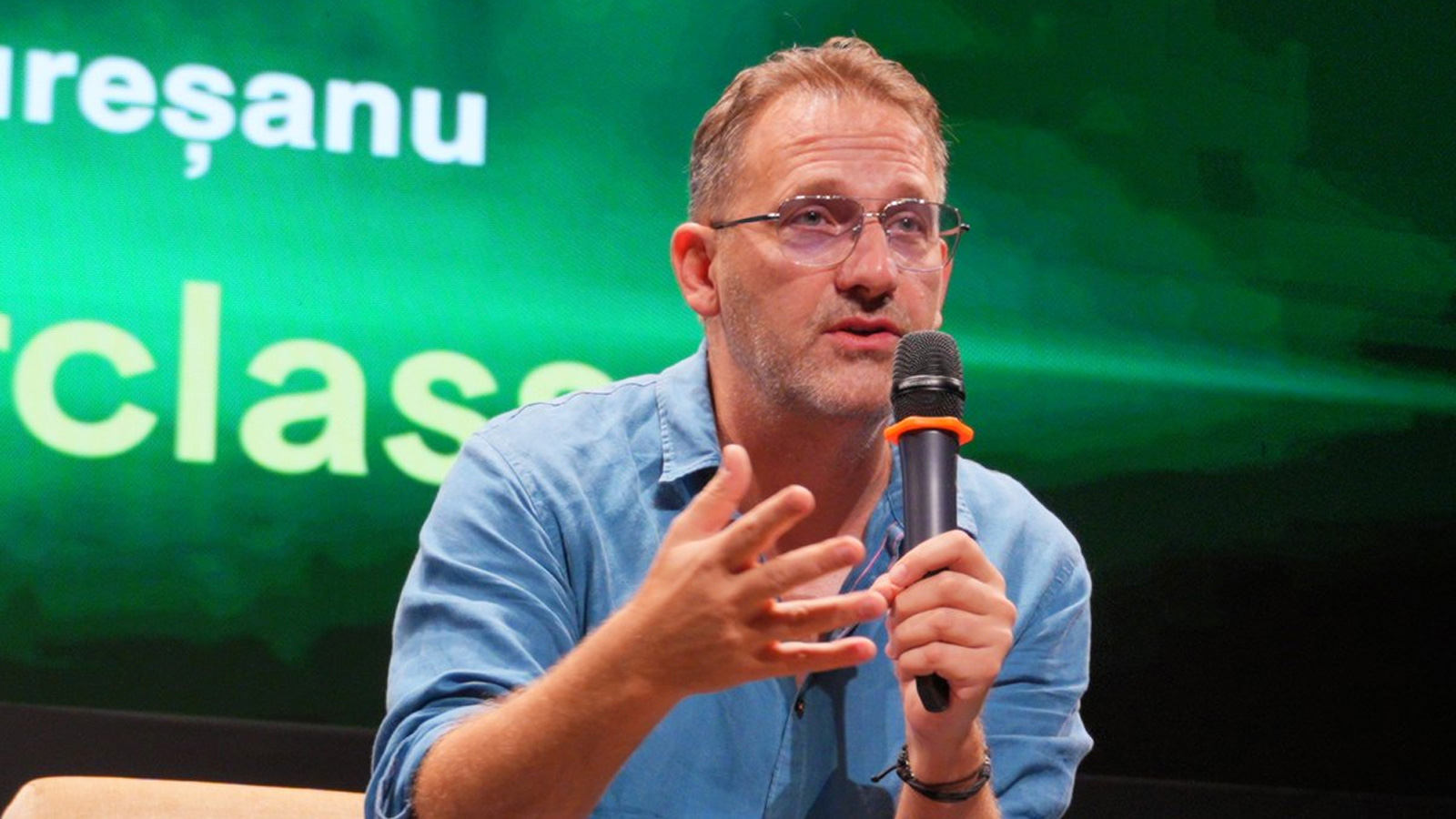
Acclaimed Romanian writer-director and producer Bogdan Mureșanu explored the intricate relationship between reality and fiction during a masterclass titled The Thin Borders Between Reality and Fiction at the 57th International Film Festival of India (IFFI) in Goa.
Addressing cinephiles, students and film professionals, Mureșanu reflected on storytelling as an essential part of human existence, arguing that it is not limited to filmmakers or artists. From everyday anecdotes shared among friends to narratives presented on the big screen, stories help people understand the world, imagine alternative realities and renew their spirit.
He described filmmaking as a deeply personal process that eventually becomes a collective experience through the audience’s engagement and interpretation. “When a monologue in your mind becomes a dialogue, the film is no longer yours alone,” he said, explaining how a filmmaker’s private vision acquires new dimensions when viewers bring their own perspectives to it.
A Clear Vision and the Power of the Unspoken
Discussing the craft of filmmaking, Mureșanu stressed the importance of a strong central idea. Unlike a novel, which can accommodate multiple narrative diversions, a two-hour film needs to remain focused, with its context, premise and themes aligned with a clear vision.
He also highlighted the importance of what remains unseen or unspoken in cinematic storytelling. Recalling a sequence from one of his films, he explained that he deliberately chose not to show a character lighting a firecracker, leaving the moment to the audience’s imagination. Such creative restraint, he noted, enables viewers to participate emotionally in the narrative rather than simply receive everything presented on screen.
Reality and Fiction as Complementary Forces
Mureșanu challenged the notion that archival footage offers an entirely objective account of history, pointing out that every camera captures only a particular perspective. Drawing on his films The Christmas Gift and The New Year That Never Came, he discussed how archival material and fictional narratives can work together to offer a deeper understanding of reality.
“When fiction works as a simplified model to understand reality, it becomes one with reality. They feed each other,” he observed, explaining how the two forms can complement and enrich one another.
He also discussed the role of visual language in shaping a film’s narrative. For films set during Romania’s communist era, he used the 4:3 aspect ratio to complement archival footage while creating a sense of intimacy and confinement. In contrast, his animated short The Magician employed a sweeping widescreen format that gave the harbour an active presence in the story.
Human Emotions at the Heart of Cinema
Reflecting on contemporary filmmaking, Mureșanu said cinema’s strength lies not merely in its pace or spectacle, but also in the expressive possibilities of the human face and the emotions communicated through a gaze.
An interactive question-and-answer session explored subjects including historical biopics, mythology and the ethical responsibilities involved in portraying real-life personalities. Referring to a recent offer to direct a biopic on a legendary personality, he suggested that focusing on a defining chapter of a person’s life can often reveal deeper truths than attempting to cover an entire life through an exhaustive biography.
Concluding the masterclass, Mureșanu encouraged storytellers to move beyond inherited perspectives, engage with the wider world and return to their roots with courage and clarity. His session underlined how cinema draws from the constant exchange between personal memory, collective experience and imagination, with audiences playing an active role in bringing stories to life.
(PIB)


