





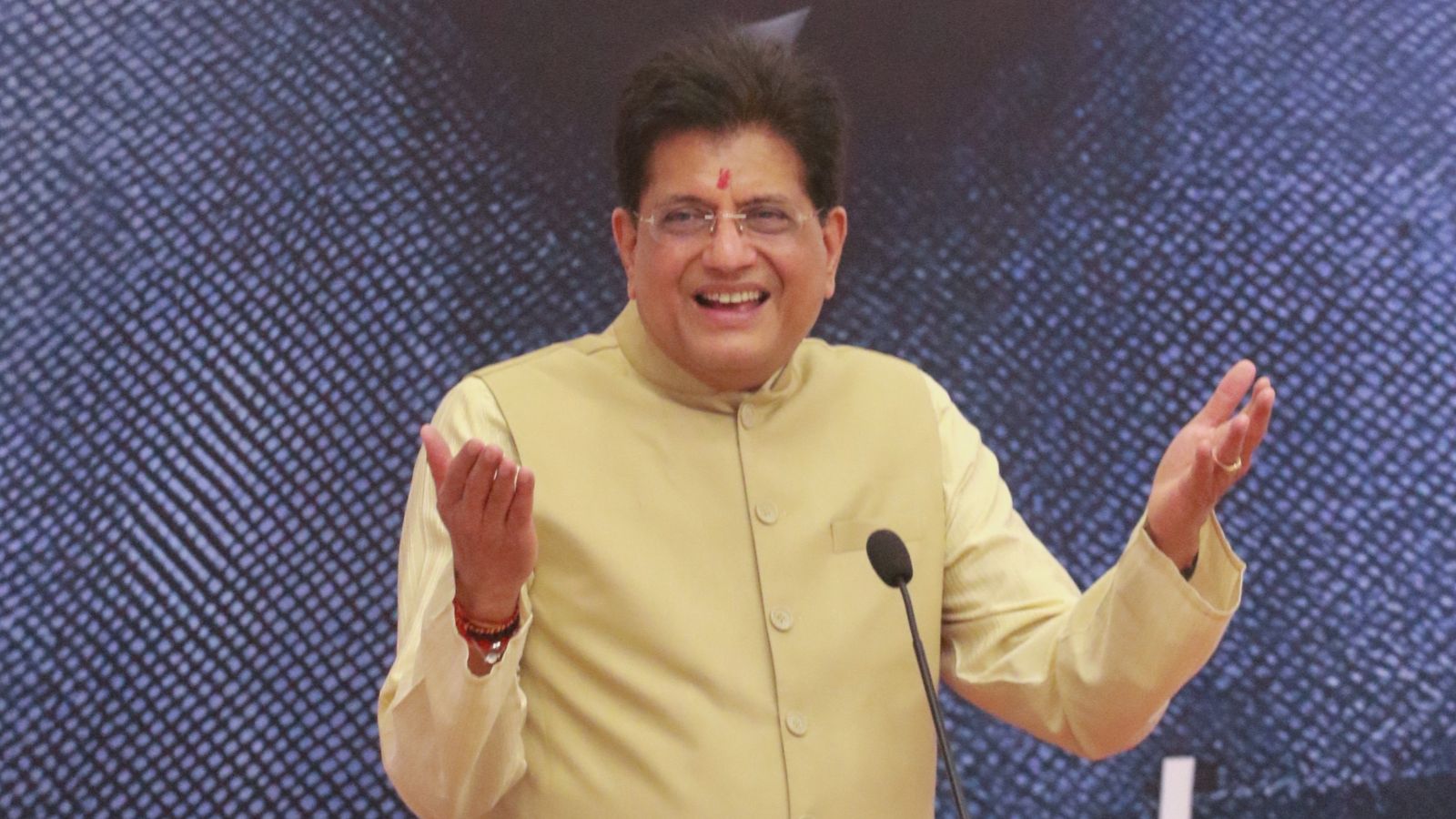
Union Commerce and Industry Minister Piyush Goyal on Thursday urged graduates of the University of Delhi to pursue their ambitions, embrace lifelong learning and contribute to the country’s development, saying that India’s youth would play a pivotal role in achieving the vision of a developed nation by 2047.
Addressing the university’s 103rd Annual Convocation, Goyal highlighted India’s economic transformation and expanding entrepreneurial ecosystem. He said nearly 50 crore Indians had moved out of extreme poverty over the past decade, while the country had emerged as the world’s third-largest startup ecosystem, with around 2.5 lakh startups and more than 130 unicorns.
Contrasting the current entrepreneurial landscape with the situation a decade ago, when India had only a few hundred startups, he said young Indians were increasingly becoming job creators rather than job seekers. Their willingness to experiment, learn from failures and take on challenges would be crucial to the country’s future, he added.
Goyal said the vision of Viksit Bharat 2047 rested on the shoulders of the younger generation. He urged graduates to use their opportunities and achievements to improve the lives of underprivileged and marginalised sections of society, stressing that their success should also contribute to the welfare of those who had not enjoyed similar opportunities.
Congratulating the graduating students and their parents, the minister noted that nearly 2.5 crore young Indians reach college-going age every year, but only a limited number secure admission to prestigious institutions such as Delhi University.
He acknowledged the efforts students had made to reach the milestone, from board examinations and the Common University Entrance Test (CUET) to navigating academic requirements, internships and campus placements. He also credited parents for their sacrifices and encouraged graduates to remember the university staff and other individuals who had supported them during their academic journey.
Emphasising the importance of teachers, Goyal said their influence extended far beyond the classroom and often became more evident as students encountered challenges in their professional and personal lives. He also encouraged graduates to preserve the friendships formed during their university years, describing friends as potential future colleagues, business partners, clients and investors, as well as lifelong well-wishers.
Referring to Delhi University’s growth over the years, Goyal said the institution had expanded to 90 colleges and more than six lakh students. He noted that it had maintained its convocation tradition through major historical events, including the freedom struggle, the Second World War and the COVID-19 pandemic.
The convocation was particularly significant, he said, with more than 400 doctoral degrees, over 1.7 lakh undergraduate and postgraduate degrees, and more than 160 gold medals being awarded. He also praised the achievements of women graduates, describing their success as a reflection of the country’s progress towards ensuring quality education for every girl child.
Urging students to keep their aspirations alive, Goyal quoted Apple co-founder Steve Jobs: “Your time is limited, so don’t waste it living someone else’s life. Have courage to follow your heart and intuition.”
He shared six lessons for a successful life, the minister advised graduates to think big, remain positive, maintain focus, continue learning, prioritise their health and trust their struggles.
He encouraged students to set ambitious goals and not allow the fear of failure to limit their aspirations. Citing the life of former US President Abraham Lincoln, he highlighted how perseverance, continuous learning and resilience helped him overcome personal and professional setbacks before becoming a historic leader.
On the importance of maintaining a positive outlook, Goyal referred to Thomas Edison’s repeated experiments in developing the electric bulb. He said setbacks should be treated as opportunities to learn and improve rather than reasons to abandon one’s ambitions.
Highlighting the need for concentration in an age dominated by short-form digital content, he quoted Swami Vivekananda: “Pick up one idea, make that one idea your life.” He said sustained focus was essential for achieving meaningful goals.
Goyal also stressed the importance of lifelong learning, particularly in the era of Artificial Intelligence and emerging technologies. He said graduates must remain willing to learn, unlearn and adapt to changing circumstances, adding that human experience and critical thinking would remain essential in addressing future challenges.
On health and well-being, he urged young people to develop disciplined lifestyles through activities such as walking, running, playing sports and practising yoga. He also highlighted the importance of preventive healthcare and maintaining physical and mental well-being.
The minister’s sixth lesson was to trust one’s struggles and view hardships as preparation for future responsibilities. Referring to the 14-year exile of Lord Ram and the Pandavas’ years in the forest, he said difficulties often prepared individuals for greater responsibilities and achievements.
Recalling former Prime Minister Atal Bihari Vajpayee as one of his most respected mentors, Goyal quoted his observation: “Education, in the truest sense of the term, is the process of self-discovery, art of self-sculpture.” Vajpayee had made the remarks during the University Grants Commission’s Golden Jubilee celebrations in 2002, he said.
Goyal also urged graduates to adopt the five national commitments, or Panch Pran, outlined by Prime Minister Narendra Modi during the 75th Independence Day celebrations from the Red Fort, and work towards fulfilling them by 2047.
The first commitment, he said, was to build a developed India. He described Viksit Bharat as a prosperous nation that ensured a good quality of life for every family and cared for all its citizens. Contributing to this vision, he said, should become the graduates’ responsibility as they stepped into the next phase of their lives.
The second commitment was to eliminate the colonial mindset. Appreciating Delhi University’s decision to replace traditional graduation gowns and robes with Indian attire, Goyal said the move reflected confidence in the country’s cultural identity and traditions.
The third commitment was to take pride in India’s history, heritage and culture. He said national development should go hand in hand with preserving cultural identity and historical legacy.
Referring to his recent visit to Rome, where he interacted with Italy’s Deputy Prime Minister during a business forum and joint committee meeting, Goyal said he had also witnessed the importance the country attached to preserving its art and cultural heritage.
He also highlighted the redevelopment of the North and South Blocks in New Delhi into the Yuge Yugeen Bharat National Museum. The project, he said, would showcase thousands of years of India’s history and heritage to the world and strengthen national cultural confidence.
The fourth commitment was national unity. Citing the Statue of Unity dedicated to Sardar Vallabhbhai Patel in Kevadia, Gujarat, Goyal referred to the development of the surrounding tribal region following the establishment of the monument.
He said the transformation demonstrated how national unity could support inclusive development. A divided society, he added, could not realise its full potential or secure its rightful position in the world.
The fifth commitment was a strong sense of duty. Goyal said that greater opportunities and authority also brought greater responsibilities. Graduates, he said, must contribute to national development, work towards building a drug-free society, protect the environment and help advance India’s technological capabilities.
He expressed confidence that India would emerge as an example for the world by 2047, when the country completes 100 years of Independence.
Concluding his address, Goyal said a convocation marked not merely the completion of an academic journey but also the beginning of an opportunity to shape one’s future and contribute to society. He described graduates as national assets whose energy, ideas and ambitions would help determine India’s future.
Urging them to learn from history without being constrained by it, he called on students to pursue ambitious goals and participate actively in shaping the country’s development.
Congratulating the graduating students, the minister wished them success in their future endeavours and encouraged them to make their teachers, parents and the nation proud.
(PIB)


