






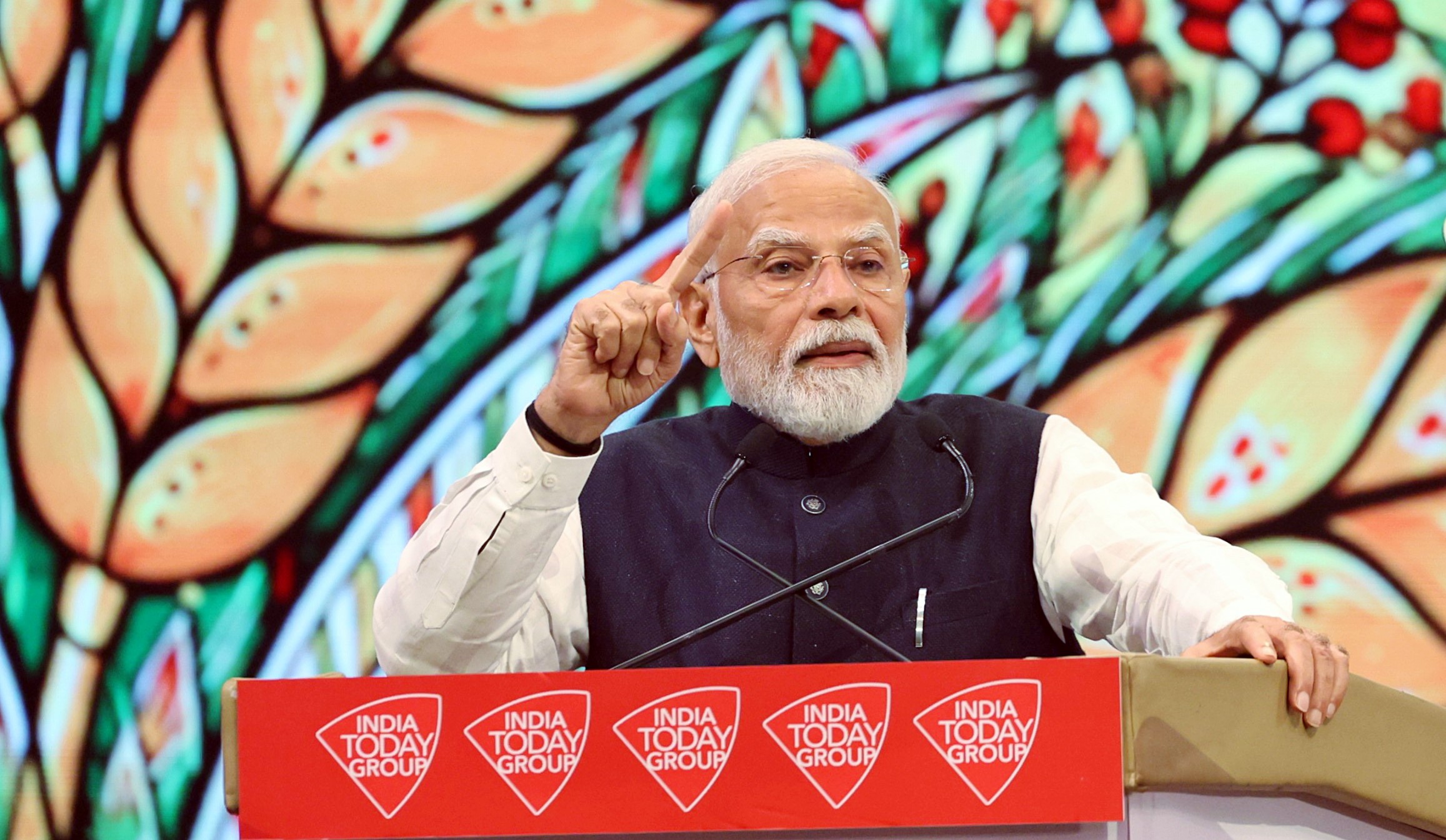
Prime Minister Narendra Modi on Thursday emphasised the importance of agricultural modernisation, crop diversification and technology in achieving the vision of a developed India, saying the country’s progress was closely linked to the prosperity of its farmers.
Addressing the Kisan Tak Bharat Agriculture Conference 2026 in the presence of agricultural scientists, agri-entrepreneurs and farmers from across the country, PM Modi commended the media group for its participation in the cleanliness campaign and for organising the two-day Kisan Mela.
Noting that the conference was being held shortly after Deepavali and during the ongoing Chhath festival, the Prime Minister said agriculture was deeply connected with India’s cultural and social traditions. He cited festivals such as Bihu, Pongal, Onam, Baisakhi, Sarhul and Pola as examples of the close relationship between farming and Indian culture.
“Agriculture and farming are our culture, our tradition, and the foundation of our social life,” he said.
Recalling his address at the Red Fort on the seven pillars of national strength, or Saptadhara, required for building a Viksit Bharat, PM Modi said agriculture was one of the key pillars of national development.
“The building of a Viksit Bharat is simply not possible without developing agriculture, without making farming smarter, and without empowering the farmer,” he said.
Highlighting the link between agricultural growth and poverty reduction, the Prime Minister referred to a World Bank study which, according to him, showed that 50 crore Indians had moved out of poverty over 12 to 13 years, accompanied by a significant decline in rural poverty among small farmers and agricultural labourers.
He said the period also coincided with the agriculture sector recording an average annual growth rate of more than four per cent for the first time in a decade since Independence.
PM Modi stressed that agricultural policies and farming practices needed to evolve in response to changing global markets, food consumption patterns, weather conditions and technologies. “Merely filling the granaries of food grains is not enough,” he said.
Highlighting the government’s efforts over the past decade, he said India’s annual agricultural exports had crossed Rs 4 lakh crore. The country ranked first globally in the production of milk, pulses, jute, rice and millets, and second in wheat, cotton, fruits, vegetables and fish production.
“These are not merely a few figures, they show how much the capability of India’s farmers has increased,” he said.
The Prime Minister called for greater crop diversification and expansion of allied agricultural activities, saying farmers needed to move beyond the traditional dependence on wheat, rice and sugarcane.
Tracing India’s agricultural progress, PM Modi recalled the Green Revolution, which helped the country achieve foodgrain self-sufficiency, and the White Revolution, which made India the world’s largest milk producer.
He said milk production had increased by nearly 70 per cent over the past decade, while egg production had risen by around 90 per cent. Fish production had more than doubled under the Blue Revolution, and honey production had increased from approximately 80,000 tonnes to 1.5 lakh tonnes under the Sweet Revolution.
Horticulture production had also grown from 280 million tonnes to more than 350 million tonnes, he said.
The Prime Minister said integrating these developments under a comprehensive agricultural strategy would create multiple income opportunities for farmers.
Referring to the solar power initiative under the PM-KUSUM scheme, he said nearly 12 lakh solar pumps had been provided to farmers, helping reduce electricity expenses and enabling them to generate additional income by producing solar power.
“This revolution has turned the Annadata of the country into an Urjadata, and along with production in farming, we have also focused on productivity and the farmer’s profit,” he said.
Recalling his 25 years in public office, including his tenure as Gujarat Chief Minister, PM Modi said he had undertaken initiatives such as Krishi Mahotsavs to modernise agriculture and improve farmers’ access to scientific knowledge.
He said hundreds of agricultural scientists and experts had travelled to villages during these campaigns, often in temperatures ranging from 40 to 45 degrees Celsius, to examine soil conditions, assess water availability and advise farmers on suitable crops and cultivation practices.
“We moved forward with the concept of Lab to Land, ensuring that the knowledge present in the labs of scientists reached the farmer’s field directly, and the farmers of Gujarat got a massive benefit from this,” he said.
Drawing on his experience in Gujarat, the Prime Minister said the number of soil testing laboratories across the country had increased from a few hundred in 2014 to more than 8,400. India also had over 725 Krishi Vigyan Kendras, he added.
He said livestock health had been strengthened through a nationwide vaccination drive against Foot and Mouth Disease, under which free vaccines had been administered to the livestock of more than eight crore farmers.
PM Modi also highlighted the growing use of technology in agriculture, citing the Namo Drone Didi initiative as an example of how rural women were adopting advanced equipment.
He said the initiative had challenged the perception that rural communities could not effectively use modern technology, with women operating drones to spray fertilisers and pesticides. The scope of drone applications in agriculture was also being expanded, he added.
The Prime Minister said engineers, scientists and young entrepreneurs were working together to develop affordable machinery for sowing and harvesting, as well as sensor-based and artificial intelligence-enabled tools to provide farmers with precise information.
He called for greater value addition at the farm level and the development of an ecosystem of agri-engineering and start-ups to encourage farmers to become agri-entrepreneurs.
Referring to the establishment of 10,000 Farmer Producer Organisations (FPOs), Modi said the initiative had helped bring small farmers together, enabling them to create value, access food processing facilities and connect with export markets.
Stating that the government’s policy was to ensure farming did not become a financial burden on cultivators, the Prime Minister said the Centre had spent Rs 16 lakh crore over the past 12 years to provide fertilisers at affordable prices despite volatility in international markets.
He said a bag of di-ammonium phosphate (DAP), which cost around Rs 5,000 in the international market, was being made available to Indian farmers for Rs 1,300. Similarly, a bag of urea, priced at around Rs 3,000 internationally, was being supplied for less than Rs 300.
Referring to the impact of the conflict in Iran and the Gulf region on global energy prices, Modi said crude oil prices had risen from USD 70 to USD 122 per barrel within weeks, creating pressure to increase diesel prices by at least Rs 50 per litre.
He said while neighbouring countries had raised fuel prices by 40 to 50 per cent, the government had limited the diesel price increase to Rs 7 per litre, absorbing the remaining Rs 43 per litre.
According to the Prime Minister, the government was bearing an additional expenditure of Rs 14,000 crore per month to shield citizens and farmers from the impact of rising international prices.
“When the interest of the country’s farmers is paramount and when there is the spirit of Nagrik Devo Bhava, then such sensitive decisions are taken,” he said.
Concluding his address, PM Modi acknowledged the achievements of Indian farmers and called for sustained efforts to build a developed India with prosperous farmers, thriving villages and modern, profitable agriculture.
He expressed confidence that the discussions at the conference would generate useful suggestions and solutions for the agriculture sector.
“The better suggestions and solutions that have emerged from here, the government will also work on them,” he said.
-PIB


