







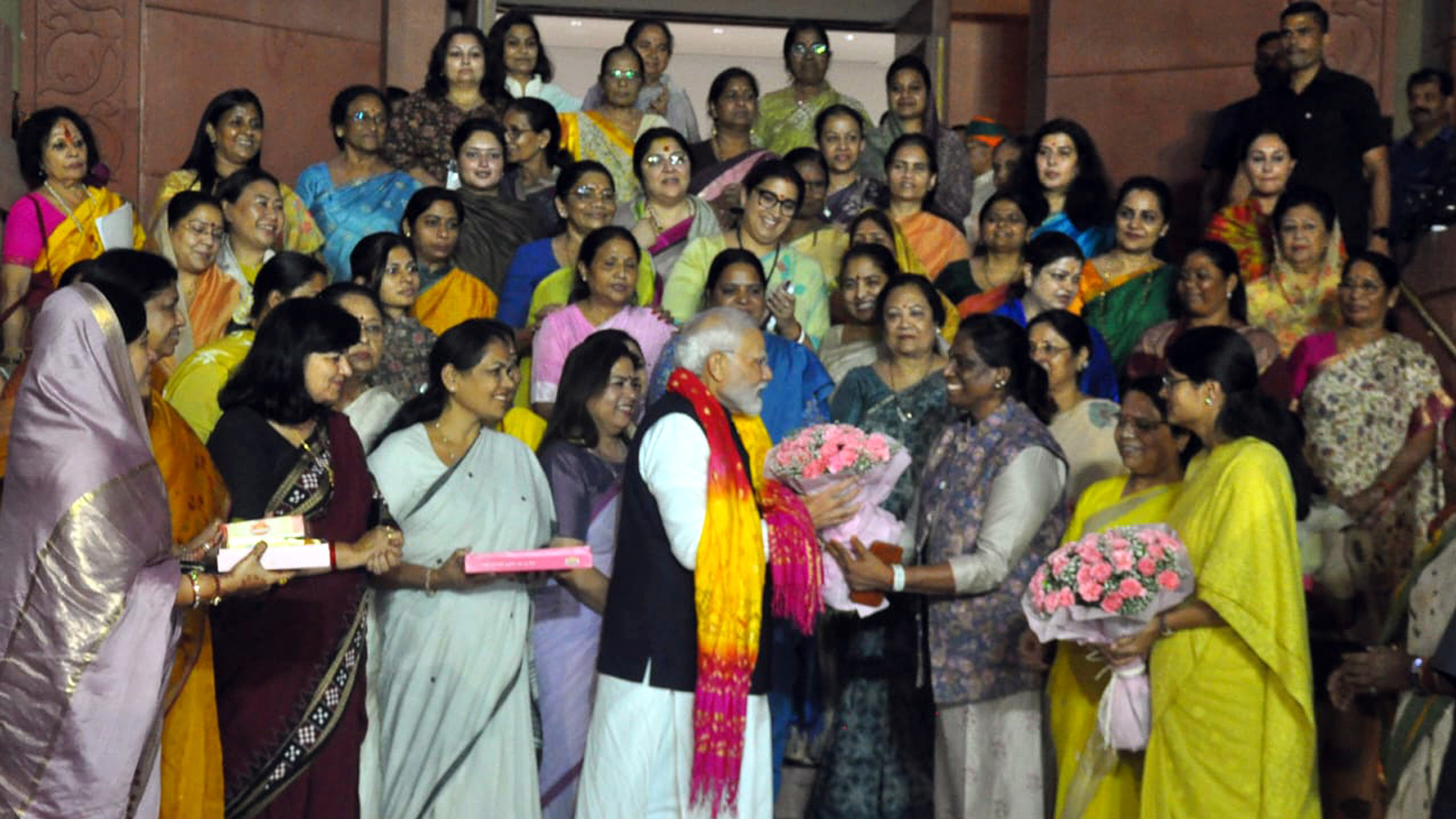
Prime Minister Narendra Modi on Thursday shared an article by Union Minister of State Shobha Karandlaje, underlining the urgency of implementing one-third reservation for women in legislatures and completing key processes such as the Census and delimitation without delay.
In a post on X, the Prime Minister’s Office (PMO) highlighted that the article presents women’s reservation as a collective national moment and a milestone for Parliament as an institution. It noted that Karandlaje has stressed the need for swift action to ensure that the benefits of the legislation reach women across the country at the earliest.
Karandlaje’s article describes the Nari Shakti Vandan Adhiniyam, passed in September 2023, as a significant step towards strengthening India’s democracy by ensuring greater participation of women in decision-making.
Karandlaje said that while the passage of the law marked a historic achievement, the real challenge now lies in its timely implementation. She emphasised that a democracy cannot be considered complete if half its population remains underrepresented in legislative bodies.
Drawing from her personal experience, Karandlaje highlighted the limited presence of women in political spaces and pointed to structural barriers -social, economic and cultural – that have historically restricted women’s participation in public life. She argued that merit thrives only when opportunities are available and accessible.
Karandlaje cited the success of reservations for women in Panchayati Raj institutions, noting that increased female representation led to greater focus on issues such as water, health, education and nutrition, along with improved accountability and reduced tolerance for corruption.
The Minister also stressed that the presence of women lawmakers influences policy priorities, bringing attention to issues that might otherwise be overlooked. A one-third reservation in Parliament and state Assemblies, she noted, would ensure that such perspectives become a permanent and integral part of governance.
Calling the moment a shared responsibility, Karandlaje said that the implementation of women’s reservation must not be delayed. She urged that processes like the Census and delimitation be expedited to operationalise the law, stating that “not a day is lost” in delivering on the promise.
While acknowledging concerns related to implementation, including seat rotation and other procedural aspects, Karandlaje maintained that these debates should not hinder progress. The focus, she said, should remain on ensuring timely execution of a transformative reform.


