







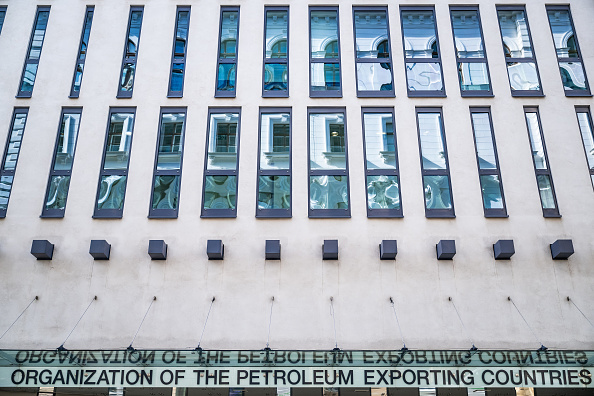
The United Arab Emirates has announced it will exit the Organization of the Petroleum Exporting Countries and the broader OPEC+ alliance, with the decision taking effect from May 1, 2026. The move follows a comprehensive review of national production policy, capacity, and long-term economic priorities. Authorities say the decision reflects the country’s evolving energy profile and its aim to enhance flexibility in responding to global market dynamics.
To understand why the UAE has walked away from OPEC after fifty-nine years, you have to understand that this decision did not happen overnight. It is the culmination of years of frustration, and a perfect storm of war, strategic ambition, and geopolitical realignment that has finally made the break inevitable. The UAE was there almost at the very beginning, joining the oil exporters’ group in 1967, four years before the nation itself formally existed. For nearly six decades, Abu Dhabi stood alongside Saudi Arabia and Kuwait as one of the central pillars of Gulf oil diplomacy. This was a bloc that, at its height, had the power to move global energy prices with a single meeting. Today, that chapter is closed, and the consequences will be felt from the Gulf all the way to the refineries of Mumbai and Chennai.
The most immediate trigger is the Iran war. The UAE has spent weeks under Iranian missile and drone attacks, and Tehran’s blockade of the Strait of Hormuz, through which a fifth of the world’s crude oil normally passes, has effectively strangled Abu Dhabi’s ability to export its own oil. What made the situation politically unbearable was not just the attacks, but the response from the UAE’s own partners. Anwar Gargash, Diplomatic Adviser to the UAE President, was blunt at the Gulf Influencers Forum, saying the Gulf Cooperation Council’s position during the Iranian attacks had been, in his words, the weakest it has ever been. That public rebuke from a senior UAE official, on the eve of this announcement, tells you everything about the depth of Abu Dhabi’s frustration.
But the war is not the only reason. The UAE has for years chafed against OPEC’s quota system. Abu Dhabi wants to grow its oil output from 3.4 million barrels a day to five million barrels by 2027, an ambition that is simply incompatible with the collective discipline OPEC demands . The UAE repeatedly pushed against its quota ceiling, holding significant idle capacity it was not permitted to deploy. Outside OPEC, its state oil company ADNOC is now free to pursue that expansion on its own terms, signing long-term bilateral supply contracts with Asian and European buyers without needing the cartel’s approval.
There is also a broader strategic calculation at play. The UAE’s non-oil economy now accounts for roughly 75 percent of its GDP, which means Abu Dhabi no longer needs OPEC’s collective price management as a fiscal lifeline the way it once did. Crucially, this exit is also a significant win for U.S. President Donald Trump, who has long accused OPEC of inflating global energy prices. The UAE is one of Washington’s closest allies in the region, and this move signals a clear strategic pivot, away from collective Arab producer solidarity and toward a tighter bilateral relationship with the United States.
The consequences for global energy markets are severe, and for India in particular, the timing could not be more difficult. India imports roughly 85 percent of its crude oil, and the Gulf, led by the UAE, Saudi Arabia, and Iraq accounts for the bulk of that supply. The UAE alone is one of India’s most important energy partners, and Indian refiners from Reliance to IOC have long relied on contracted UAE volumes for supply planning and pricing. With UAE crude now priced and marketed entirely outside the OPEC reference framework, Indian refiners face a fragmented and potentially more volatile pricing signal at exactly the moment they can least afford uncertainty.
Yet there is a side to this story that works in India’s favour, and it is worth pausing on. Freed from OPEC quota constraints, the UAE is now at liberty to negotiate directly with New Delhi on its own terms. India, as one of the world’s fastest-growing energy consumers, is an enormously attractive long-term partner for Abu Dhabi. What this opens up is the possibility of dedicated bilateral supply agreements, potentially at preferential pricing, outside the rigid structures OPEC membership imposed. India and the UAE already share one of the strongest bilateral relationships in the region, underpinned by the Comprehensive Economic Partnership Agreement signed in 2022 and a nearly four-million-strong Indian diaspora in the Emirates. A UAE that is free to act as an independent producer can tailor supply volumes, payment terms, and contract durations specifically to India’s needs, something that was far harder to arrange when Abu Dhabi was bound by collective OPEC discipline. If ADNOC moves aggressively to lock in Asian markets, India stands to be among the first and most consequential beneficiaries of that new commercial freedom.
The broader supply picture is already alarming. Gulf export volumes have fallen from 15 million to an effective 7 million barrels per day since the Hormuz crisis began. Brent crude is trading close to $104 a barrel today and the U.S. Energy Information Administration has forecast a peak of one $115 in the second quarter before any easing. For India, where every ten-dollar rise in Brent adds roughly ₹1.33 lakh crore to ₹1.52 lakh Crore rupees to the annual import bill, this is a direct fiscal shock, working its way into everything from fuel prices to inflation to the current account deficit.
If others follow the UAE’s lead, and there are producers with their own quota grievances who will be watching closely, the global oil order that has governed energy markets since the 1970s could begin to fracture in ways that will take years to fully understand.For India, for Asia, and for the world, the message is the same: the era of predictable, cartel-managed oil is ending. What comes next will be defined not by consensus, but by the individual interests of the producers who remain, and those who have now chosen to leave.


