







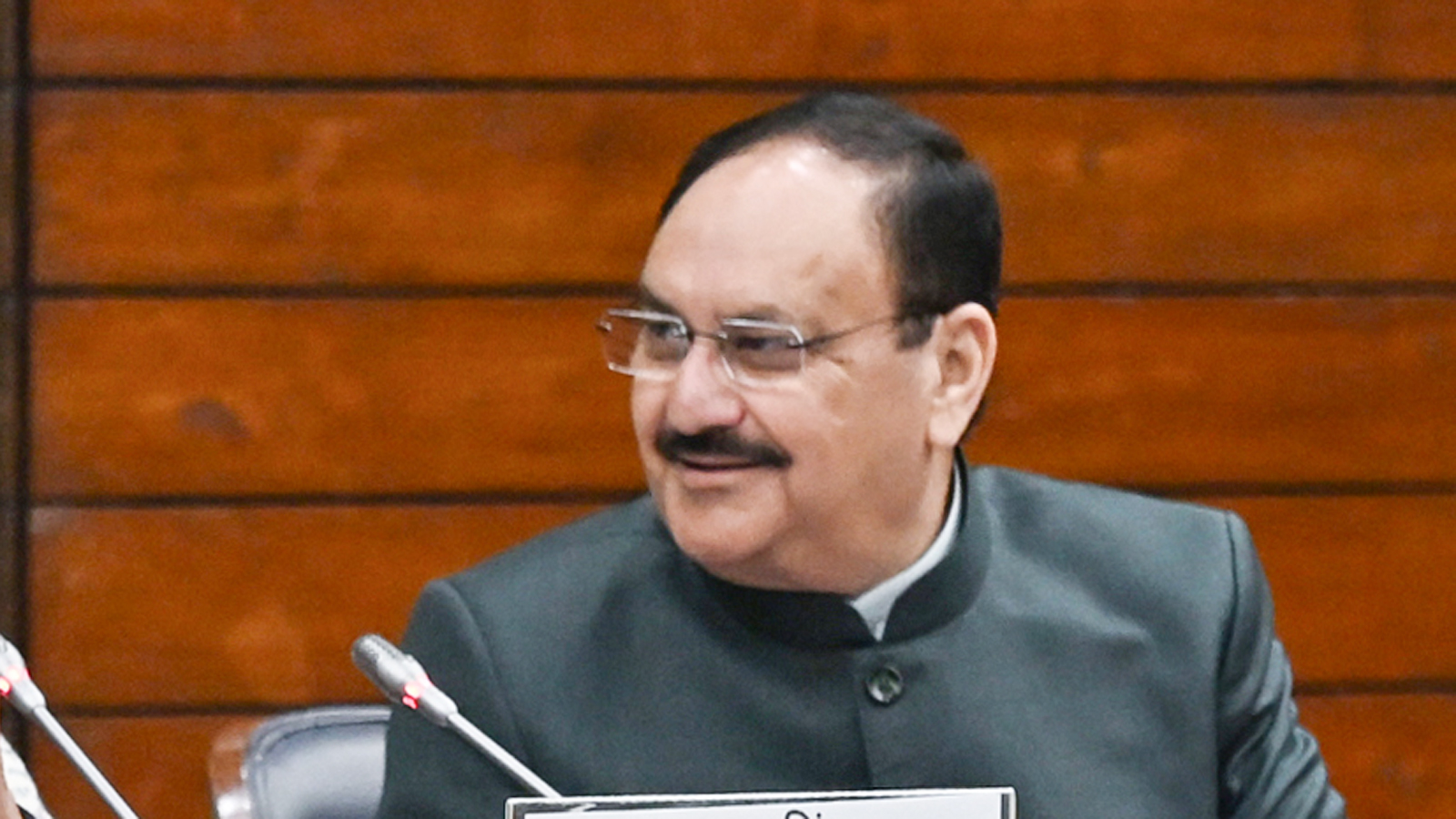
Union Health Minister Jagat Prakash Nadda on Wednesday highlighted India’s expanding efforts in tuberculosis elimination, lung health screening, and ethical use of artificial intelligence in healthcare while addressing multiple high-level side events during the 79th World Health Assembly in Geneva.
Speaking at a ministerial side event on “Ministerial Perspectives on Lung Health Screening,” organized by the Stop TB Partnership and co-hosted by India, Japan, the Philippines, and Zambia, Nadda said timely screening, early diagnosis, and equitable access to healthcare are central to building resilient and people-centric health systems.
Highlighting India’s efforts under the National Tuberculosis Elimination Programme and the vision of a “TB-Mukt Bharat,” the Union Minister said the country has undertaken one of the world’s largest screening and early detection campaigns for tuberculosis.
He noted that India has significantly expanded active case finding through house-to-house outreach, mobile screening units, community campaigns, and focused drives in high-risk and vulnerable populations.
Nadda said India has also rapidly scaled up modern diagnostic infrastructure for TB and lung diseases. Molecular testing platforms, digital chest X-ray services, AI-assisted interpretation tools, handheld screening devices, and decentralized testing systems are being extensively deployed to reduce diagnostic delays, particularly in remote and underserved areas.
“Innovation must serve equity and technology must reach the last mile,” he emphasized.
The Health Minister also highlighted the role of Ayushman Bharat Health and Wellness Centres and India’s frontline healthcare workforce in bringing healthcare services closer to communities. Stressing that diagnosis alone is not enough, he underscored the importance of nutritional support, treatment adherence, social protection, and community participation in fighting TB.
Under the TB Mukt Bharat Abhiyaan, India has mobilized citizens, institutions, corporates, and local communities to support TB patients and their families, he added.
Nadda further showcased India’s digital initiatives, including the TB Mukt Bharat App featuring “Khushi,” an AI-enabled multilingual chatbot that provides real-time guidance on symptoms, patient entitlements, and nearby diagnostic facilities, even on entry-level smartphones.
Calling for stronger global cooperation, the Union Minister urged countries to integrate lung health into Universal Health Coverage frameworks, expand access to affordable diagnostics and digital technologies, strengthen primary healthcare systems, promote domestic manufacturing and innovation, and ensure sustainable financing for prevention and early detection of TB and other respiratory diseases.
At another high-level side event titled “Artificial Intelligence in Health: Laws, Ethical Oversight, Research and Equity,” Nadda outlined India’s broader vision for responsible AI-driven healthcare transformation.
He said Artificial Intelligence presents enormous opportunities to improve healthcare delivery but warned that its deployment must be guided by sound regulation, ethical oversight, rigorous research, and equity-focused policies.
The Minister highlighted that India laid the foundation for digital transformation through the Digital India programme launched in 2015 under the leadership of Prime Minister Narendra Modi. He added that the National Health Policy 2017 and the Ayushman Bharat Digital Mission launched in 2021 helped build an interoperable and consent-based digital health ecosystem.
Nadda also highlighted the launch of the Strategy for AI in Healthcare for India (SAHI) during the India AI Impact Summit earlier this year, describing it as the first comprehensive AI healthcare strategy emerging from the Global South.
He noted that India is developing governance frameworks for AI deployment across a highly diverse population of 1.4 billion people speaking 22 official languages and experiencing varying levels of healthcare access.
To ensure fairness and reliability in AI-driven healthcare solutions, the Minister referred to the creation of the Benchmarking Open Data Platform for Health AI (BODH), which evaluates AI tools using real-world datasets to ensure safe and equitable performance across different populations.
Calling for international collaboration, Nadda said no country can tackle the opportunities and challenges of AI in healthcare alone. He reiterated India’s commitment to strengthening interoperable health data ecosystems, promoting collaborative research, advancing ethical AI development, and addressing shared healthcare challenges with global partners.
Concluding his remarks, the Union Health Minister said the future of AI in healthcare would be shaped not by algorithms alone but by collective human choices. Referring to PM Modi’s vision, he said India believes not just in “Artificial Intelligence” but in “All-Inclusive Intelligence,” and called for ensuring that AI becomes a force for global good.


