







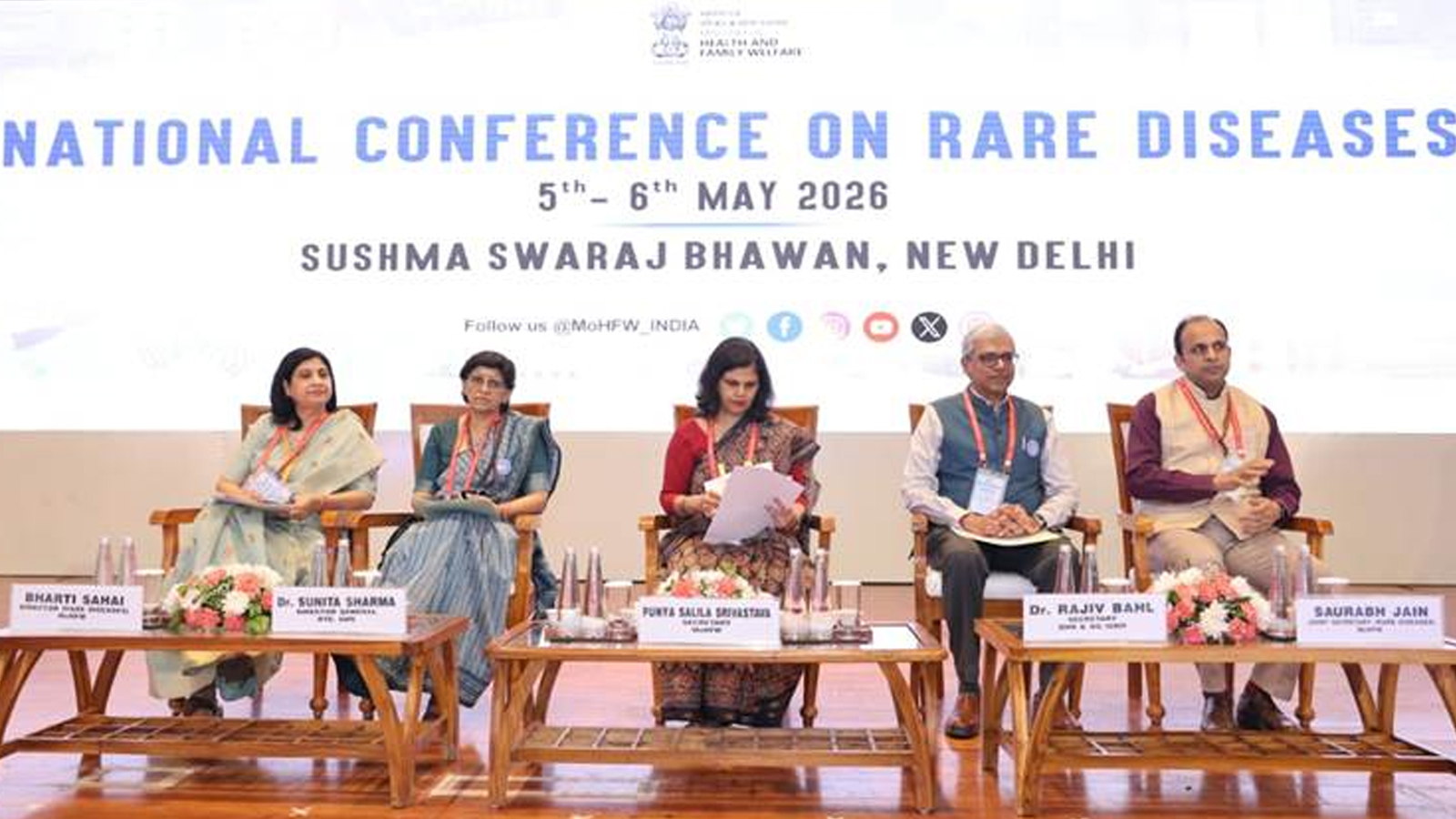
The Ministry of Health and Family Welfare (MoHFW) on Tuesday inaugurated a two-day National Conference on Rare Diseases, bringing together policymakers, researchers, clinicians, industry representatives and patient advocacy groups to strengthen India’s response to rare diseases.
Addressing the inaugural session, Union Health Secretary Punya Salila Srivastava highlighted the need for innovation, early diagnosis and stronger collaboration among stakeholders to improve outcomes for patients. She said the conference aims to identify key challenges, encourage new ideas and accelerate efforts to enhance rare disease management in the country.
Srivastava noted that India’s approach to rare diseases has evolved significantly since the issue was first recognised in the National Health Policy, 2017, followed by the launch of the National Policy for Rare Diseases in 2021. She pointed out that the policy is being implemented through a growing network of Centres of Excellence, which has expanded from eight to 15 institutions across the country, including two in the Northeast.
Highlighting financial support measures, she said assistance for patients has been increased to ₹50 lakh, improving access to treatment for identified rare diseases. The government has also taken steps to reduce treatment costs by exempting certain life-saving drugs from basic customs duty.
Emphasising awareness and capacity building, the Health Secretary said training programmes and workshops are being conducted nationwide, while digital platforms are being used to strengthen monitoring and compliance. She also underlined the importance of genetic analysis, early detection and coordinated clinical management in tackling rare diseases.
Speaking at the event, Rajiv Bahl, Secretary of the Department of Health Research (DHR) and Director General of the Indian Council of Medical Research (ICMR), called for an India-specific model for rare disease care. He stressed the need to optimise resources, promote indigenous innovation and adopt preventive strategies such as family-based genetic screening and antenatal diagnosis.
Bahl said India has made notable progress over the past three decades, moving from limited diagnostic capabilities to providing financial support and developing treatment pathways. He also highlighted ongoing efforts to indigenise therapies, explore repurposed drugs and advance cutting-edge technologies such as gene therapy in collaboration with institutions like the Department of Biotechnology and CSIR.
Director General of Health Services Sunita Sharma stressed the importance of strengthening healthcare systems to ensure early diagnosis and comprehensive care. She called for better integration of services across different levels of healthcare, along with expanded screening programmes and standardised treatment protocols.
The conference will feature technical sessions on genomic technologies, affordable treatment strategies, research collaborations and patient-centric care models. Officials said the deliberations are expected to help improve coordination among stakeholders and enhance access to quality healthcare services.
Rare diseases, often genetic and chronic in nature, pose significant challenges due to delayed diagnosis, limited treatment options and high costs. Nearly half of new cases occur in children, making early intervention critical.
The Ministry reaffirmed its commitment to ensuring equitable, timely and affordable care for patients, expressing confidence that sustained collaboration and innovation will help improve the lives of those affected by rare diseases across India.


