







When the Pradhan Mantri Surakshit Matritva Abhiyaan (PMSMA) was launched on June 9, 2016, India was still grappling with significant maternal health challenges. Maternal mortality remained a major public health concern, and ensuring access to quality antenatal care for millions of pregnant women, particularly in rural and underserved regions, was a pressing priority.
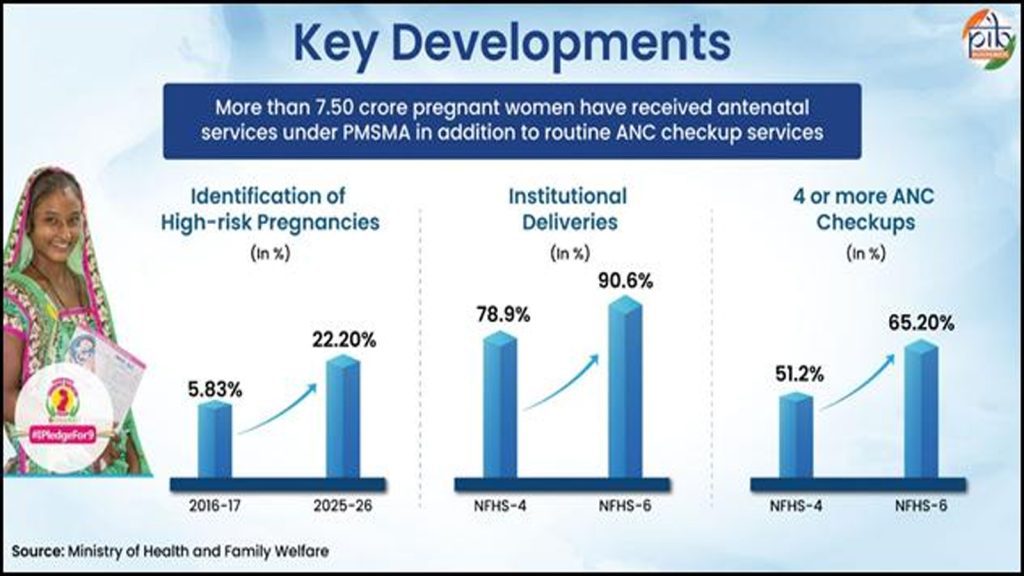
Ten years later, PMSMA has emerged as one of the country’s most impactful maternal healthcare initiatives, delivering free and comprehensive antenatal care services to more than 7.50 crore pregnant women and contributing to a substantial decline in maternal mortality across India.
As the programme completes a decade of implementation, it stands as a key pillar of India’s maternal healthcare framework and a major contributor to the country’s progress towards achieving the Sustainable Development Goals (SDGs).
Why Maternal Health Matters
Every pregnancy carries the promise of a new life, but it also comes with health risks that require timely medical attention. Maternal health is widely regarded as one of the most important indicators of a nation’s healthcare system, reflecting the quality, accessibility, and inclusiveness of healthcare services.
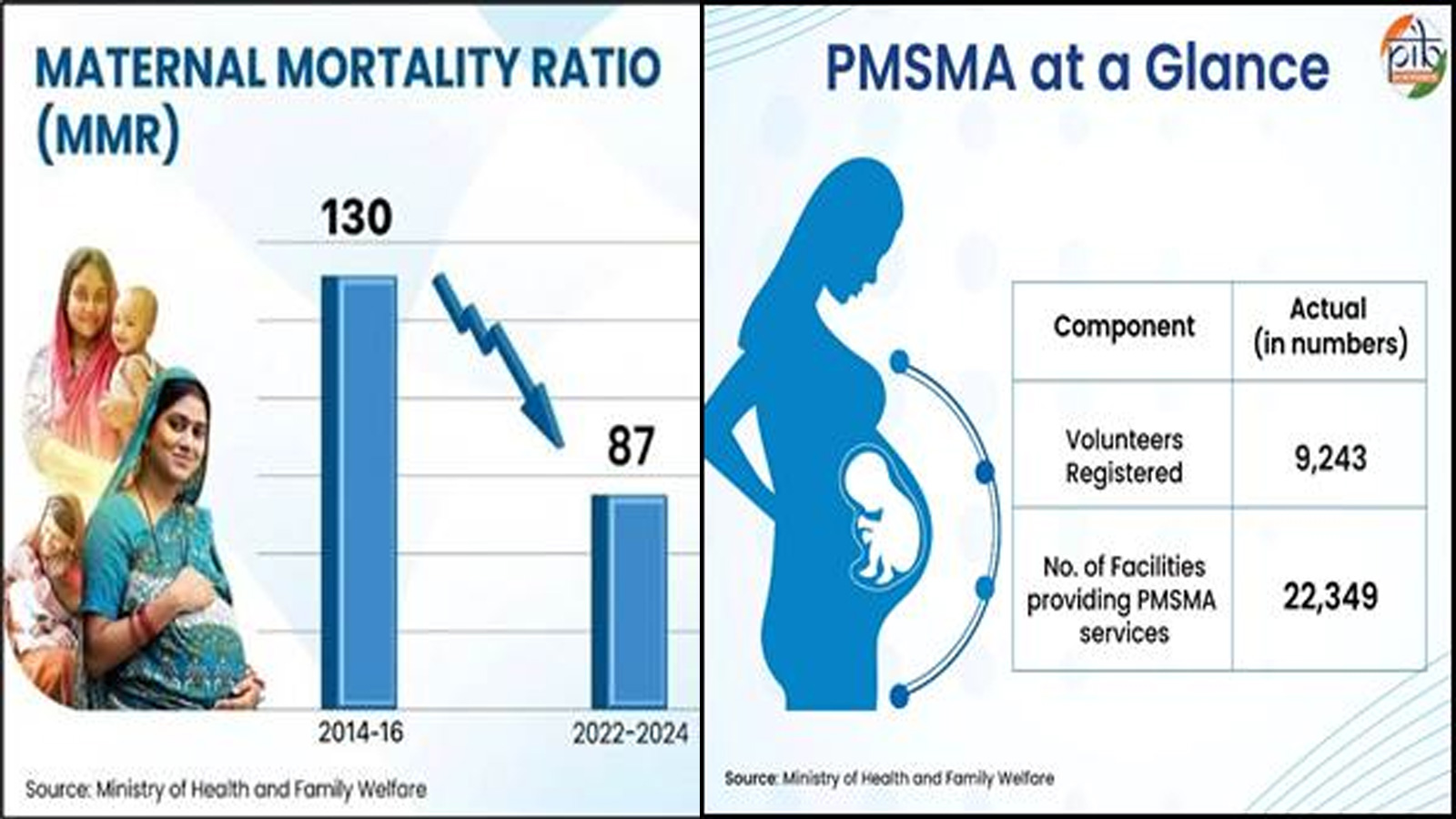
Before PMSMA was introduced, India faced a high Maternal Mortality Ratio (MMR) of 130 maternal deaths per one lakh live births during 2014-16. The challenge was particularly acute in remote and resource-constrained regions where access to specialist healthcare services was limited.
The situation prompted the government to strengthen maternal healthcare interventions in line with its commitment to reducing maternal mortality below 70 per 100,000 live births by 2030, as envisaged under the Sustainable Development Goals and the National Health Policy, 2017.
The Birth of PMSMA
Launched by Prime Minister Narendra Modi on June 9, 2016, PMSMA was designed to ensure that every pregnant woman in India receives at least one comprehensive antenatal check-up by a specialist during the second or third trimester of pregnancy.
The programme provides free antenatal care services on the 9th day of every month at designated government healthcare facilities across the country.
The initiative focuses on early detection of pregnancy-related complications, timely medical intervention, specialist consultations, laboratory investigations, ultrasonography, medicines, and counselling on nutrition and safe motherhood practices.
Unlike routine antenatal check-ups, PMSMA specifically emphasizes specialist care, helping identify high-risk pregnancies that require close monitoring and advanced medical support.
Comprehensive Care for Mothers
Under PMSMA, pregnant women receive a wide range of healthcare services, including clinical examinations by obstetricians, gynaecologists, or trained emergency obstetric care specialists; blood and urine investigations; ultrasound examinations, nutritional counselling; birth preparedness guidance; complication readiness counselling; medication support; and referral services for high-risk pregnancies.
The programme primarily caters to women in their second trimester (13-27 weeks) and third trimester (28 weeks until delivery), ensuring that complications are detected before they become life-threatening.
Identifying High-Risk Pregnancies
One of PMSMA’s most significant contributions has been its systematic approach to identifying and managing high-risk pregnancies.
Healthcare providers screen pregnant women for 25 major risk factors, including severe anaemia, hypertension, gestational diabetes, HIV, syphilis, hypothyroidism, tuberculosis, malaria, teenage pregnancy, twin pregnancies, previous caesarean deliveries, congenital abnormalities, and other medical complications.
Women identified as high-risk are linked to the nearest First Referral Unit (FRU) and provided specialised monitoring and care to ensure safer deliveries.
A colour-coded sticker system on Mother and Child Protection Cards helps healthcare workers quickly identify risk categories and monitor pregnancies more effectively.
The Power of Volunteer Doctors
A distinctive feature of PMSMA is its voluntary doctor participation model.
The programme encourages obstetricians, gynaecologists, radiologists, and physicians from the private sector to dedicate one day each month – specifically the 9th – to providing free specialist services at government health facilities.
The initiative gained momentum after Prime Minister Modi appealed to doctors during his radio programme Mann Ki Baat to contribute just 12 days a year towards maternal healthcare.
Doctors who volunteer under the programme are recognised through the “I Pledge for 9” campaign and achievement awards, encouraging greater participation from the medical fraternity.
A Nationwide Movement
What began as a focused intervention has evolved into a nationwide maternal health movement.
Over the past decade, PMSMA has expanded across districts, health facilities, and communities throughout the country. Its reach has extended deep into rural and remote regions, bringing specialist maternal healthcare closer to women who previously had limited access to such services.
The programme has helped mainstream antenatal screening, strengthen referral systems, and improve healthcare-seeking behaviour among pregnant women.
The impact is reflected in India’s maternal health indicators.
According to government data, the country’s Maternal Mortality Ratio declined from 130 during 2014-16 to 87 during 2022-24, representing a reduction of 43 maternal deaths per lakh live births.
While several healthcare initiatives have contributed to this improvement, PMSMA has played a crucial role by facilitating early diagnosis and management of high-risk pregnancies.
Extended PMSMA: Strengthening Follow-Up Care
Recognising that identifying high-risk pregnancies is only the first step, the government launched the Extended PMSMA Strategy in January 2022.
The expanded initiative focuses on continuous monitoring and follow-up of women identified as high-risk.
Under the programme, each high-risk pregnancy is individually tracked until delivery. Additional antenatal visits are encouraged, and both pregnant women and Accredited Social Health Activists (ASHAs) receive financial incentives to facilitate continued care.
Technology also plays an important role. SMS alerts are sent to beneficiaries and ASHA workers to remind them about follow-up visits and medical appointments.
The strategy ensures that high-risk pregnancies remain under continuous medical supervision throughout the pregnancy period.
Working Within a Larger Maternal Healthcare Ecosystem
PMSMA functions alongside several flagship maternal and child health programmes that collectively aim to improve health outcomes for mothers and newborns.
Among them is the Janani Suraksha Yojana (JSY), which promotes institutional deliveries and has benefited more than 11.96 crore women since 2014-15.
The Janani Shishu Suraksha Karyakram (JSSK) provides free healthcare services to pregnant women and newborns and has supported over 18 crore beneficiaries.
The Surakshit Matritva Aashwasan (SUMAN) initiative strengthens maternal healthcare through a network of more than 99,000 healthcare facilities.
Other complementary programmes include the POSHAN Abhiyaan, which focuses on maternal nutrition; the Pradhan Mantri Matru Vandana Yojana (PMMVY), which provides maternity benefits; and LaQshya, which seeks to improve the quality of care in labour rooms.
Together, these initiatives create a comprehensive continuum of care for mothers and children.
Celebrating Ten Years of PMSMA
To mark the programme’s tenth anniversary, the government has launched nationwide celebrations highlighting its achievements and encouraging greater awareness about maternal healthcare.
Special PMSMA sessions are being organised at district hospitals, sub-district hospitals, First Referral Units, and other designated facilities across the country.
Quality antenatal care services are also being provided through approximately 1.8 lakh Ayushman Arogya Mandirs.
Community outreach activities are being conducted through Village Health Sanitation and Nutrition Days (VHSNDs), Jan Arogya Samitis, and Self-Help Groups to raise awareness about safe pregnancy practices and the importance of regular antenatal care.
Looking Ahead
As India advances towards its vision of becoming a developed nation by 2047, maternal health remains central to its public health agenda.
Over the past decade, PMSMA has demonstrated how targeted healthcare interventions can save lives, reduce complications, and improve health outcomes for millions of families.
By making specialist antenatal care accessible, strengthening early risk detection, and ensuring timely treatment, the programme has helped transform maternal healthcare delivery across the country.
The decline in maternal mortality over the past decade highlights the impact of sustained policy focus and healthcare investments. As PMSMA enters its second decade, its continued emphasis on quality care, early intervention, and universal access is expected to further strengthen India’s efforts to ensure that every pregnancy is safer and every mother receives the care she deserves.
For millions of women across India, PMSMA has become more than a healthcare programme – it has become a lifeline that helps ensure healthier pregnancies, safer deliveries, and stronger beginnings for future generations.


