







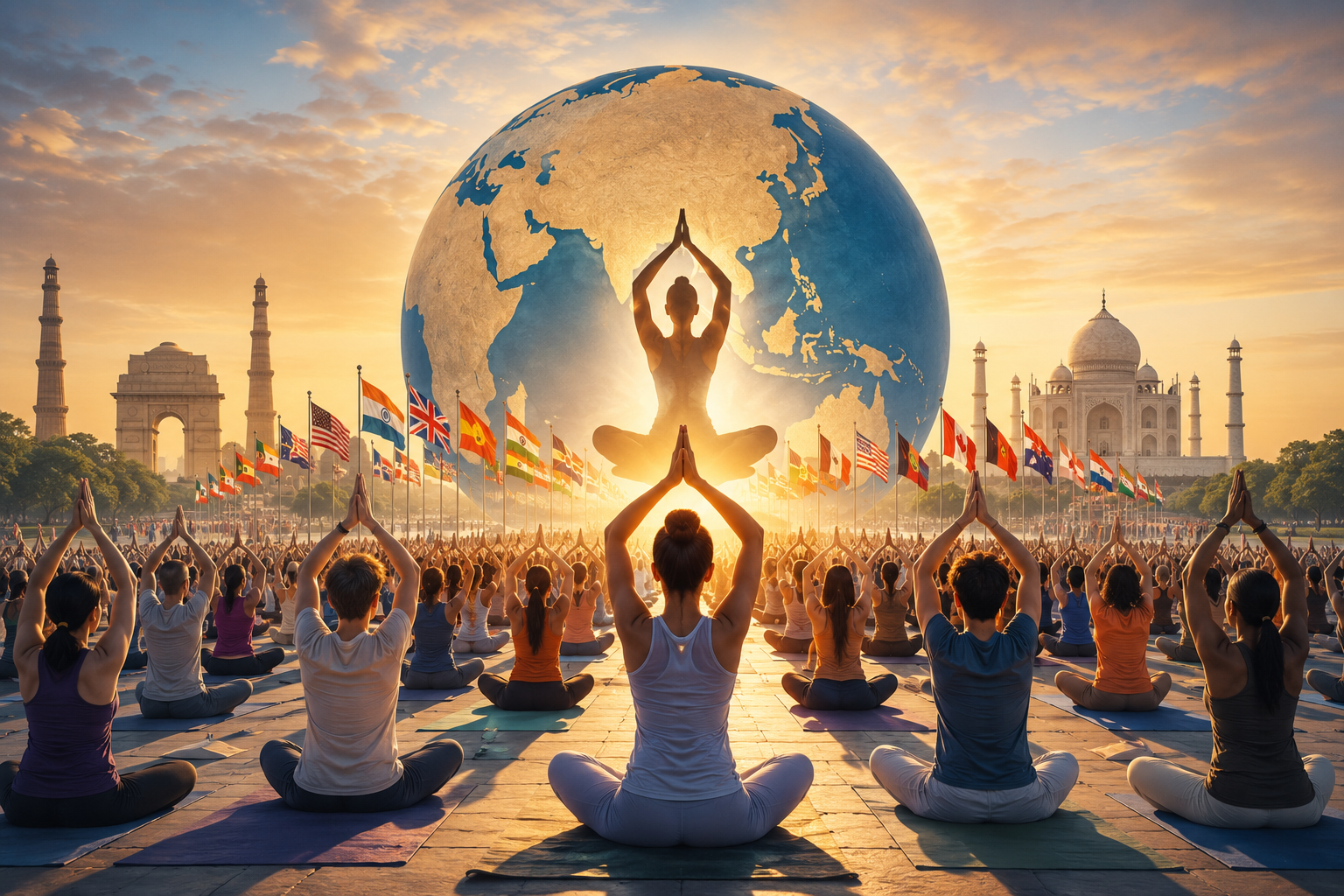
Since its first observance in 2015, the International Day of Yoga has evolved into one of the world’s largest participatory wellness movements, bringing together millions of people across countries, cultures and communities through the shared practice of yoga.
Ancient roots, global recognition
Yoga is among the world’s oldest knowledge traditions, with roots tracing back to the Indus-Saraswati civilisation around 2700 BCE. References to yogic practices are found in the Vedas, Upanishads, Buddhist and Jain traditions, as well as the Mahabharata and Ramayana.
The philosophical framework of yoga was systematised by Maharishi Patanjali through the Yoga Sutras, laying the foundation for a practice that has survived and evolved over centuries.
Recognising its universal appeal, the United Nations proclaimed June 21 as International Day of Yoga in 2014 following a proposal made by Prime Minister Narendra Modi at the 69th session of the UN General Assembly. The resolution received support from 175 countries.
The first International Day of Yoga was celebrated on June 21, 2015, while yoga was included in UNESCO’s Representative List of Intangible Cultural Heritage of Humanity in 2016.
From Rajpath to the world
The inaugural event at Rajpath in New Delhi brought together 35,985 participants from 84 countries and entered the Guinness World Records for the largest yoga lesson and the highest number of nationalities participating.
Over the years, the main national celebrations travelled from New Delhi to Chandigarh, Lucknow, Dehradun, Ranchi, Mysuru, Jabalpur, Srinagar and Visakhapatnam, bringing yoga closer to communities across India.
A movement during the pandemic
Even during the Covid-19 pandemic, International Day of Yoga adapted to changing circumstances through digital and home-based participation.
Themes such as “Yoga at Home, Yoga with Family” in 2020 and “Yoga for Wellness” in 2021 highlighted the role of yoga in promoting physical fitness and emotional resilience during a global health crisis.
Decadal milestone in 2025
The 11th edition in 2025, celebrated under the theme “Yoga for One Earth, One Health”, marked a decade of global observance.
More than 13 lakh events were organised across the country, with participation exceeding 26 crore people. The main event in Visakhapatnam attracted over three lakh participants and created two Guinness World Records for the largest yoga lesson and the largest simultaneous Surya Namaskar demonstration.
Yoga’s expanding global footprint
Today, International Day of Yoga is observed in more than 190 countries. Celebrations have been held at iconic venues ranging from the United Nations Headquarters in New York and temples in Japan to sports stadiums in South Africa and public landmarks in Brazil and Saudi Arabia.
For IDY 2026, more than 210 Indian missions abroad are organising yoga events at nearly 2,500 locations worldwide.
Available in all six official languages of the United Nations, the Common Yoga Protocol has enabled people from different countries and cultures to participate in a shared experience.
As International Day of Yoga enters its 12th edition, the focus is increasingly shifting from a single day of celebration to integrating yoga into everyday life, making wellness a sustained and inclusive global movement.


