







Over the past 12 years, India’s space programme has undergone a remarkable transformation, evolving from a scientific endeavour into a strategic national asset that supports development, strengthens technological self-reliance and expands the country’s global influence. Driven by the vision of Aatmanirbhar Bharat and Viksit Bharat 2047, India has expanded its footprint across space exploration, satellite technology, launch systems, commercialisation and international cooperation.
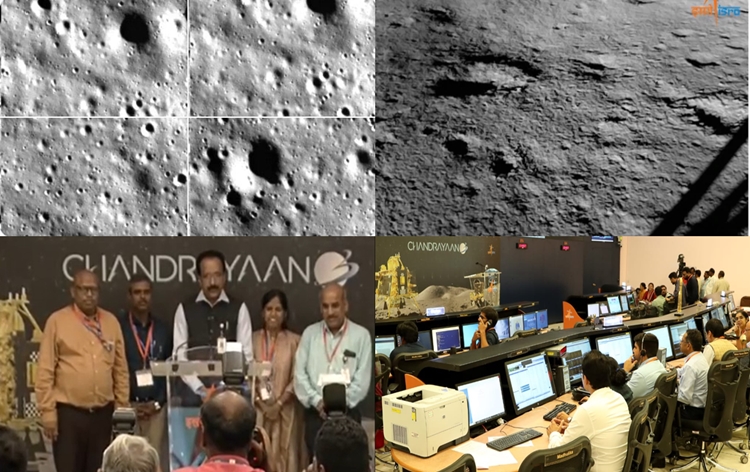
The transformation is visible not only in headline-grabbing achievements such as Chandrayaan-3’s historic landing near the Moon’s south pole and the Aditya-L1 solar mission, but also in the rapid growth of private space startups, advances in indigenous technology and the increasing use of space-based services in governance, agriculture, healthcare and disaster management.
From the Moon to Mars and beyond
India’s modern space journey is built on a series of increasingly ambitious exploration missions.
The Chandrayaan programme laid the foundation for India’s emergence as a major player in lunar exploration. Chandrayaan-1, launched in 2008, made a significant contribution to global science by discovering evidence of water molecules on the Moon. Chandrayaan-2, launched in 2019, further strengthened India’s lunar research capabilities by providing some of the highest-resolution images of the lunar surface.
The biggest breakthrough came on August 23, 2023, when Chandrayaan-3 successfully achieved a soft landing near the Moon’s south pole. The achievement made India the first country to land in the region and only the fourth nation to achieve a soft lunar landing. Scientific instruments aboard the Vikram lander conducted in-situ studies and confirmed the presence of sulphur on the lunar surface.
India’s lunar ambitions continue to expand. Chandrayaan-4, scheduled for 2027, is expected to collect lunar samples and bring them back to Earth, while the Chandrayaan-5 or LUPEX mission, being developed with Japan, will explore water and volatile materials trapped in permanently shadowed regions near the Moon’s south pole.
India’s success has not been limited to the Moon. The Mars Orbiter Mission, popularly known as Mangalyaan, made history in September 2014 when India became the first country to reach Mars orbit on its maiden attempt. The mission operated for more than eight years, far exceeding its planned lifespan, and generated valuable data about the Martian atmosphere and surface.
The country also turned its attention towards the Sun through Aditya-L1, India’s first dedicated solar mission. Positioned around 1.5 million kilometres from Earth at the Sun-Earth L1 Lagrange Point, the spacecraft continuously studies solar activity, space weather and the solar corona. More than 27 terabytes of scientific data from the mission have already been shared with researchers.
India has simultaneously expanded its capabilities in space science. AstroSat, the country’s first space observatory, completed a decade in orbit in 2025, while XPoSat has strengthened India’s position in X-ray astronomy.
Preparing for human spaceflight
India’s next major milestone is the Gaganyaan mission, which aims to send Indian astronauts into space aboard an indigenous spacecraft. Approved in 2019, the programme is designed to place up to three astronauts in a 400-kilometre orbit for up to three days before safely returning them to Earth.
Preparations for human spaceflight received a boost through India’s participation in the Axiom-4 mission to the International Space Station in 2025. Group Captain Shubhanshu Shukla conducted seven microgravity experiments that provided valuable experience in astronaut training, scientific research and operational procedures.
The Gaganyaan programme is also paving the way for the Bharatiya Antariksh Station, a planned five-module space station that will support long-duration human missions and advanced scientific research. The first module of the station is targeted for launch by 2028.
Breakthroughs in space technology
India has steadily built advanced technological capabilities required for future exploration.
A major milestone came in January 2025 through the Space Docking Experiment (SPADEX), which made India the fourth country after the United States, Russia and China to demonstrate autonomous docking and undocking in space. The mission also validated power transfer between docked spacecraft and tested a robotic arm in microgravity.
The successful development of the indigenous Bharatiya Docking System is expected to play a crucial role in future missions such as Gaganyaan, Chandrayaan-4 and the Bharatiya Antariksh Station.
Looking further ahead, India is preparing its first mission to Venus. The Venus Orbiter Mission, targeted for launch in 2028, will study the planet’s atmosphere, geology and surface composition while testing advanced technologies such as aerobraking and thermal management systems.
The rise of India’s private space ecosystem
One of the biggest changes in the space sector has been the growing role of private companies.
The opening of the space sector to private participation in 2020 and the introduction of the Indian Space Policy 2023 created new opportunities for startups and industry players. The impact has been dramatic. From just one registered space startup in 2014, India now has more than 400 space startups.
Companies such as Pixxel, Dhruva Space, Skyroot Aerospace, Agnikul Cosmos and Bellatrix Aerospace have emerged as key players in satellite technology, launch vehicles and space applications.
Government initiatives such as liberalised foreign direct investment norms, the IN-SPACe Seed Fund Scheme, a ₹1,000 crore venture capital fund and a ₹500 crore Technology Adoption Fund have further accelerated growth.
Investment in Indian space startups has crossed $500 million, with nearly $150 million invested in 2025 alone.
How India’s space economy is expanding
India’s space economy is currently valued at around $8 billion and accounts for nearly 2-3 per cent of the global space economy. The target is to increase this figure to $40-45 billion over the next decade and raise India’s global share to 8 per cent by 2030.
Institutions such as NewSpace India Limited (NSIL) and the Indian National Space Promotion and Authorisation Centre (IN-SPACe) have played a key role in commercialisation and private-sector participation.
NSIL’s revenues rose from ₹321.77 crore in FY22 to ₹3,246.09 crore in FY25. By January 2026, IN-SPACe had facilitated 71 technology transfers from ISRO to industry and startups. Private companies have also launched satellites and payloads using Indian launch platforms, signalling the emergence of a vibrant commercial ecosystem.
Building self-reliance in space transportation
India has steadily reduced its dependence on foreign launch services by developing a robust fleet of indigenous launch vehicles. The Polar Satellite Launch Vehicle (PSLV), Geosynchronous Satellite Launch Vehicle (GSLV) and Launch Vehicle Mark-3 (LVM3) now provide India with the capability to independently place satellites weighing up to 10 tonnes into Low Earth Orbit and up to 4.2 tonnes into Geosynchronous Transfer Orbit.
The next step in this journey is the Next Generation Launch Vehicle (NGLV), which is being developed to carry payloads of up to 30 tonnes into Low Earth Orbit. The rocket is expected to support future human spaceflight missions, large satellite deployments and deep-space exploration programmes.
India is also investing heavily in reusable launch technologies to lower the cost of access to space. Scientists are working on partially reusable variants of future rockets and a winged upper-stage vehicle capable of returning from orbit and landing autonomously on a runway.
Expanding launch infrastructure
To support future growth, India is rapidly expanding its launch infrastructure.
A second spaceport is being developed at Kulasekarapattinam in Tamil Nadu, which will complement the existing Satish Dhawan Space Centre at Sriharikota. The new facility is expected to support the growing demand for small satellite launches.
The foundation stone for the Small Satellite Launch Vehicle (SSLV) complex was laid in February 2024. The facility is expected to support 20 to 25 orbital launches annually, with the first SSLV launch targeted during FY 2026-27.
In January 2025, the government approved the construction of a third launch pad at Sriharikota at a cost of nearly ₹3,985 crore. The facility will support next-generation rockets, human spaceflight missions and future lunar exploration programmes.
Advances in propulsion and indigenous technology
India is also developing advanced propulsion systems that will improve mission flexibility and reduce operational costs.
The country’s first satellite equipped with an Electric Propulsion System is expected to be launched during 2026-27. Electric propulsion technology allows satellites to operate more efficiently and remain in orbit for longer durations.
ISRO has also made significant progress in cryogenic and semi-cryogenic engine technologies. The upgraded CE20 cryogenic engine can now be restarted multiple times during a mission, while improvements in the Vikas engine are expected to support future reusable launch systems.
The SSLV programme has also benefited from technological upgrades that have reduced rocket weight and increased payload capacity.
Another important milestone has been the development of indigenous electronics. ISRO and the Semiconductor Laboratory in Chandigarh have jointly developed VIKRAM3201, India’s first fully indigenous 32-bit space microprocessor, and KALPANA32, a processor designed for high-reliability space missions. These developments reduce dependence on imported components and strengthen technological self-reliance.
India’s expanding global space partnerships
International cooperation has become an increasingly important pillar of India’s space programme.
While India launched only 35 foreign satellites between the 1990s and 2014, the figure has risen to 399 foreign satellite launches since 2014. India has also signed more than 300 space cooperation agreements with 61 countries and five multilateral organisations.
One of the most significant collaborations is the NASA-ISRO Synthetic Aperture Radar (NISAR) mission. Launched in July 2025, the Earth observation satellite is designed to monitor glaciers, forests, land surfaces and oceans, helping scientists better understand climate change and natural disasters.
India is also partnering with France on the TRISHNA mission, which will provide high-resolution thermal imaging data for agriculture, water management, glaciers and climate studies.
Cooperation with Japan has expanded through the Chandrayaan-5/LUPEX mission. The project combines an Indian lander and a Japanese rover to search for water and ice deposits in the Moon’s polar regions.
In Europe, collaboration with the European Space Agency has grown beyond Earth observation to include future human spaceflight missions and potential cooperation involving the Bharatiya Antariksh Station.
India has also strengthened space ties with Germany, Italy, Saudi Arabia, Mauritius and Bhutan, covering areas ranging from satellite development and Earth observation to human spaceflight and scientific research.
Regional leadership through space diplomacy
India has increasingly used space technology as a tool for regional cooperation.
The BIMSTEC Space Programme is one such initiative. It focuses on disaster management, weather forecasting, capacity building and satellite-based applications for member countries. India has proposed regional nano-satellites, ground stations and shared Earth observation services to support the region.
Another important initiative is the South Asia Satellite, launched in 2017. Built and funded by India, the satellite provides communication, telemedicine, tele-education and disaster management services to neighbouring countries including Afghanistan, Bangladesh, Bhutan, Maldives, Nepal and Sri Lanka.
Space technology: Improving lives on Earth
The benefits of India’s space programme extend far beyond exploration missions.
NavIC, India’s indigenous navigation system, provides positioning, navigation and timing services across India and surrounding regions. The system is increasingly being used for train tracking, vehicle monitoring, logistics management, power-grid synchronisation and public safety services.
The launch of second-generation NavIC satellites has further strengthened the system’s reliability and coverage. India has also signed agreements to establish NavIC reference stations abroad, expanding its international reach.
Space technology plays a major role in agriculture and water management. Satellite-based systems support crop acreage mapping, yield forecasting, drought assessment and irrigation planning, helping policymakers and farmers make informed decisions.
Disaster management is another major area of application. Satellites monitor cyclones, floods, landslides and forest fires, while the National Database for Emergency Management provides real-time geospatial information to authorities.
Geospatial technologies are also supporting the implementation of programmes such as MGNREGA, PMGSY, PMKSY and AMRUT through improved planning and monitoring.
Supporting fishermen, healthcare and education
India’s space programme is helping improve livelihoods and public services across the country.
Potential Fishing Zone advisories use satellite data to identify productive fishing grounds, reducing fuel consumption and search time for fishermen. Indigenous Distress Alert Transmitters improve safety by enabling emergency communication from fishing vessels.
In healthcare, ISRO’s telemedicine network connects remote and high-altitude regions with specialist medical services. Nearly 179 telemedicine nodes are operational across the country, including many in strategically important regions such as Ladakh, Leh and Siachen.
Space-based communication systems are also strengthening education. Under PM e-Vidya, hundreds of educational television channels are delivered through Indian satellites, helping expand access to learning resources in remote areas.
The road to Space Vision 2047
India’s space programme is entering a new phase defined by human spaceflight, deep-space exploration, advanced orbital infrastructure and commercial growth.
Upcoming missions include Chandrayaan-4, the LUPEX lunar exploration mission, the Venus Orbiter Mission, Gaganyaan and the Bharatiya Antariksh Station. At the same time, investments in reusable launch vehicles, next-generation rockets and private-sector participation are expected to reshape India’s position in the global space economy.
As India moves towards Space Vision 2047, the focus is no longer limited to reaching new frontiers in space. The broader objective is to use scientific innovation and technological capability to strengthen national development, improve citizens’ lives and establish India as one of the world’s leading space powers.


