







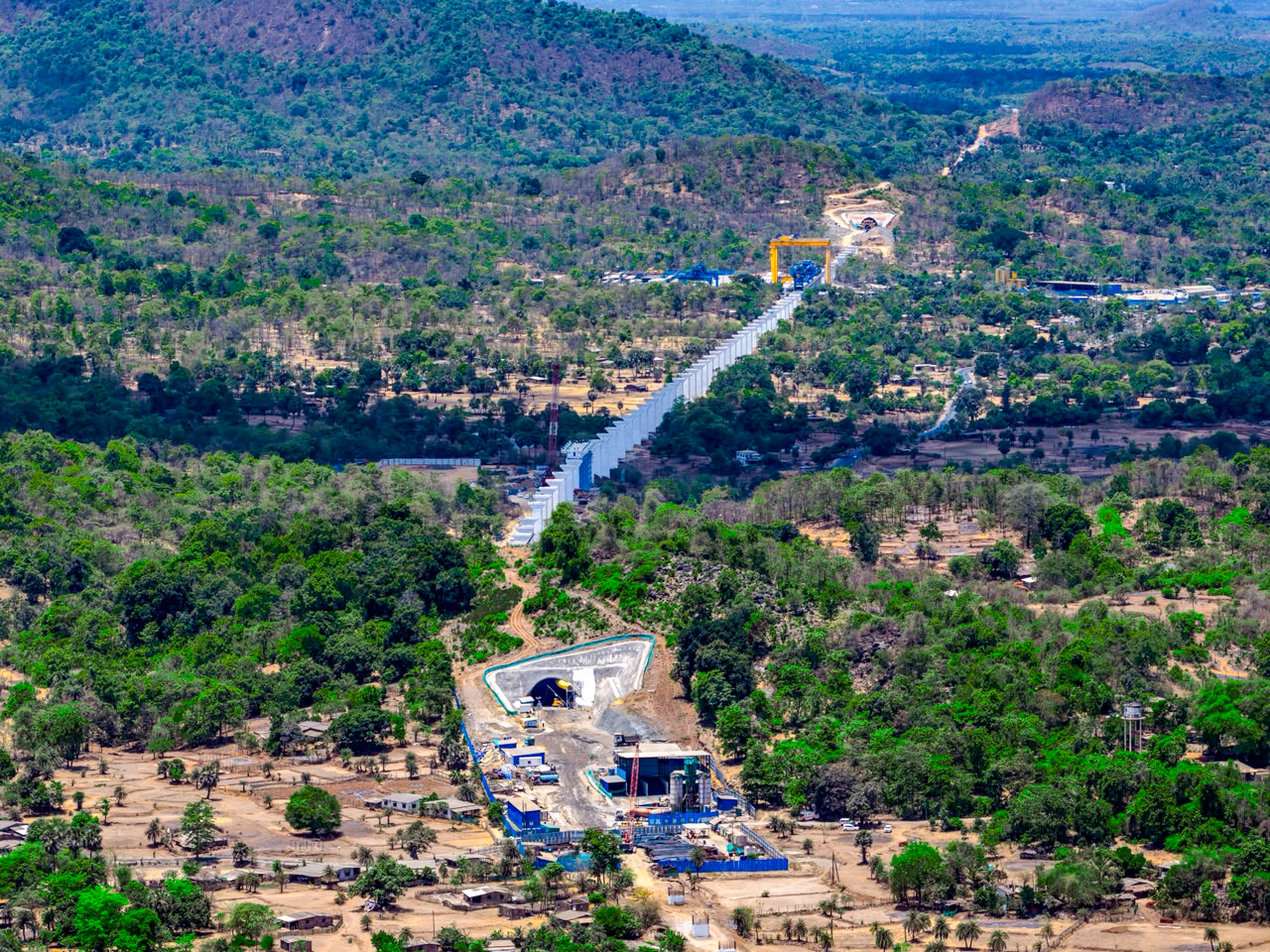
The Mumbai-Ahmedabad High-Speed Rail (MAHSR) Project, India’s first bullet train corridor, is steadily progressing towards becoming a landmark in the country’s transport infrastructure. Spanning 508 kilometres across Maharashtra, Gujarat and Dadra & Nagar Haveli, the project is expected to transform inter-city travel while laying the foundation for a domestic high-speed rail ecosystem.
Designed to operate at a speed of 320 kmph, the corridor will reduce travel time between Mumbai and Ahmedabad to about one hour and 58 minutes. The project, launched in 2017, marks India’s entry into the high-speed rail era and is being developed using Japan’s Shinkansen technology and operational standards.
The corridor will include 12 stations at Mumbai, Thane, Virar, Boisar, Vapi, Bilimora, Surat, Bharuch, Vadodara, Anand, Ahmedabad and Sabarmati. The Sabarmati station is being developed as a multimodal transport hub, integrating the bullet train with metro, BRTS and conventional railway services. The first high-speed rail service on the route is expected to commence in August 2027.
Construction activity has gathered pace across the corridor, with significant progress reported in bridge, viaduct and tunnel works. The project includes 25 river bridges and 28 steel bridges crossing highways, canals and railway lines. Work is underway on major crossings over the Sabarmati, Narmada, Tapi and Vaitarna rivers, among others.
One of the most notable engineering achievements is India’s first undersea rail tunnel beneath Thane Creek. The 21-kilometre tunnel section includes an approximately seven-kilometre undersea stretch and is being constructed using Tunnel Boring Machines (TBMs) and the New Austrian Tunnelling Method (NATM). Around 4.8 kilometres of the undersea tunnel have already been completed.
The corridor will feature advanced infrastructure systems, including ballastless tracks based on Japanese technology, dedicated traction substations, overhead electrification and modern signalling systems. Three rolling stock depots are being developed at Sabarmati, Surat and Thane to support operations.
Safety remains a key focus area for the project. The high-speed rail corridor will be equipped with an Early Earthquake Detection System comprising 28 seismometers, along with dedicated rainfall and wind speed monitoring systems. These technologies will enable real-time monitoring and prompt operational responses during adverse weather conditions or seismic events.
Several milestones have been achieved during 2026, including the completion of a 100-metre-long Make in India steel bridge in Ahmedabad, breakthroughs in mountain tunnels in Maharashtra, the launch of heavy portal beams over operational railway tracks and the commencement of track installation work on the viaduct.
Beyond transportation, the project is expected to generate substantial economic benefits. It is projected to create around 4,000 direct jobs and up to 40,000 indirect employment opportunities while boosting sectors such as steel, cement, electrical equipment and construction. A dedicated High-Speed Rail Training Institute in Vadodara is also being established to build expertise in advanced railway technologies.
The MAHSR project is also expected to support regional economic development by improving connectivity between industrial hubs, strengthening supply chains and promoting tourism. Faster travel times and improved accessibility are expected to enhance business activity and encourage investment along the corridor.
The project comes as the Union Budget 2026-27 announced seven additional high-speed rail corridors across the country, spanning nearly 4,000 kilometres. Together, these initiatives signal India’s growing focus on high-speed rail as a key component of its future transport network.
As construction progresses, the Mumbai-Ahmedabad High-Speed Rail Project is emerging not only as a transportation initiative but also as a catalyst for technological advancement, skill development and infrastructure modernisation, shaping the future of rail travel in India.


