







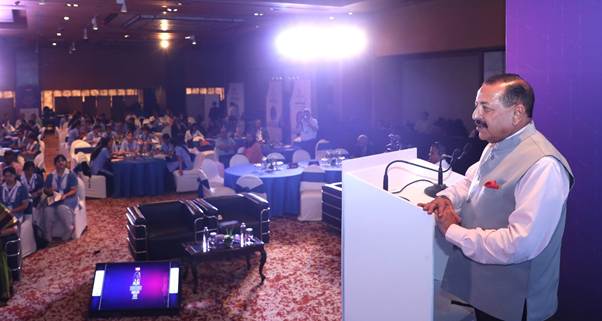
Union Minister of State for Science and Technology Jitendra Singh on Wednesday described the National Education Policy (NEP) 2020 as one of the most significant reforms in India’s education sector, saying it has enabled students to pursue studies based on their aptitude and aspirations rather than being confined to predetermined academic streams.
Addressing The Week Education Conclave 2026, Singh said the policy had introduced greater flexibility into the education system and allowed students to make course corrections in line with their interests and abilities.
Explaining the impact of the policy, Singh said NEP 2020 had “liberated children from being prisoners of the subjects chosen for them by their parents.” He noted that the earlier system often compelled students to continue with academic streams regardless of their interests, limiting flexibility and individual choice.
The minister said students now have greater freedom to explore diverse disciplines, including biotechnology, literature and other emerging fields, instead of being restricted to conventional career trajectories. This, he said, has enabled more learners to enter professions by choice rather than by default.
Referring to the impact of these changes on the scientific ecosystem, Singh said the quality and orientation of young scientists entering research institutions today are markedly different from earlier generations, with many choosing careers in science out of genuine interest and aptitude.
Highlighting the role of technology in education, Singh said educational opportunities had become more accessible over the past decade. He said the use of technology had helped make education more affordable and reduced barriers that previously limited opportunities for many students.
Pointing to trends in competitive examinations, Singh said an increasing number of top-ranking candidates were coming from smaller towns and non-metropolitan regions, often without attending expensive coaching institutions. According to him, the growing availability of educational resources through digital platforms and mobile technologies has helped create a more level playing field for aspirants.
The minister said success in the current educational environment is increasingly determined by perseverance, self-learning and effective use of available resources. He cited interactions with students from modest backgrounds who had excelled in competitive examinations as examples of the opportunities now available.
Describing the present period as a promising phase in India’s educational journey, Singh said today’s students have unprecedented access to opportunities and resources. Referring to the vision of Viksit Bharat 2047, he expressed confidence that the country’s youth would play a key role in shaping India’s future and contributing to national development.
The Minister also urged students to make full use of the opportunities available to them and contribute to nation-building through excellence, innovation and public service, while appreciating the role of teachers and educators in mentoring future generations.


