







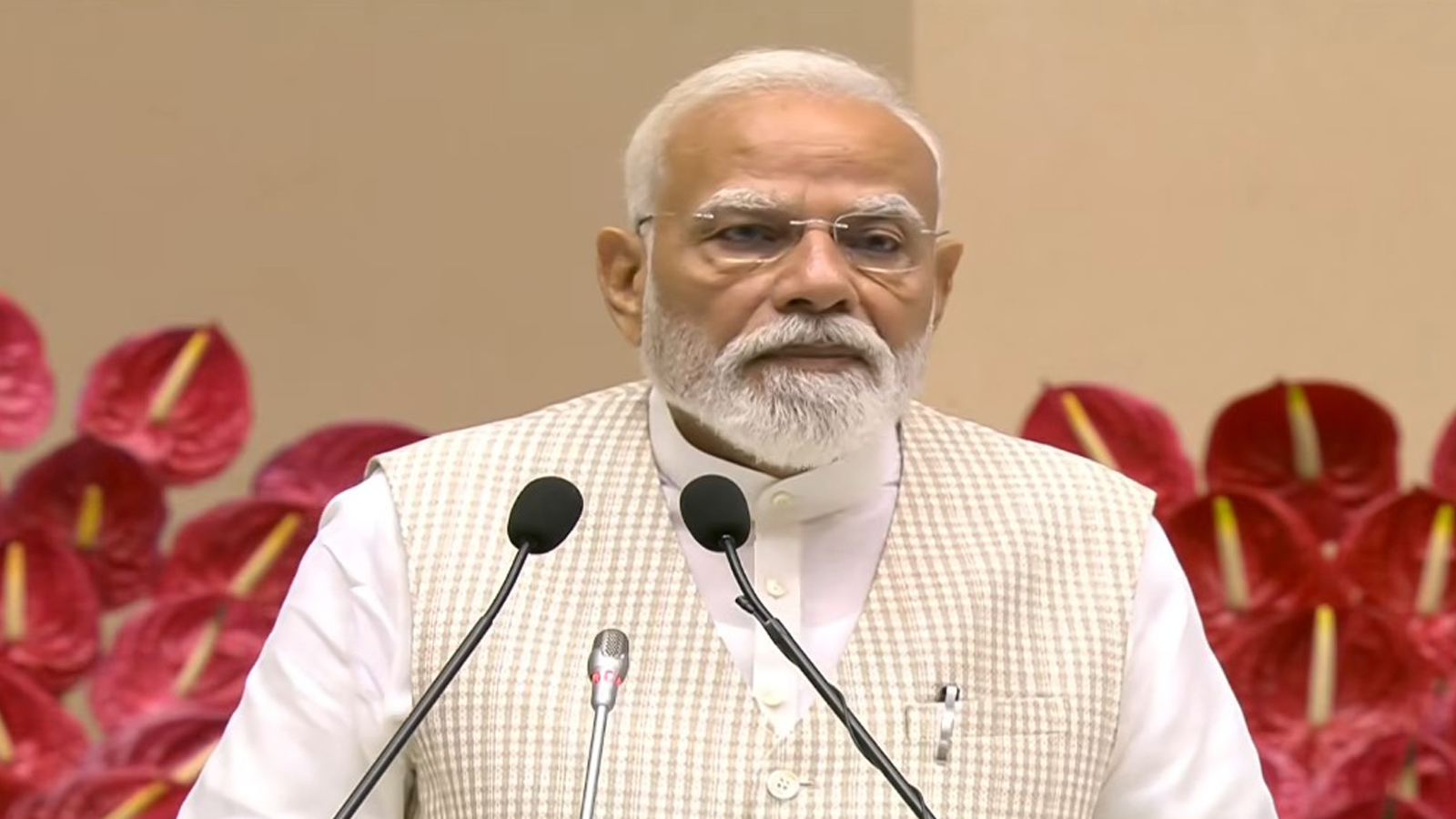
Prime Minister Narendra Modi on Thursday called upon states to transform India’s demographic dividend into a development dividend through focused investments in education, skilling and capacity-building, while chairing the 11th Governing Council Meeting of NITI Aayog in New Delhi.
The meeting, held at the Rashtrapati Bhavan Cultural Centre, was attended by Chief Ministers, Lieutenant Governors and Administrators from 28 states and five Union Territories. According to the government, it was the first Governing Council meeting in which Chief Ministers of all 28 states participated. The theme of the meeting was “Inclusive Human Development for Viksit Bharat@2047.”
Addressing the gathering, Prime Minister Modi said India’s growth story continues to inspire the world despite economic uncertainty affecting several major economies. He stressed the need to strengthen the country’s resolve towards self-reliance and adopt global best practices, particularly in the renewable energy sector.
Emphasising cooperative federalism, the Prime Minister said the Centre and states must work together to achieve the goal of a developed India by 2047. He noted that the vision of Viksit Bharat should become a collective commitment at every level, from states and districts to blocks and villages.
Highlighting India’s youthful population,PM Modi said nearly 70 crore Indians are below the age of 25, describing them as the country’s greatest asset. He urged states to equip young people with future-ready skills and create opportunities that would enable them to contribute meaningfully to the nation’s development.
Referring to India’s recently concluded Free Trade Agreements (FTAs) with several countries, the Prime Minister encouraged states to help youth and micro, small and medium enterprises (MSMEs) benefit from new market opportunities. He also called on states to actively attract investments from partner nations.
The Prime Minister reiterated the government’s commitment to women-led development and urged states to work towards increasing the number of Lakhpati Didis from three crore to six crore. He also stressed the importance of ensuring a safe and secure environment for women.
Calling for greater focus on the One District One Product (ODOP) initiative,PM Modi asked states to formulate export-oriented strategies around local products. He also identified defence manufacturing as a rapidly growing sector and encouraged states to develop policies to leverage emerging opportunities in the industry.
The Prime Minister highlighted the need for coordinated action to tackle social challenges such as drug abuse and cyber fraud through awareness campaigns, preventive measures and effective governance mechanisms.
Drawing attention to the impact of El Niño conditions, The PM Modi urged states to prioritise water conservation and promote natural and organic farming practices. He noted that the purchase of 11 lakh tonnes of organic manure during the current Kharif season reflected growing confidence among farmers in sustainable agricultural methods.
The Prime Minister also emphasised the importance of monitoring development at the district level and suggested identifying 100 districts in the agriculture sector on the lines of the Aspirational Districts Programme to drive targeted improvements and measurable outcomes.
Highlighting the role of good governance, transparency and infrastructure in attracting investments, PM Modi urged states to focus on ease of doing business, branding and opportunities in emerging sectors such as data centres and artificial intelligence. He said AI should be viewed as an opportunity and stressed the need to prepare citizens for the future economy through appropriate skill development.
During the meeting, Chief Ministers, Lieutenant Governors and Administrators congratulated the Prime Minister on completing 12 years in office and expressed solidarity with the Centre in addressing global geopolitical challenges, strengthening energy security and sustaining India’s growth momentum.
Concluding the meeting, PM Modi said the discussions reflected the aspirations, experiences and best practices of states across the country. Expressing confidence in the spirit of cooperative federalism, he said India could accelerate its journey towards becoming a developed nation by 2047 through innovation, collaboration and a shared commitment to development.


