







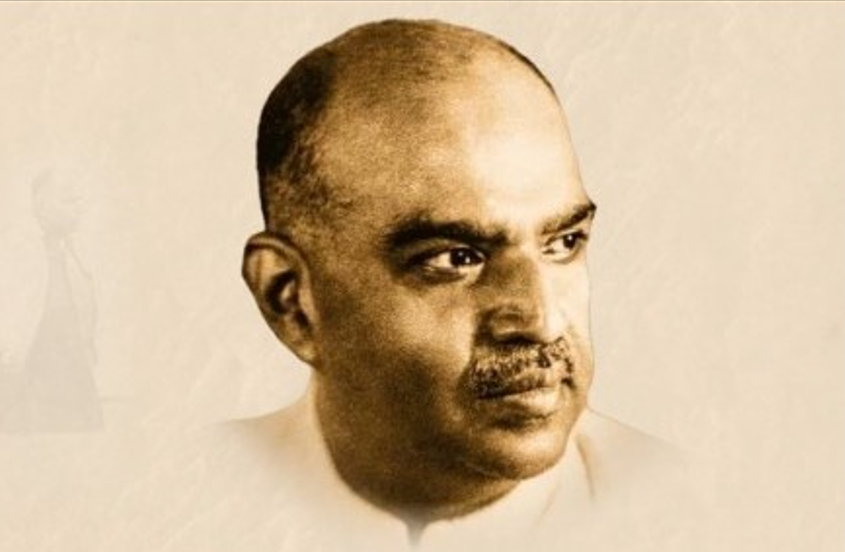
Prime Minister Narendra Modi, Union Home Minister Amit Shah and Defence Minister Rajnath Singh paid homage to Syama Prasad Mookerjee on his death anniversary.
In a post on X, PM Modi said, “On his Balidan Diwas, I pay homage to Dr. Syama Prasad Mookerjee, a distinguished patriot, scholar and statesman who dedicated his life to India’s development. His unwavering conviction, courage in public life and commitment to national interest continue to inspire generations. Dr. Mookerjee’s sacrifice remains etched in our collective memory. We reaffirm our commitment to building a strong and developed India, guided by the values he cherished and served till his last breath.”
Home Minister Amit Shah also paid tribute, calling Mookerjee a fierce advocate of India’s unity and integrity. HM Shah highlighted his opposition to the concept of “two constitutions, two heads and two flags” in Jammu and Kashmir and recalled his efforts to ensure that Bengal remained an integral part of India. He said the nation would continue to draw inspiration from Mookerjee’s vision of cultural nationalism and nation-first governance.
Defence Minister Rajnath Singh described Mookerjee as a brilliant nationalist, educationist and founder of the Bharatiya Jana Sangh. He said Mookerjee made lasting contributions to national unity, cultural identity and democratic values, adding that his resolve, courage and sacrifice continue to inspire millions of Indians.
Born on July 6, 1901, in Calcutta (now Kolkata), Mookerjee emerged as one of the most influential political and intellectual figures of modern India.
Mookerjee’s political journey began in 1929 when he was elected to the Bengal Legislative Council. Over the years, he became a prominent voice in national politics and played a key role in shaping debates on governance, identity, constitutional issues and national unity.
An accomplished educationist and barrister, he became the youngest Vice-Chancellor of University of Calcutta, serving from 1934 to 1938 and working extensively to expand opportunities in higher education.
After Independence, Mookerjee joined Prime Minister Jawaharlal Nehru’s Cabinet as India’s first Minister for Industry and Supply, serving from 1947 to 1950. During his tenure, he played an important role in laying the foundations of India’s industrial development by advocating industrialisation, self-reliance and support for small-scale industries.
In 1951, he founded the Bharatiya Jana Sangh, which later evolved into the Bharatiya Janata Party (BJP). Under his leadership, the Jana Sangh emerged as a significant opposition force rooted in the principles of cultural nationalism, national integration and economic self-reliance.
(With IANS inputs)


